Archive for the ‘DIFF’ Category
Being Taunted in Tunis
 August 8th, 2026 |
  Author:
 My Friend
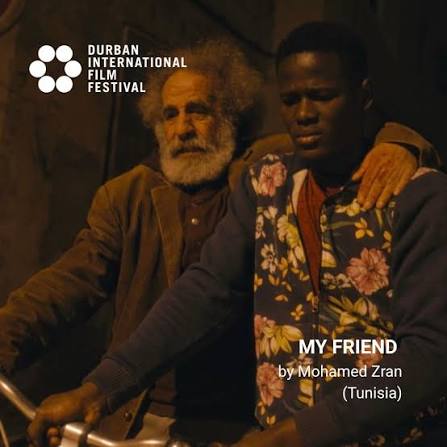
Director: Mohamed Zran
Cast: Fethi Akkari, Mamadou Diallo
Running Time: 85 minutes
Country of Origin: Tunisia
Festival: Durban International Film Festival
Language: Arabic and French with English Subtitles.
Film Rating: 7 out of 10
PLEASE NOTE THERE WAS LIMITED PUBLICITY AVAILABLE FOR THIS FILM: POSTERS & STOCK IMAGES.
Tunisian director Mohamed Zran’s 85 minute film My Friend closed the 47th Durban International Film Festival https://ccadiff.ukzn.ac.za/ and follows the nocturnal and nefarious wonderings of a Senegalese immigrant to Tunisia Idrissa who decides to assist Hassan, a down and out old man who has been badly injured and is sleeping in the doorway of someone’s home in Tunis.
My Friend is shot entirely in one take with no editing, which makes the film engrossing but also difficult to watch as the audience follows the adventures and horrors of Idrissa as he valiantly attempts to get Hassan to a hospital in Tunis which is unfortunately on the outskirts of town perched on a hill.
As Idrissa and Hassan ward off racist attacks and attempted muggings by discontented youths in a nocturnal Tunis, My Friend follows the story of the two men as they attempt to get to safety. No good deed goes unpunished as Idrissa soon finds that he is robbed and his immigration papers which allow him to stay in Tunisia are stolen.
Tunisia is also a stopping off point for migrants to get from central Africa to Europe as it is a stone’s throw away from the flashy resorts of Italy and France in the Mediterranean.
Broke, injured and hungry, Idrissa and Hassan press on towards their destination, a hospital which should be a place for healing and medical assistance but turns out to hold a fate far worse for Idrissa.
My Friend is a fascinating and daunting exploration of an unlikely friendship at the tipping point of it collapsing as Hassan, a Tunisian citizen will find all the help he requires while Idrissa, a Senegalese outcast will be treated as a hostile pariah.
Director Mohamed Zran’s film My Friend is recommended as an arthouse film and unfortunately does lack commercial appeal but stands up as a scathing judgement of Tunisian society who views foreigners as non-citizens, a trend which seems to be replicated the world over.
Tackling issues of homelessness, poverty, immigration and the lack of human kindness, My Friend gets a film rating of 7 out of 10 and was a fitting film to end off the Durban International Film Festival. If viewers catch it on a streaming site or elsewhere be sure to watch it.
In the Days Before the Fall
No Good Men
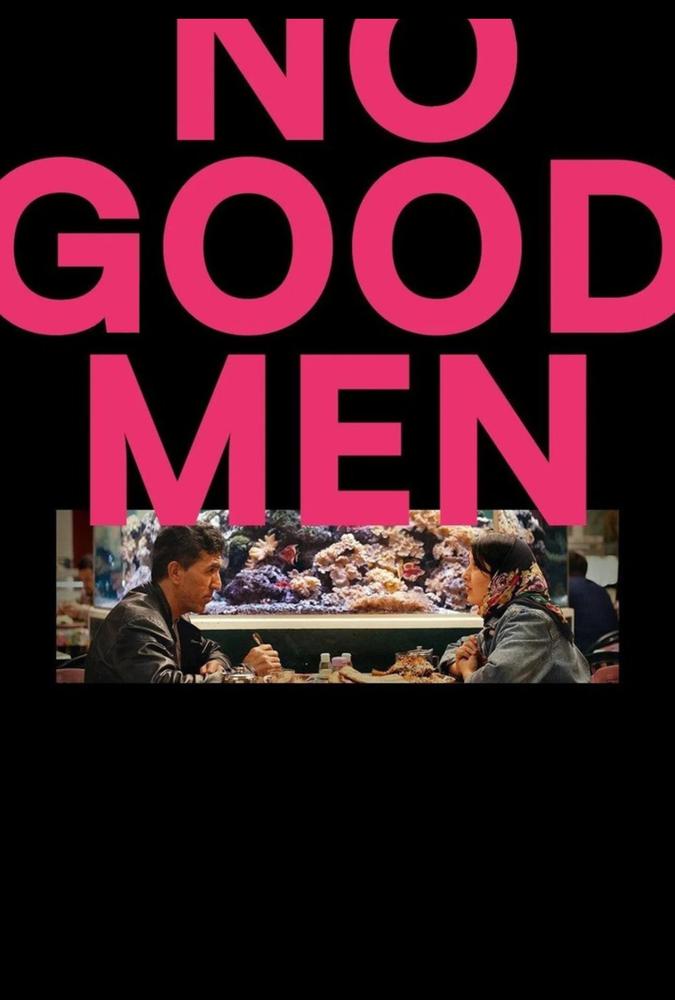
Director: Sahrbanoo Sadat
Cast: Sahrbanoo Sadat, Anwar Hashimi, Yasin Negah
Running Time: 1 hour 43 minutes
Countries of Origin: Norway, Denmark, Germany and Afghanistan
Festival: Durban International Film Festival
Language: Pashto and Dari with English Subtitles.
Film Rating: 7.5 out of 10
Afghan director Sahrbanoo Sadat both stars in and directs an autobiographical tale of a female TV reporter for Kabul News in the heady and catastrophic months before the fall of Afghanistan in April 2021 to complete rule by the Taliban after the untimely withdrawal of American troops by the Biden Administration in her new film No Good Men, which premiered at the Berlinale in February 2026.
Sadat plays the outspoken TV journalist Naru in a completely patriarchal society where even the thought of a female camerawoman is frowned upon. In No Good Men, Sadat paints all the men in Afghanistan as violent, dominant and in complete control, which is not far from the truth since the Afghan women had no rights at all. Even when Naru has to navigate looking after her three year old son Liam played by Liam Hussaini, his father, the wayward womanizing husband of Naru kidnaps the son from play school and Naru has no way of getting her child back except through complete submission to her husband.
Naru meets TV anchorman Qodat played by Anwar Hashimi, a mild mannered by strong principled handsome man who strikes up a fondness for this feisty female journalist in a society which was about to be ruled by complete patriarchy.

No Good Men with it’s vibrant beginning and dazzling insight into Afghanistan before the Taliban took over is beautiful tale of one woman whose destiny changes forever when she meets Qodat who makes the ultimate sacrifice at the critical moment when her life undergoes a full upheaval.
With flashy scenes of Kabul News footage of wedding bombings and disastrous interviews with the inept Afghan government which simply abandoned the country the moment the American troops withdraw from Kabul, No Good Men is a poignant and funny tale of Naru and her lover Qodat whose love is never fully explored due to a country on the verge of collapse.
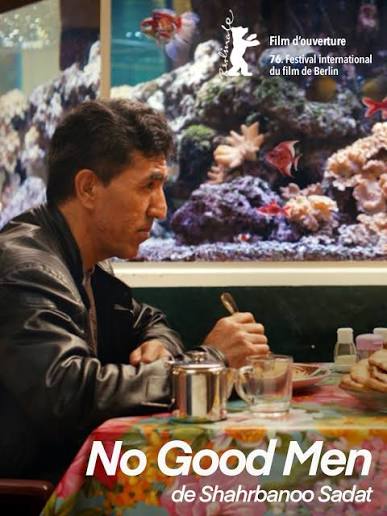
With funding from Norway, Denmark and Germany, No Good Men directed by Sahrbanoo Sadat is worth seeing providing an interesting romantic comedy about constrictive gender relationships, doomed love and a vibrant society on the verge being destroyed forever.
When Margaret Atwood wrote the brilliant dystopian novel The Handmaid’s Tale about a society in which women’s rights are completely nullified by a toxic male dictatorship she based her ideas on visiting Afghanistan in the 1980’s before the Russian invasion. No Good Men, without the pity or sadness, shines an expert light on Afghanistan before the fall and how even in these extraordinary circumstances, love can flourish.
No Good Men gets a film rating of 7.5 out of 10 and is worth seeing. Director Sahrbanoo Sadat does a brilliant job of shining a cinematic light on a forgotten country whose vibrancy has now been extinguished. Recommended viewing.
 Posted in DIFF, Sahrbanoo Sadat |
  Tags: Anwar Hashimi, Sahrbanoo Sadat, Yasin Negah |
  Comments Closed
From Langa to Ibiza Return
Fosta
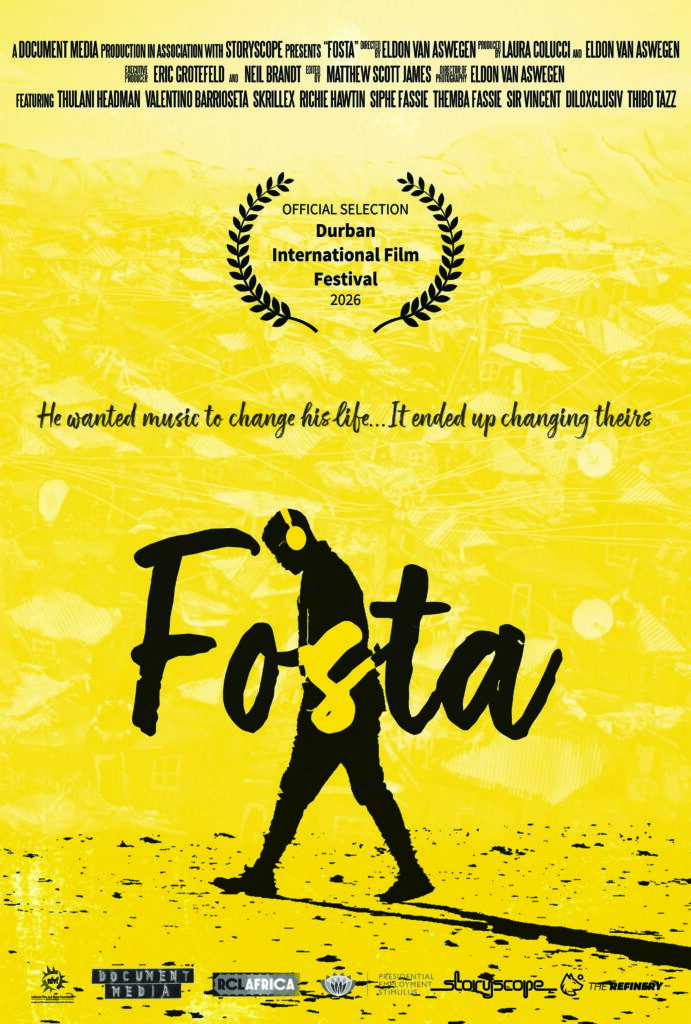
Director: Eldon van Aswegen
Cast: Thulani Headman, Valentino Barrioseta, Black Coffee, Richie Hawtin, Ed Sheeran, Skrillex, Themba Fassie, Siphe Fassie
Running Time: 1 hour and 30 minutes
Languages: English and Xhosa
Country of Origin: South Africa
Festival: Durban International Film Festival
Film Rating: 8 out of 10
Please note this film is a documentary.
South African cinematographer and film maker Eldon van Aswegen makes his feature film directorial debut with his film Fosta which had its world premiere at the 47th Durban International Film Festival on Friday 24th July 2026 and is a superb documentary about Cape Town based DJ Thulani “Fosta” Headman, who was a former gang member who effectively turns to electronic dance music as a means of transforming his life.
Expertly directed by Eldon van Aswegen, Fosta is a fascinating and relevant documentary about the successful trajectory of a former ex-convict as it traces his journey from his township roots in Langa, Cape Town to his chance meeting with Barcelona based events promoter Valentino Barrioseta who visits Cape Town to take a break from the hectic dance scene on the Spanish holiday island of Ibiza.
While Barrioseta is in Cape Town he takes a tour to Langa where he meets Thulani and recognizes Thulani’s talent as an electronic music DJ. Before long the Spanish events promoter invites other international DJs including American DJ Skrillex and British Canadian DJ Richie Hawtin to Cape Town to meet Thulani “Fosta” Headman and witness his talent.
After revitalising the dance scene in Langa, Fosta recognizes the possibilities of working with an international promoter but is reluctant to just disappear overseas and not bring anything back to the community.
Fosta as a documentary has high production values and features great interviews with Fosta and the other international DJ’s as the non-fiction film follows him as he travels first to Amsterdam and then London and Glastonbury, whereby Barrioseta introduces him to some influential music festivals and exposes him to the international DJ scene.
Together with some international fundraising, Fosta, Skrillex and Valentino Barrioseta give something back to the community of Langa by building the Bridges for Music academy – https://bridgesformusic.org/ and registering the DJ and Talent music development school in the UK as a charity.
Eldon van Aswegen choses to make a vibrant documentary about Fosta combining elements of taped interviews with touches of bright yellow animation and tells a compelling story about positive transformation and skills development and the potential for the South African electronic dance music scene to shine on the international stage.
Fosta is a fantastic documentary, uplifting and innovative and is highly recommended viewing.
Fosta gets a film rating of 8 out of 10 and will interest 21st century contemporary DJ and dance music lovers. Worth seeing.
Posted in DIFF, Documentary, Eldon van Aswegen |
Tags: Black Coffee, Ed Sheeran, Richie Hawtin, Siphe Fassie, Skrillex, Themba Fassie, Thulani Headman, Valentino Barrioseta |
Comments Closed
The Plight of the Unhoused
God’s Work
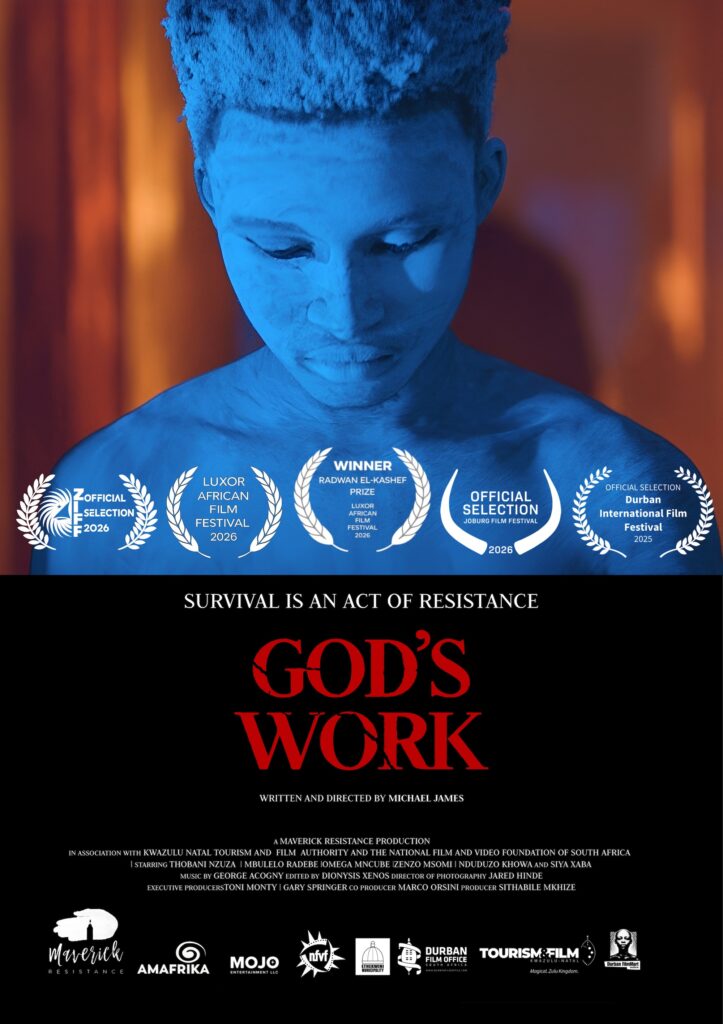
Director: Michael James
Cast: Thobani Nzuza, Mbulelo Radebe, Zenzo Msomi, Omega Mncube, Aaron McIroy, Nduduzo Khowa
Running Time: 2 hours and 7 minutes
Film Rating: 7.5 out of 10
Festival: Durban International Film Festival – https://ccadiff.ukzn.ac.za/
Durban based film director Michael James expertly and inventively shines a light on the plight of the city’s homeless population or the unhoused in his debut full length feature film entitled God’s Work which had its glittering and packed South African premiere at the 46th Durban International Film Festival on Sunday 20th July 2025 at Durban’s Suncoast Casino and Entertainment Complex.
Often as urban dwellers we simply drive past the homeless population in Durban or just ignore them. Durban like many cities around South Africa and the world has a growing homeless situation and James creates a self–reflexive tale about a group of homeless men lead by the haunted drug addict Simphiwe played by Thobani Nzuza along with fellow actors Mbulelo Radebe, Omega Mncube, Siya Xaba, Zenzo Msomi and Nduduzo Khowa who star in supporting roles.

God’s Work bravely explores the plight of homelessness in a mockumentary style film which is both poignant, uncomfortable and shocking.
Shot around Durban’s inner city, the story also written by Michael James follows Simphiwe and his friends as they are initially approached by a film director to make a documentary about homelessness and then the group’s struggle with drug addiction, extreme poverty and harassment by less than savoury law enforcement officers. Some of the films scenes did go on too long and needed to be edited for the sake of brevity.
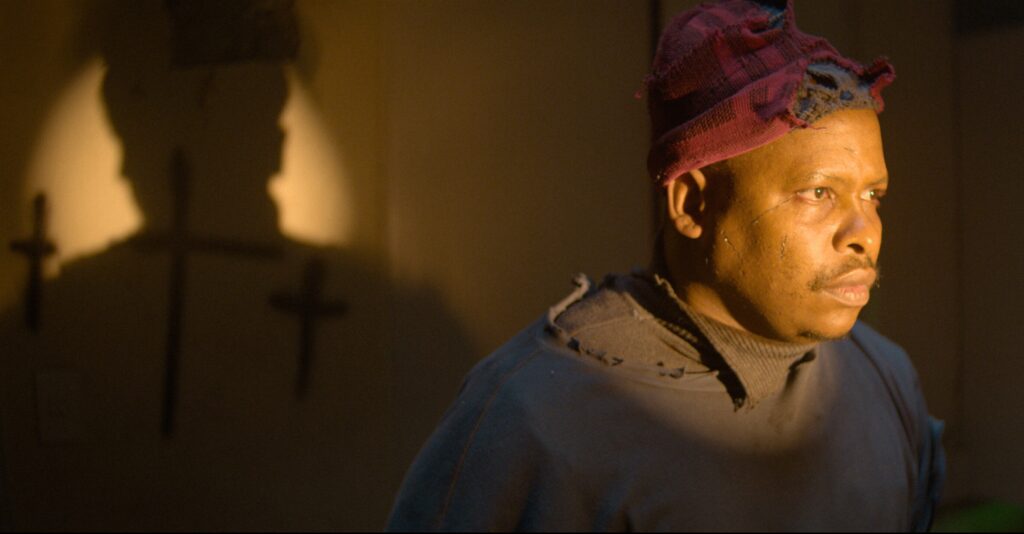
God’s Work is at time very funny and also quite shocking as it explores the misadventures of Simphiwe and his friends as they attempt to rob a shady drug dealer named Biko, run into a crazy political activist featuring a great cameo by Durban comedian Aaron McIroy (Spud, Spud 2: The Madness Continues, Spud 3: Learning to Fly) and also deal with the impending political march of a militant political party determined to recruit them.
As Simphiwe’s journey is both emotional and physically exhausting, he confronts his turbulent relationship with his absent alcoholic mother in a confessional scene in St Emmanuel’s Cathedral in central Durban, after which he and his friends get arrested for vagrancy and deported out of the city to a distant rural location.
God’s Work highlights both the tenacity of the unhoused and also their determination to survive in gruelling conditions on poverty stricken streets while battling addiction and harassment.
Director Michael James wants the audience to feel uncomfortable watching this film, which makes the film relevant and difficult to watch.
While the humour is appreciated, the film’s tone is unrelentingly sombre, which serves its purpose of highlighting the dire circumstances of the unhoused in the face of government, social and economic indifference.
God’s Work is a creative and social journey into the unwanted areas of urban society, a brave and fearless tale of hope, loss and survival.
This film is not for everyone, but it will strike a chord with the socially conscious and will definitely serve as a talking point for deeper conversations about complex urban problems which many cities face, both in South Africa and abroad.
For sheer inventiveness and bravery, God’s Work gets a film rating of 7.5 out of 10 and is recommending viewing for those that enjoy gritty urban cinema.
Posted in DIFF, Michael James, South African Cinema |
Tags: Aaron McIlroy, Mbulelo Radebe, Nduduzo Khowa, Omega Mncube, Siya Xaba, Thobani Nzuza, Zenzo Msomi |
Comments Closed
Listen and Appreciate
Fallen Leaves
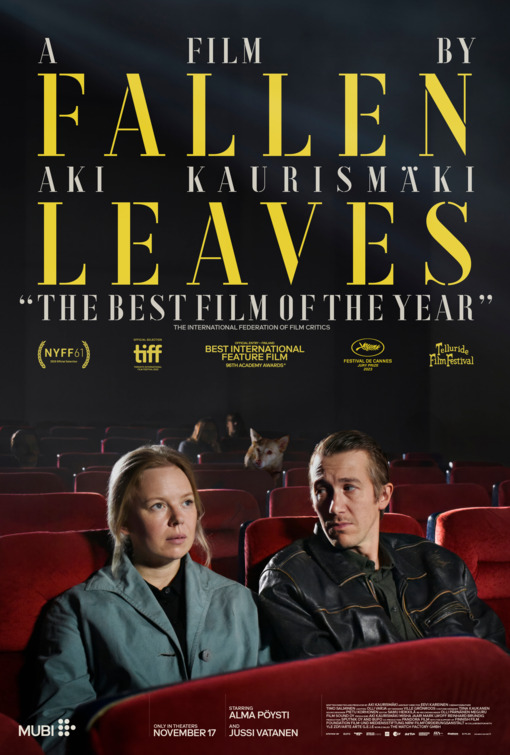
Director: Aki Kaurismaki
Cast: Alma Poysti, Jussi Vatanen, Janne Hyytiainen
Running Time: 1 hour 21 minutes
Film Rating: 7.5 out of 10
Language: Finnish with English subtitles
Festival: Durban International Film Festival
Finnish director Aki Kaurismaki presents his deadpan humour cinematically in the wonderful wacky romantic comedy Fallen Leaves starring Alma Poysti as Ansa Gronholm, a shelf stocker at a local supermarket in Helsinki and welder and Jussi Vatanem as construction worker Holappa who has a periodic drinking problem.
Despite the dreary lives of the two main characters, their courtship and blighted romance takes on an absurdist tinge as Fallen Leaves resembles more a Pedro Almodovar film with its characters dressed in primary colours, its scenes of bizarre Finnish nightlife involving bad Karaoke, where the characters are told to listen and appreciate. It’s as if Almodovar made a film set in Helsinki and not Madrid.
Fallen Leaves is filled with some hilarious scenes especially when Ansa received her electricity bill and cannot afford to pay it as she has been retrenched so she unplugs all the appliances. Then there are the karaoke scenes in which Holappa flirts with Ansa only later to ask her on a date at a dodgy looking art cinema named the Ritz, which culminates in him losing her phone number.
Ansa decides that men are completely unreliable and after she finds another low level job as a construction worker, she adopts a dog to keep her company. Holappa on the other hand jumps from job to job as he frequently takes to vodka to drown his sorrows and his miserable life. His only companionship is his fast talking older friend Hannes Huotari played by Janne Hyytiainen, who hits on younger woman only to be told he is too old for them even though he hasn’t hit 50.
Fallen leaves is a delightful 81 minutes, a brief snapshot into life in contemporary Helsinki in which most of the sparse dialogue is interrupted by radio reports of the ongoing Russian invasion of the Ukraine, which director Aki Kaurismaki snuck in there to provide a subliminal political commentary.
Crisply acted by Alma Poysti and Jussi Vatanem, Fallen Leaves beautifully charts a young couples event ridden courtship to their final walk into the sunset, while subtly highlighting issues of social connection, isolation, worker exploitation and addiction.
Colourful and deadpan with a distinctly Scandinavian sense of humour Fallen Leaves gets a film rating of 7.5 out of 10 and is highly recommended as a quirky love story about fate, films and falling in love.
If viewers love an art house romance, then catch Fallen Leaves on a streaming site. This Finnish film was a beautiful way to end of the 45th Durban International Film Festival.
Posted in Aki Kaurismäki, DIFF |
Tags: Alma Poysti, Janne Hyytiainen, Jussi Vatanen |
Comments Closed
Broken Characters
Memory

Director: Michel Franco
Cast: Jessica Chastain, Peter Sarsgaard, Merritt Weaver, Josh Charles, Jackson Dorfman, Jessica Harper, Brooke Timber
Running time: 1 hour 43 minutes
Film Rating: 6.5 out of 10
Festival: Durban International Film Festival
Mexican director Michel Franco assembles an American cast in his latest film Memory starring Oscar winner Jessica Chastain (The Eyes of Tammy Faye) and Peter Sarsgaard (The Lost Daughter, Blue Jasmine). The two American stars play dysfunctional and broken characters in this contemporary New York drama.
Jessica Chastain plays Sylvia, a single mother and recovering alcoholic who is grappling with her traumatic past. Sylvia is very strict with her teenage daughter Anna played by Brooke Timber not allowing her to mix with boys or to go to teenage parties hoping to prevent a repetition of her own traumatic youth. Sylvia is supported emotionally by her stable and reliable younger sister Olivia wonderfully played Merritt Weaver (Marriage Story, Birdman and Michael Clayton) who is married with three children. Anna spends most of her time with her cousins while Sylvia is trying to cope with everyday life.
Anna’s life changes forever when a strange man Saul follows her home from a party then falls asleep on her doorstep outside her rundown apartment next to a tyre dealership in New York.
Peter Sarsgaard is brilliant as Saul Shapiro, the strange man who suffers from dementia and is looked after by his younger brother Isaac played by Josh Charles. Sarsgaard won the Best Actor prize at the 2023 Venice Film Festival for playing Saul who is constantly confused yet knows that in Sylvia he finds the love of his life, a woman equally damaged as he is, but who is able to look after him and incorporate him into the family dynamic involving her and her daughter.
At a family gathering, all of Sylvia’s traumatic past gets laid bare in a crucial scene in which she brings Saul to meet her sister Olivia, while the sisters overbearing mother Samantha played by Jessica Harper confronts Sylvia about her life choices.
While the acting of the two main lead stars is impeccable, Memory as a film falters as the storyline lacks pace and at times feels like a tortured unglamorous saga in which New York as a city is not even featured except as a grimy backdrop for miserable characters.
Director Michel Franco aims for an art house film whose storyline doesn’t really go anywhere except to highlight themes like addiction, complex family relationships and mental health.
Memory is worth seeing for Jessica Chastain and Peter Sarsgaard’s performances but unfortunately the storyline fails the characters. Memory gets a film rating of 6.5 out of 10. Catch Memory in cinemas or on an available streaming site.
Posted in DIFF, Michel Franco |
Tags: Brooke Timber, Jackson Dorfman, Jessica Chastain, Jessica Harper, Josh Charles, Merritt Wever, Peter Sarsgaard |
Comments Closed
The Court Jester’s Power
The Showerhead
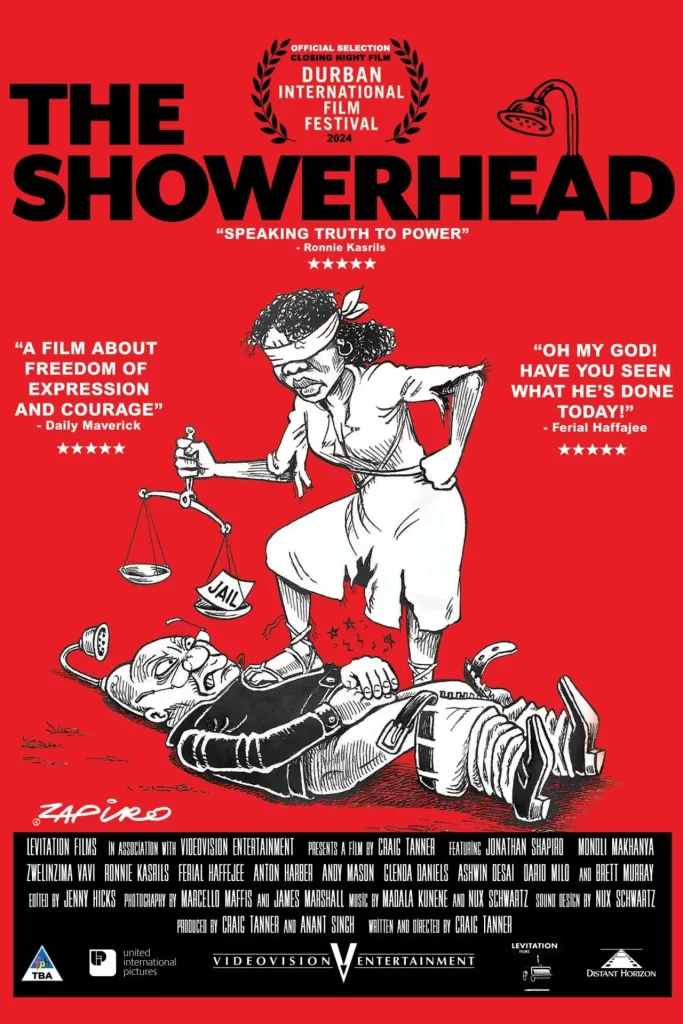
Director: Craig Tanner
Running time: 99 minutes
Film Rating: 8 out of 10
Film Festival: Durban International Film Festival
Please note this film is a Documentary
Thank you to Videovision Entertainment for the invitation to the preview media screening held at their offices in Umhlanga on Wednesday 24th July 2024.
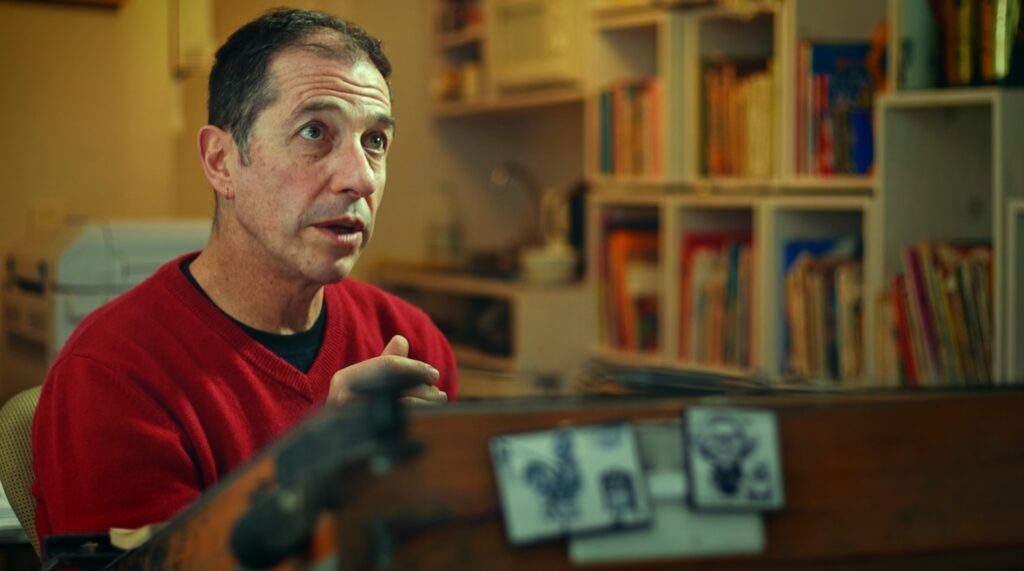
The role of the court jester in any royal court is to make the king laugh by poking fun at the king and his antics.
In documentary filmmaker Craig Tanner’s film The Showerhead, Zapiro, that famous and incisive political cartoonist whose cartoons on many South African politicians have graced the pages of the Sunday Times, Mail and Guardian and more recently The Daily Maverick, is the court jester and he holds all the power.
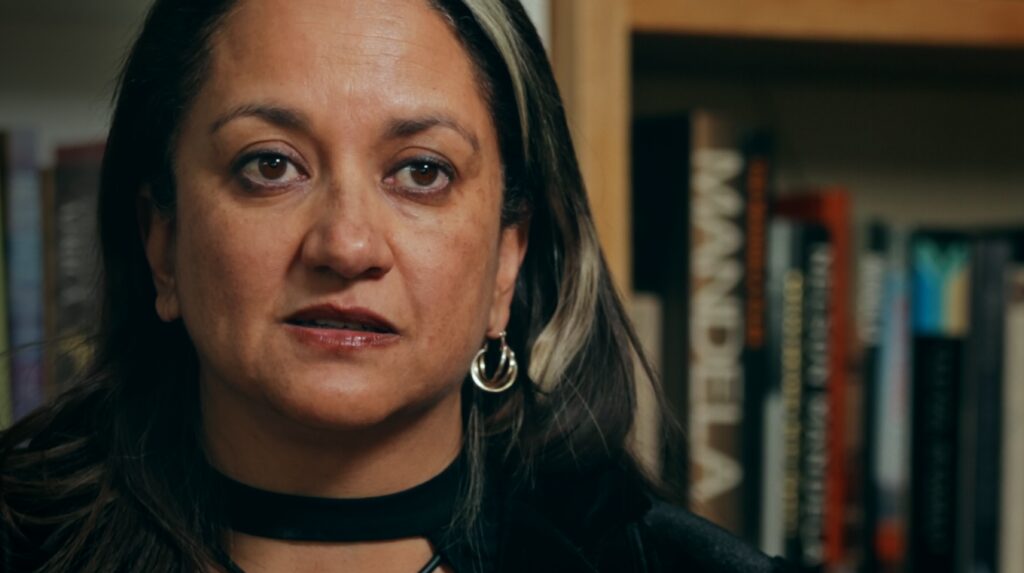
The Showerhead is one of the best documentaries on the freedom of expression particularly pertinent to the South African political landscape which has now shifted from the disastrous Zuma years through state capture to Ramaphosa’s second term of office in which the President guides the beast that is the Government of National Unity following the ANC’s loss of their majority in the recent 2024 elections.
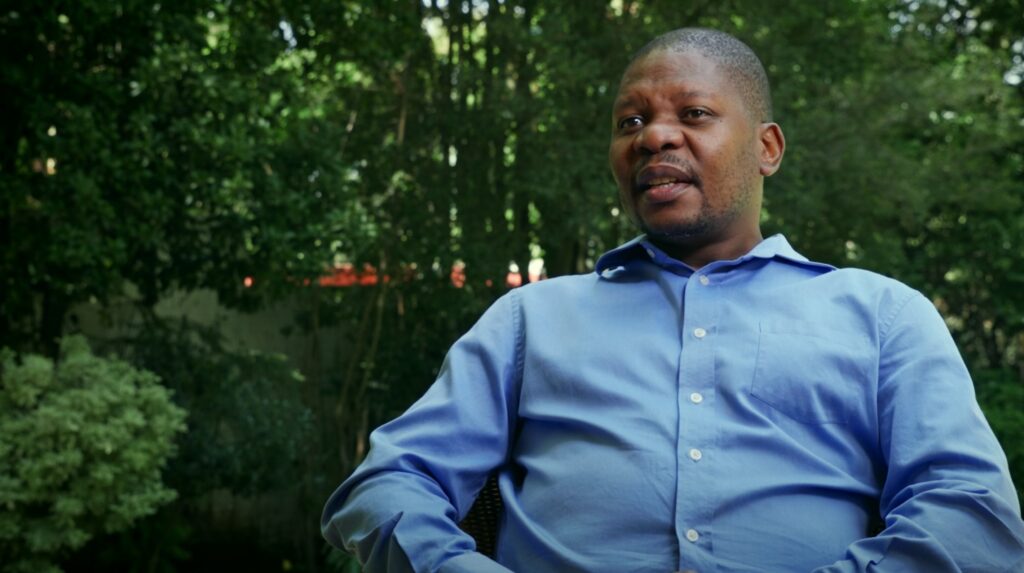
Viewing The Showerhead through an amused vantage point of 2024, where the political landscape has transformed considerably, this excellent documentary focuses on the life of Zapiro, known as Jonathan Shapiro whose extraordinary ability to capture in cartoons the South African political zeitgeist of the moment, focussing particularly of his numerous depictions of former President Jacob Zuma from his rise to power to his rape trial and then of course to his numerous corruption charges which ultimately lead to his downfall.
In a recent online interview with director Craig Tanner and Zapiro, I asked them about their collaboration process, which they replied was intense but rewarding as Tanner expertly weaves the life of Jonathan Shapiro as he emerges as the leading controversial political cartoonist in South Africa as the politics of the country swept from President Thabo Mbeki’s AIDS denialism in the early 2000’s to the rise of President Zuma in 2009.
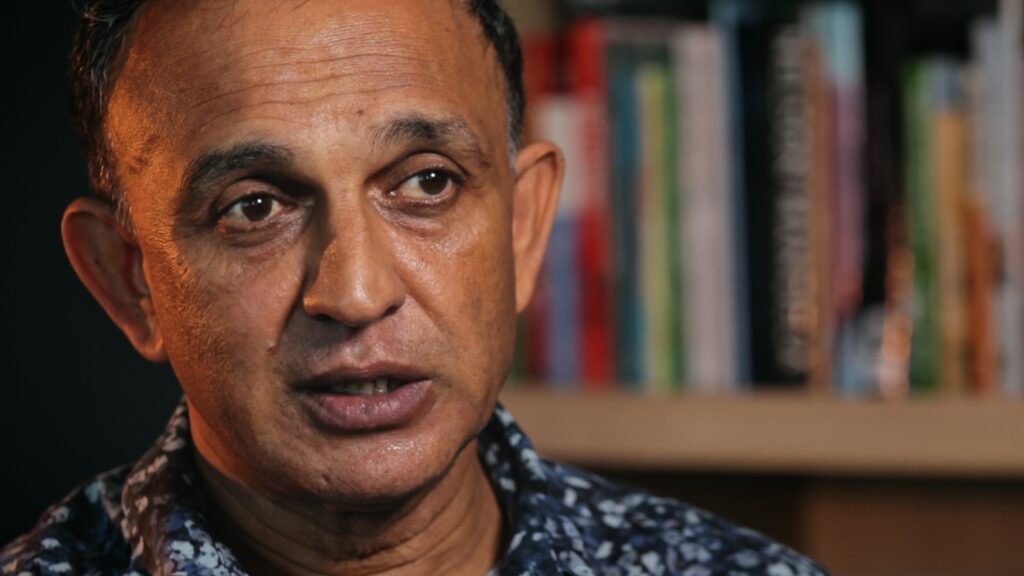
Zapiro expertly captured all of Zuma’s disgraceful antics from his rape trial to his shady association with the Gupta brothers at the height of State Capture which wrecked the South African economy, to President Zuma suing Zapiro for a particularly blistering cartoon of the rape of Lady Justice.
Ultimately, The Showerhead is about the right to freedom of expression and how powerful politicians should not interfere with that right. It must be expressed by talented cartoonists like Zapiro or brilliant contemporary artists like Brett Murray whose controversial painting of Jacob Zuma known as The Spear which appeared at the Goodman Gallery in Johannesburg caused a clash between the artists right to exhibit and the government’s power to censor.
The Showerhead is specifically South African, but it will find an audience internationally as freedom of expression is being undermined in many repressive countries globally.
Craig Tanner’s excellent and humorous document will not only take the viewers on a forgotten political journey of previous SA presidents but focuses on the talented Zapiro who captures every politician’s misstep with spot on humour and ingenuity.
The Showerhead closes the 45th Durban International Film Festival tonight Saturday 27th July 2024 and will sure have audiences talking beyond it’s premiere and into its commercial release which is being facilitated by Videovision Entertainment.
In the case between Zapiro and Zuma, the court jester has all the power as he successfully outwits a fallen king.
The Showerhead gets a film rating of 8 out of 10 and is highly recommended viewing as an extraordinary documentary and a brave account of significance of the freedom of expression, which is enshrined in the South African constitution. Catch The Showerhead on commercial cinema release later this year, its brilliant.
Irreproachable
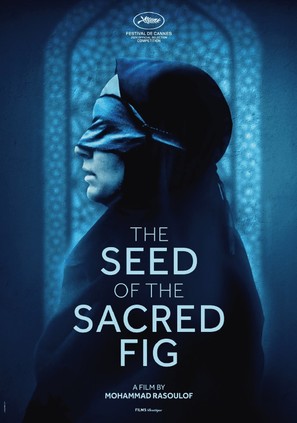
The Seed of the Sacred Fig

Director: Mohammad Rasoulof
Cast: Mahsa Roshani, Setareh Maleki, Niousha Akhshi, Missagh Zareh, Soheila Golestrani
Running Time: 2 hours and 48 minutes
Film Rating: 8 out of 10
Film Festival: Durban International Film Festival – DIFF
Language: Persian with English subtitles
After a tumultuous start to the premiere of Iranian director’s new film The Seed of the Sacred Fig which eventually did premiere in competition at the 2024 Cannes festival, the lucky director Mohammad Rasoulof managed to escape his sentence in Iran of 8 years in prison, a whipping and a fine and move to Germany in May 2024 just in time for his superb yet complex film to premiere at Cannes Film Festival in France.
Fresh from its controversial premiere, The Seed of the Sacred Fig had its African premiere at the 45th Durban International Film Festival and is a fascinating yet complex, slightly drawn out family drama which moves from the confines of a luxury apartment in central Tehran to an outlying area of Iran: a remote house in the countryside.
Much like director Justine Triet’s Oscar winning courtroom drama Anatomy of a Fall, which rightly won best original screenplay at the 2024 Oscars, The Seed of the Sacred Fig which was also written and directed by Mohammad Rasoulof is a simple story about a family of four: a father, a mother and two daughters.
One day the father who has been promoted as an investigator whose job description is shady at best, comes home one day and brings a gun to the apartment. He shows it to his wife. Then the gun goes missing.
Ironically, before this incident, the father tells his family that their actions should be viewed by the rest of Iranian society as irreproachable. After all he is an investigating judge for the Islamic Revolutionary Court in Tehran.
While the investigator Iman played by Missagh Zareh is often absent, his wife Rezvan played brilliantly by Mahsa Rostami has to contend with their two young daughters Sana and Sadaf as they start rebelling against the current government and as protests flare up in central Tehran many horrific videos are shared on social media and soon the eldest Sadaf assists one of her college friends who gets badly beaten.
The women have no rights in this film and interestingly when Iman’s gun goes missing which could threaten his job in the pernicious administration, his work colleague suggests that he interrogates his wife and two daughters.
From domestic harmony, where the social unrest and strife is always viewed through partly closed windows as the night sky in Tehran is lit up with fires and the sounds of civil unrest, that external social strife soon becomes internalized in this family when Iman takes his wife and daughters to a remote location to question them, the only time that a seemingly normal family event occurs which rapidly deteriorates into a cat and mouse game between captor and hostage.
As Iman’s true occupation as a judge and executioner gets revealed, director Mohammad Rasoulof expertly directs the action by incorporating real footage from social media of recent civil unrest in Tehran, while commenting on the many contradictions in Iranian society as it struggles to maintain traditions and religious custom while digital advancement gradually undermines the social fabric.
Ominous in tone, but hugely fascinating as a piece of cinema which offers an unfiltered glimpse into a reclusive society which is completely at odds with the West, The Seed of the Sacred Fig gets a solid rating of 8 out of 10.
The only criticism is that some of the domestic scenes could have been edited, otherwise this complex family film is recommended viewing as a fine example of International cinema.
Posted in DIFF, Mohammad Rasoulof |
Tags: Mahsa Rostami, Missagh Zareh, Setareh Maleki, Soheila Golestani |
Comments Closed
Savitha’s Choice
A Match
Director: Jayant Diganbar Somalkar
Cast: Nandini Chikte, Sandip Somalkar, Taranath Khiratkar, Sangita Sonekar, Suyog Dhawas
Running time: 1 hour 44 minutes
Film Rating: 7.5 out of 10
Film Festival: Durban International Film Festival – DIFF – https://ccadiff.ukzn.ac.za/
Strip away all the Bollywood dazzle and audiences are left to contemplate director Jayant Diganbar Somalkar authentic Indian directorial debut film A Match focusing on the future of a young Indian woman Savita who lives in the countryside with her father, a cotton farmer, her mother and her misbehaving brother Mangya played by Suyog Dhavas.
Savita is adeptly played by a non-professional actor Nandini Chikte who plays the role of perpetual candidate for an arranged marriage as endless groups of men, male relatives of a potential suitor interview her about her age, her caste, her education and her hobbies. This is all part of the traditional practices of setting up an arranged marriage in rural India.
Savitha has other plans which involves her completing her education and writing her final exam on sociology while flirting with her male lecturer as they read the newspapers.
As the Indian trains run swiftly past rural villages, A Match follows the journey of Savitha and more significantly her hapless father Daulatrao played by Taranath Khiratkar an indebted cotton farmer who is battling to survive financially and cannot wait to marry his daughter off. When one such bid for marriage represents itself as enticing the price paid to the male relatives for the potential suitor proves to be exorbitant and Daulatrao considers drastic action.
Ironically Savitha’s flirty male lecturer who preaches female emancipation in India doesn’t practice it and our heroine in this story feels constantly stifled by the overpowering and persuasive patriarchal system which allows arranged marriages to thrive often without consent from the woman involved.
Unlike the flamboyant but excellent 2001 Mira Nair film Monsoon Wedding, director Jayant Diganbar Somalkar’s film is a grassroots and gritty exploration of arranged marriages in a traditional rural Indian village far away from the glossy, bustling cities of Mumbai and New Delhi. The characters are authentic and identifiable, a family seemingly trapped by their own circumstances with Savitha’s ultimate choice is really to defy these restrictive social conventions.
After a successful premiere at the 2023 Toronto International Film Festival (TIFF) and now premiering at the Durban International Film Festival (DIFF) catch A Match at the 2024 festival or on a future streaming site.
A fascinating portrayal of arranged marriages and generational conflict, A Match gets a film rating of 7.5 out of 10 and is worth seeing especially as the cast comprises non-actors. Recommended viewing.
Posted in DIFF, Jayant Diganbar Somalkar |
Tags: Nandini Chikte, Sandip Somalkar, Sangita Sonekar, Suyog Dhawas, Taranath Khiratkar |
Comments Closed
The Blame Frame
All the Beauty and the Bloodshed

Director: Laura Poitras
Running Time: 2 hours and 2 minutes
Festival: Durban International Film Festival (DIFF2023)
PLEASE NOTE THAT THIS FILM IS A DOCUMENTARY FEATURE
Even before viewers watch film maker Laura Poitras Oscar nominated documentary All the Beauty and the Bloodshed, they should read the New Yorker journalist’s superbly researched book Empire of Pain: The Secret History of the Sackler Dynasty by Patrick Radden Keefe who gives a detailed account of the complex issues surrounding the extensive opioid crisis that gripped America for the first 20 years of the 21st century.
Poitras chooses to follow the bohemian life of photographer and activist Nan Goldin who herself got addicted to OxyContin and then once recovered launched a successful smear campaign again the Sackler Family who owned the Pharmaceutical giant Purdue Pharma who made and distributed the highly addictive strong pain killer OxyContin, which is a derivative of heroin.
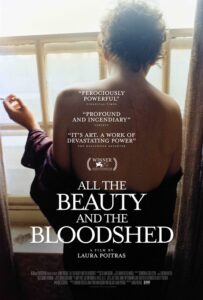
All the Beauty and the Bloodshed focuses on Goldin’s smear campaign, who as an artist who had her work hung in some of the world’s most prestigious galleries from The Met to the Guggenheim and the Louvre, attacked the immensely wealthy Sackler’s families philanthropic efforts of donating huge amounts of money to galleries in New York, London and Paris with the proviso that the cultural institution name a wing of the gallery after the Sackler’s.
With a brilliant title, All the Beauty and the Bloodshed, documentarian Laura Poitras makes her position clear that she is on the side of Nan Goldin and does not maintain an objective gaze but instead scandalizes the actual smear campaign which was both riveting and explosive as Nan Goldin and her gang of activists stages protests in the Guggenheim throwing thousands of prescription OxyContin bottles down the spiral ramp of the Guggenheim, the most glamourous art gallery in New York. Goldin does a similar protest at the Louvre where the European wing of the Sackler’s who were based in London had donated large amounts of money.
Laura Poitras does do a full comprehensive historical biography of Nan Goldin from her counterculture days as an emerging photographer in New York surrounded by fringe film makers and queer artists to her own addiction struggles and to the scourge of the AIDS crisis in the late 1980’s which nearly wiped out that entire counter-culture community.
Ultimately what Poitras does do is paint the immensely clever and secretive Sackler clan as aloof billionaires who had invented a drug which was abused by millions of Americans and many died, while not accepting any responsibility for how they had contributed to the Opioid epidemic from 2000 to 2020, while vastly benefiting from the immense profits made by their Pharmaceutical company.
The faces of Kathe and Richard Sackler, some of the heirs of the vast wealth of the Sackler clan, as appearing cold and unsympathetic at the end of the documentary when the family is deposed virtually in 2020 to appear before the families of the victims who died during this crisis, paints the family that privately owned Purdue Pharma as completely unsympathetic, which they were. The Sackler’s did not acknowledge guilt or accountability but through the efforts of Nan Goldin and her gang of protesters, years of philanthropy have been stripped at some of the finest cultural institutions in the world as the Sackler name was erased from the esteemed Art World.
As a documentary film maker, Laura Poitras does a superb job of bringing the opioid crisis to light and how the once influential Sackler family lost their reputation but not their wealth. All The Beauty and the Bloodshed is a fascinating if slightly one sided documentary which is tangential in parts but illuminating in other.
While the complex ethics of pharmaceutical distribution is largely untouched in this documentary, the focus squarely remains on the Sackler’s enormous contribution to the World of Art and their untimely undoing by a spiralling opioid crisis and Federal litigation. See this documentary in conjunction with reading Patrick Radden Keefe’s brilliant non-fiction book, to gain the full complex history of the Sackler family and the opioid crisis in America.
All the Beauty and the Bloodshed gets a film rating of 8 out of 10 and is a fascinating tale of counterculture flamboyance and protest versus corporate greed and murky philanthropy to some of the most influential art galleries in the World: The Louvre, the Guggenheim, The Tate and the Met. Highly recommended viewing.

- John de Mol’s Formats Giant Talpa Studios Heads to Mipcom With New Shows ‘Sing With Me,’ ‘The Golden Elevators’ (EXCLUSIVE)John de Mol’s Talpa Studios, whose hit formats include quiz show “The Floor,” is heading to next week’s TV market Mipcom with a slate of new entertainment formats, led by “Sing With Me” and “The Golden Elevators.” “Sing With Me” is a feelgood music entertainment format developed in collaboration with Dutch producer IDTV, the creator […]Leo Barraclough
- ITV Studios Travels to Mipcom With 10 New Titles on Its Formats Slate, Led by ‘The Chase Around the World’ (EXCLUSIVE)ITV Studios has unveiled 10 new titles on its Mipcom formats slate, led by “The Chase Around the World,” and also revealed the unscripted lineup, which includes “70 Up,” the final chapter of the groundbreaking documentary series “7 Up.” “The Chase Around the World,” a multi-country treasure hunt, is a spin-off of ITV’s game show […]Leo Barraclough
- La Oreja de Van Gogh Songs Set to Power an Ambitious Romantic Musical From Fernando González Molina (EXCLUSIVE)The songs of pop group phenomenon La Oreja de Van Gogh, which has just become the only Spanish band with a song in Spotify’s Billions Club, are heading for the big screen, set to be sung and power the emotional currents of an ambitious romantic musical, “Puedes Contar Conmigo.” Director of blockbuster “Palm Trees in […]John Hopewell
- Talent Agency Cosmic Opens London Office, Led by Gabrielle de CevinsCosmic Talents, which represents leading international heads of department, is opening a London office. It will be led by Gabrielle de Cevins, who joins Cosmic Talents as the agency’s U.K.-based agent. De Cevins brings eight years of in-house production experience to the role, including the last four at London-based feature film production company The Bureau […]Leo Barraclough
- Harvey Keitel Plays Acting Teacher in Gaurav Bhardwaj’s Debut Feature ‘The Method’ (EXCLUSIVE)Harvey Keitel stars as a celebrated acting teacher in “The Method,” the first feature from director and co-writer Gaurav Bhardwaj, produced by “CTRL” banner Travelin Bone Entertainment alongside Imagination Infinite Motion Pictures. Mina Sundwall (“Murdaugh: Death in the Family,” “Lost in Space”) also features, as do Rakshit Bhuchar and Rohan Maletira, both of whom make […]Naman Ramachandran
- Was 2003 the Greatest Year in Pop Culture? Watch and Decide October 5, 2026Welcome to The Greatest Year in Pop Culture. E!'s new anthology documentary series is revisiting the years that shaped entertainment history, starting with 2003. Yes, it was the year that...Jess Cohen,Brett M Malec
- How Newlyweds Taylor Swift and Travis Kelce Became Winning Teammates October 5, 2026Nice to meet you, where you been? Can you show me some football things? At least that's how we'd like to imagine that first 2023 encounter between newlyweds Travis Kelce and Taylor Swift—who...Sarah Grossbart
- Sister Wives' Janelle Brown Reacts to Ex Kody Brown's Claims About Her October 5, 2026Now that Sister Wives' Kody Brown has officially completed his season 20 apology tour, his ex Janelle Brown has a little something she'd like to get off her chest. "I feel like the apology tour...Sarah Grossbart
- Lizzo Says She Had to "Make Peace" With Harassment Lawsuits Aftermath October 4, 2026Lizzo is not letting her truth hurt her. Three years after the “About Damn Time” singer was the subject of two harassment and discrimination lawsuits—the second of which was completely dismissed...Paige Catton
- Kim Kardashian Says She Has to “Hold” North West Back October 4, 2026Kim Kardashian is keeping North West under certain boundaries. The Kardashians star—who shares the 13-year-old, along with Saint, 10, Chicago, 8, and Psalm, 7, with ex Kanye “Ye” West—expressed...Paige Catton
- Read MoreDifferent providers offer different cell phones, so take a look at the options from each provider to choose the right one for you. You may also want to look into any promotions that the providers have to offer, such as free cell phones in exchange for signing a contract. Tags: 2gmhass90