Author Archive
Oklahoma’s Malevolent Matriarch
 March 17th, 2014 |
  Author:
August: Osage County
Director: John Wells
Starring: Meryl Streep, Julia Roberts, Juliette Lewis, Julianne Nicholson, Ewan McGregor, Dermot Mulroney, Chris Cooper, Margo Martindale, Benedict Cumberbatch, Abigail Breslin, Sam Shepard
The Pulitzer Prize winning play by Tracy Letts, August: Osage County comes to the big screen with a stunning ensemble cast headed by the incomparable and superb Meryl Streep (The Iron Lady, Devil Wears Prada) as the pill popping matriarch of the Oklahoma based Weston family, who all gather together when Violet Weston, a malevolent matriarch played by Streep alerts her clan to the sudden and inexplicable disappearance of her heavy drinking poet husband, Bev Weston, a brief appearance by Sam Shepard. Oscar winner Julia Roberts plays the feisty eldest daughter Barbara who drags her straitlaced husband Bill Fordham played by Ewan McGregor and their teenage daughter Jean played by Little Miss Sunshine star Abigail Breslin.
Incidentally the playwright Tracy Letts is also an actor who recently appeared on the Award winning show Homeland. His take on an all female dysfunctional family in his award winning play is both perceptive and wonderfully written with Streep and Roberts savouring some of the best lines like – “Bitch, eat your Fish!”
August: Osage County takes themes of addiction, inter-generational communication along with family secrets and rivalry to new heights as the entire Weston clan gather, but the plot is really anchored by the fierce exchanges between a disorientated Violet and her outspoken daughter Barbara, in a career best performance by Julia Roberts. Streep earned her 18th Oscar nomination in 2014 for her almost tragic yet bitter performance of Violet Weston, a woman who clearly has not had an easy life on the mid-Western plans and has to cope with all the hardships including bringing up three daughters and an inebriated poet as a husband.
Julia Roberts (Erin Brokovich, Eat, Pray, Love) also earned a 2014 Best Supporting Actress Oscar nomination for her brilliant performance as Barbara, a woman whose marriage is failing and is battling to cope with a rebellious teenage daughter, an uncooperative cheating husband and a matriarchal and incredibly demanding mother. The onscreen tension between Violet and Barbara is beautifully played out against the vast Oklahoma plains, with the landscape providing an emotional resonance to all the familial conflict that the Weston gathering produces where everyone’s own miserable secrets, faults and deceptions soon come to light amidst the hottest month of summer: August.
Director John Wells interweaves the chaotic scenes at the Weston mansion in rural Oklahoma with gorgeous shots of the mid-Western plains, giving a sense that these characters are grappling with not only their own turmoil but their unique identities apart from those prescribed by being part of a larger family group. And what a family it is.
Violet Weston’s two other daughters are the pacifying Ivy played by Julianne Nicholson and the free-spirited youngest Karen, played by Oscar nominee Juliette Lewis (Cape Fear) both of whom have to heed the dominance of their mother and eldest sister, along with the bitter rivalry which ensues.
As with all plays that are turned into film adaptation, much like the four character play Doubt, August: Osage County drives its narrative purely through an electrifying and barbed script, with Streep and Roberts delivering some vicious one-liners. The rest of the cast including Chris Cooper as Uncle Charlie and Margo Martindale, Benedict Cumberbatch (12 Years a Slave) and Dermot Mulroney provide a theatrical sounding board for the predominantly female driven story of rivalry, deception and loneliness.

What elevates August: Ossage County out of pure melodrama, although some aspects of the plot are questionable, is the groundbreaking and utterly absorbing performance of Streep and Roberts as mother and daughter Violet and Barbara fighting each other and their own apparent faults significant in the touching scene when they are both wondering aimlessly through an Oklahoma hayfield. This onscreen rivalry ironically is a reversal of Streep’s performance opposite Shirley Maclaine as Hollywood daughter and mother in the 1990 film about drug addiction, Postcards from the Edge based upon the best selling novel by Carrie Fisher of Star Wars fame.
August: Osage County is a compelling family drama, at times hysterical, at times poignant but a wonderful and incisive examination of a complex family dynamic which forces each member to come to grips with their own flaws whilst becoming aware of a collective sense of misery, loss and impending loneliness. This film is a master class in ensemble acting and highly recommended viewing.
 Posted in John Wells |
  Tags: Abigail Breslin, Benedict Cumberbatch, Chris Cooper, Dermot Mulroney, Ewan McGregor, Julia Roberts, Julianne Nicholson, Juliette Lewis, Meryl Streep, Misty Upham, Sam Shepard |
  Comments Closed
A Tiger Never Abandons his Mountain

The Grandmaster
Director: Wong Kai Wai
Starring: Tony Leung, Ziyi Zhang, Jin Zhang, Chen Chang
Films about martial arts have a niche market audience, but in this beautifully orchestrated and visually rich tale of Ip Man, the Grandmaster of Kung Fu, director Wong Kai Wai provides an extraordinary blend of history, action and breathtaking beauty in his groundbreaking cinematic spectacle The Grandmaster.

Featuring Asian martial arts stars Tony Leung (Hero, Lust, Caution) as Ip Man and the poised and gorgeous Ziyi Zhang (Memoirs of a Geisha, House of Flying Daggers) as Gong Err two opposing grandmasters who first encounter each other in a lavish brothel, The Golden Pavilion and who display their unique Kung Fu skills and also an enduring love for each other. Gong Err has to contend with her father’s legacy and the rivalry of an adopted brother known as The Razor played by Chen Chang who threatens to usurp her position as head of the family home in 1930’s Foshan, China following the proverb of a tiger who never abandons his mountain. In this case honour trumps defeat.
As the action seamlessly follows these three characters, the historical narrative moves from Foshan in 1936 through the Japanese invasion of China to post-war Hong Kong which becomes the haven for contemporary Kung Fu in the 1950’s. Ip Man incidentally becomes the Grandmaster of Martial Arts star the legendary Bruce Lee who revolutionized martial arts films in the 1960’s and 70’s.
Director Wong Kai Wai’s sumptuous tale of the evolution of Kung Fu is gorgeously told in The Grandmaster with breathtaking cinematography by Philippe Le Sourd who deservedly got nominated for a 2014 Oscar but lost out to Alphonso Cuaron’s film Gravity. The intricate Oriental costumes of 1940’s China are superbly evoked in The Grandmaster which also got a nod for Best Costume Design but lost out to The Great Gatsby at the 2014 Oscars. One particularly memorable scene comes to mind when Gong Err is attending her father’s lavish funeral march as she encounters the followers of the Razor on the icy plains of Northeastern China all beautifully attired in crisp white funeral robes.
The Grandmaster is both a martial arts film but also a historical account of the fortunes of the two central Chinese characters as their lives are disrupted by the invading Japanese and both are forced to flee south to the safety of Hong Kong. Memorable scenes include the Chinese New Year fight sequence at a train station between the unflinching Gong Err and her adversary and the opening sequence of legendary Ip Man as he swiftly defeats a gang of rivals in a rain soaked Foshan alleyway.

As the opening film of the 2013 Berlin Film Festival http://www.davidrwalker.co.za/2013/05/2013-berlinale/ The Grandmaster is authentic Asian cinema at its best, with Chinese dialogue and English subtitles along with flawless visuals and wonderfully elegant fight sequences to rival directors Zhang Yimou (Raise the Red Lantern) and Ang Lee (Crouching Tiger, Hidden Dragon, Lust Caution). This is highly recommended viewing especially for film enthusiasts and lovers of authentic martial arts cinema in the tradition of Hero, House of Flying Daggers and Crouching Tiger, Hidden Dragon.
Bloody Visuals Detract from Ancient Legends

300: Rise of an Empire
Director: Noam Murro
Starring: Eva Green, Sullivan Stapleton, Rodrigo Santoro, Lena Headey, Callan Mulvey, Jack O’Connell, David Wenham
300: Rise of an Empire lacks the visual punch of the original 300 directed by Zach Snyder which made himself and its star Gerard Butler enormously famous. In this follow up sequel, 300 Rise of an Empire looks at the fortunes of the God King Xerxes, a fabulously gold clad Rodrigo Santoro as he attempts to invade the Greek Isles and its major city states. It shows the ruthless of the invading Persians in nautical battles which took place almost simultaneously to the battle of Thermopylae when 300 Spartans saved Greece by becoming martyrs. In 300: Rise of an Empire, audiences can expect a necrophiliac lustful and sexy naval commander Artemisia wonderfully overplayed by Eva Green (The Dreamers, Casino Royale) getting off on decapitations and drowning of her own sailors as she viciously commands the Persian fleet ordering them to defeat the Greek ships at all costs. The Greeks in this case are represented by muscle bound Themistocles who just happened to be the daring soldier that killed Xerxes father King Darius with a fateful arrow that changed the course of these two ancient civilizations.
Lena Headey (now famous in the HBO Series Game of Thrones) reprises her role as Queen Gorgo of the Spartans who not only narrates the entire ancient diatribe but also features as a plot device for avenging the death of Leonidas in 300 against the invading Persians. What makes 300: Rise of an Empire worth watching is brutal sex scene bordering on sadomasochism between Artemisa and Themistocles on board a Persian vessel reminding audiences of the tangible psychological link between sex and death.

Unfortunately the blood visuals and excessive gore featured in 3D in this sequel detracts stylistically from what could have been a really fascinating narrative about ancient civilizations battling it out on turbulent Mediterranean seas. Australian actor Sullivan Stapleton could not rival Gerard Butler in screen presence with the only redeeming feature being the audacious Eva Green making the most of her bloodthirsty and vengeful role as the kinky and sadistic Artemisia, a tragic Greek woman who has turned on her own nation after her family was brutally slaughtered.
Ancient history buffs will enjoy 300: Rise of an Empire but this is an unworthy sequel to the fabulously dazzling and original film and will land up being regarded as mere popcorn viewing. 300 Rise of an Empire is fun, sexy and slightly disturbing but not fantastic and definitely not worth it in 3D especially as Israeli director Noam Murro chose gore and bloodlust over historical accuracy. Callan Mulvey and Jack O’Connell also star as father and son team Scyllias and Calisto valiantly fighting the Persians and providing a less than emotional subplot to the real Aegean drama of the nautical battle between Persians and Ancient Greeks.
Posted in Noam Murro |
Tags: Callan Mulvey, David Wenham, Eva Green, Jack O’Connell, Lena Headey, Peter Ferdinando, Rodrigo Santoro, Sullivan Stapleton |
Comments Closed
2014 Berlin Film Festival
2014 Berlin International Film Festival Winners

The 64th annual Berlin International Film Festival was held from February 6 to 16, 2014
The Berlin International Film Festival known as the Berlinale takes places annually in February and is regarded as one of the most prestigious film festivals in the world.

The Opening Night film was The Grand Hotel Budapest directed by Wes Anderson
Winners of the five main prizes at the 2014 Berlin Film Festival were as follows: –

Golden Bear (Best Film) – Black Coal, Thin Ice directed by Diao Yinan

Silver Bear (Best Director) – Richard Linklater for Boyhood starring Ethan Hawke, Patricia Arquette, Ellar Coltrane & Lorelei Linklater
Best Actor – Liao Fan for Black Coal, Thin Ice

Best Actress – Haru Kuroki for The Little House

Silver Bear for Best Screenplay – Stations of the Cross written by Dietrich Brüggemann
Source: – http://en.wikipedia.org/wiki/64th_Berlin_International_Film_Festival
Posted in Berlin, Diao Yinan, Richard Linklater, Wes Anderson |
Tags: Ellar Coltrane, Ethan Hawke, Haru Kuroki, Liao Fan, Lorelei Linklater, Patricia Arquette |
Comments Closed
Cowboys in the Rodeo Ring

Dallas Buyers Club
Director: Jean-Marc Vallee
Starring: Matthew McConaughey, Jared Leto, Jennifer Garner, Denis O’Hare, Griffin Dunne, Steve Zahn, Dallas Roberts
The Young Victoria French Canadian director Jean-Marc Vallee tackles the AIDS pandemic in the gritty but superbly told critically acclaimed film Dallas Buyers Club.
The film which opens with reckless rodeo hand and electrician Ron Woodruff having a cocaine fuelled orgy in a rodeo pen on the outskirts of Dallas, showing a glimpse of a hard living reckless Texan drifter. The narrative is firmly placed in the summer of 1985, at the height of the pandemic as audiences see an emaciated Woodruff recovering from a binge in his trailer park with a Budweiser as he reads a newspaper article about Hollywood star Rock Hudson collapsing in a Ritz Hotel room in Paris in July 1985 due to an AIDS related illness, shocking the world with a disease that the famous film star took pains to keep hidden – http://en.wikipedia.org/wiki/Rock_Hudson.
This is a precursor to Woodroof’s own less glamorous story of a far more determined battle with the disease and the monolithic Federal Drug Administration (FDA) of America, which approved the relevant anti-retro virals (ARV’s), namely AZT first used on unsuspecting HIV patients alternating with a placebo in human drug trials.

Woodroof is the central character in Dallas Buyers Club, a homophobic, drug addicted hard-partying electrician who bets on the Texas rodeo to maintain a hedonistic lifestyle which abruptly changes after an industrial accident at a Texaco oil field, superbly played by Matthew McConaughey (The Lincoln Lawyer, Magic Mike), who lost 21 kilograms to authenticate the role, which recently earned him the 2014 best actor Oscar. McConaughey is now hot property in the acting stakes after shedding his rom-com image (Ghosts of Girlfriends Past, How to Lose a Guy in Ten Days) and taking part in increasingly edgier, morally dubious parts such as in Lee Daniel’s The Paperboy and the recent HBO series True Detective.
In the Dallas Mercy hospital, a severely gaunt looking Woodroof is told that he is HIV positive and only has 30 days to live by Dr Sevard, (Denis O’Hare) and the sympathetic Dr Eve Saks, played by Jennifer Garner. Refusing to accept defeat and not willing to wait for the proposed clinical trials of the newly developed antiretroviral AZT, Woodroof embarks on a mission to source the best possible ARVs to keep him alive. After an initial phase of denial, anger and stigmatisation from fellow co-workers and those he previously cavorted with at the Dallas rodeos, the determined Woodruff embarks on a mission to save his life even if it means illegally.
He embarks on an illicit journey to Mexico where he meets Dr Vass played by Griffin Dunne who supplies him with a regimen of FDA unapproved drugs to sustain his survival. Ever the drifter, Woordoof makes his way back into Texas, ironically dressed as priest with a stash of ARVs which he needs to distribute under the radar to fellow sufferers.

However his pervasive illness lands him back in hospital where he meets the fabulously tragic transsexual Rayon, an utterly breathtaking transformation by Jared Leto (American Psycho, Requiem for a Dream, Alexander), who also received an Oscar for Best Supporting Actor at the 2014 Academy Awards. The gorgeous, fatally destructive Rayon is the perfect foil to break down Woodruff’s preconceived notions of homosexuality and homophobia as his biggest clients, the city’s largely excluded homosexual community soon become paying members of the lucrative, yet life saving Dallas Buyers Club.
What director Jean-Marc Vallee does, is never hold these characters in judgement but superbly lifts a mirror up to their desperate and unconventional forms of survival in mid-1980’s America when the knowledge of AIDS and the correct dosage of ARVs was certainly not as advanced as it is today, almost 20 years later.
It is McConaughey and Leto’s staggering transformation with the former losing an incredible amount of weight and really bringing pathos and layers of emotion to a complex role while Leto is simply incredible as the sultry and tragic Rayon who eventually has to forgo the charade and in one touching scene he bravely confronts his sexuality and illness with his conservative Texan father.
Both actors deserved to win these Oscars and while Dallas Buyers Club is heavy on subject matter, it is a supremely balanced account of one man’s incredible and courageous journey of survival both in America and through procuring foreign drugs internationally to prolong his life at a time when advances in medical science were only grappling to come to terms with the scale of a truly worldwide AIDS pandemic.
Powerful, emotional and brilliant, Dallas Buyers Club follows the trials of Woodroof and Rayon as cowboys in the rodeo ring, dodging the inevitability of being thrown off the proverbial bull while the clowns provide a tragic distraction, the film’s poignant central motif.
Posted in Jean-Marc Vallee |
Tags: Dallas Roberts, Denis O'Hare, Griffin Dunne, Jared Leto, Jennifer Garner, Matthew McConaughey, Michael O'Neill, Steve Zahn |
Comments Closed
86th Academy Awards
The 86th Academy Awards / The Oscars
Sunday 2nd March 2014
OSCAR WINNERS AT THE 86TH ANNUAL ACADEMY AWARDS

Best Picture/Film: 12 Years a Slave

Best Director: Alfonso Cuaron – Gravity

Best Actor: Matthew McConaughey – Dallas Buyers Club

Best Actress: Cate Blanchett – Blue Jasmine
Best Supporting Actor: Jared Leto – Dallas Buyers Club

Best Supporting Actress: Lupita Nyong’o – 12 Years a Slave
Best Adapted Screenplay: John Ridley – 12 Years a Slave

Best Original Screenplay: Spike Jonze – Her

Best Foreign Language Film: The Great Beauty (Italy) directed by Paolo Sorrentino –
http://en.wikipedia.org/wiki/The_Great_Beauty

Best Documentary Film: 20 Feet from Stardom – http://en.wikipedia.org/wiki/20_Feet_from_Stardom

Best Animated Feature: Frozen
Best Cinematography: Emmanuel Lubezki – Gravity
Best Editing: Alfonso Cuaron and Mark Sanger – Gravity
Best Hair and Make-up: Robin Matthews – Dallas Buyers Club
Best Original Score: Steven Price – Gravity
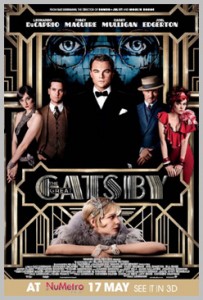
Best Production Design: Catherine Martin – The Great Gatsby
Best Costume Design: Catherine Martin – The Great Gatsby
Best Visual Effects: Gravity
Source: http://www.oscars.org/
Posted in Alfonso Cuaron, Documentary, Oscars, Paolo Sorrentino |
Tags: Cate Blanchett, Jared Leto, Lupita Nyong’o, Matthew McConaughey |
Comments Closed
The Treasures of War

The Monuments Men
Director: George Clooney
Starring: George Clooney, Matt Damon, Cate Blanchett, John Goodman, Bob Balaban, Bill Murray, Jean Dujardin, Hugh Bonneville, Sam Hazeldine
Actor and director George Clooney and screenwriter Grant Heslov, the team behind The Men Who Stare at Goats and Good Night and Good Luck, team up for an old-fashioned historical war film about a middle aged group of men who set out during the latter years of World War II to recover most of the stolen art works secretly stashed in Nazi hordes across France, Belgium and parts of Germany from 1943 to 1945 as the Germans retreated in defeat as the tide of war turned against them. Whilst The Monuments Men boasts an all star cast including Bill Murray, Jean Dujardin (from The Artist), John Goodman and Matt Damon, the film doesn’t quite match up to the incisive political comment of the Oscar winning Good Night and Good Luck about the approaching threat of McCarthyism on broadcast journalists in the 1950’s.
Instead, Heslov and Clooney focus more on the after effects of war and looting and the utter destruction of entire communities, mainly the European Jews at the hands of the ruthless Nazi’s during the holocaust. There are moments of humour interjected in a mainly historical narrative about how these men travelled across the European Theatres of War from Paris to Brugge to Normandy to track down the hugely valuable and culturally significant pieces of art works stolen by the Nazi’s from Rembrandts to Michelangelo’s famed sculpture Madonna and child stolen from a Belgium monastery.
There is a brief interlude with Damon as Captain James Granger teaming up with a French Resistance woman in Paris forced to work for the Nazi’s Claire Simone played by Cate Blanchett, with an indistinguishable European accent. There is the witty banter between Richard Campbell and Preston Savitz played respectively by Bill Murray and Bob Balaban and then there is a wonderful cameo by Hugh Bonneville (Downton Abbey) as Donald Jeffries a British Lieutenant who sobers up to join the Monuments Men to save his famed Madonna.
Whilst at times The Monuments Men comes across as sentimental and nostalgic, it’s because its focusing more on the saving of priceless art than on the horrors of conflict and the utter destruction of parts of Europe. This film is in no league to such Oscar winners as Saving Private Ryan or Anthony Minghella’s elegant The English Patient. Instead The Monuments Men shines light on the aspect of war which is often neglected the looting of treasures by the conqueror over the defeated and the crazy scheme of Hitler’s 3rd Reich to build a Fuhrer Art Museum in Berlin, which naturally never materialized. If anyone has been to the great art museums of London, Amsterdam, Paris or New York, many viewers will know that much of the greatest artworks was saved and restored to their original glory.
For art historians, The Monuments Men is a delightful and fascinating film, but for lovers of War films, don’t expect loads of action or bloodshed, just lots of barbed humour and the occasional tragic scene as this band of merry men navigate through dangerous battlefields to reclaim the original treasures of war. Recommended for lovers of nostalgic war films.
Posted in George Clooney |
Tags: Bill Murray, Bob Balaban, Cate Blanchett, Diarmaid Murtagh, George Clooney, Hugh Bonneville, Jean Dujardin, John Goodman, Matt Damon, Sam Hazeldine |
Comments Closed
That Seventies Con!
American Hustle

Director: David O. Russell
Cast: Christian Bale, Amy Adams, Bradley Cooper, Jennifer Lawrence, Jeremy Renner, Shea Wingham, Robert de Niro, Alessandro Nivola, Michael Pena
Acclaimed director of Silver Linings Playbook, David O. Russell delivers another cinematic masterpiece with his latest film American Hustle about a couple of con artists in New York in 1978 during the Disco era. Think fabulous Seventies costumes, broad Jersey accents, big hair, the brilliantly ensemble cast of American Hustle all deliver top notch acting along with some sassy flair and loads of self-deception.

Oscar Winner Christian Bale (The Fighter) is brilliant as Irving Rosenfeld a two-bit con artist with a chain of dry cleaning businesses which also double as a front for selling fake art to unsuspecting New Yorkers who teams up with Sidney/Edith a sexy pole dancer turned grifter superbly played by Amy Adams (Doubt, The Fighter) at a Jersey pool party in January!

Together the ever glamorous Edith sporting a fake British accent and the smooth talking wily potbellied Irving unveil their small scams selling unsuspecting lines of credit to gamblers, pimps and two bit hustlers. However their duplicitous lives are crossed by unstable Richie diMarso energetically played by Bradley Cooper (Place beyond the Pines), complete with a perm and a pent-up attitude who is in fact an FBI agent out to catch bigger fish from corrupt politicians to American mobsters who control the Florida casinos in Florida are looking to reinvigorate Jersey’s den of iniquity Atlantic City with its newly acquired gambling licences.

The setting is New York, 1978 in the wake of the Watergate scandal, when the American public are distrustful of smooth taking politicians and economically hangover from a 1977 oil embargo and a costly Vietnam war. Director Russell captures the ambience of the late 1970’s Americana perfectly heavily influenced by the films of that period including The French Connection, American Gigolo and even the 007 film Live and Let Die. As the narrative unfolds a complication comes in the form of the no-nonsense confident chain smoking wife of Irving, Rosalyn Rosenfeld, a knockout performance by Jennifer Lawrence, last year’s Oscar winner for Silver Linings Playbook.

American Hustle follows a cleverly scripted and elaborate plot about these four drifters and cons who not only try to out wit the FBI, the mob and a shady Jersey politician Mayor Carmine Polito a well coiffed Jeremy Renner (The Hurt Locker, The Bourne Legacy) involving shifting money for fronting an imaginary investment into the revitalization of Atlantic City casinos. Oddly enough the con also involves funds from a mysterious Abu Dhabi Sheik, comically downplayed by Michael Pena who is in fact Mexican.

Amy Adams gives a tour de force performance as Sidney/Edith a vulnerable yet shrewd woman who can smooth talk any man out of his cash which is certainly Oscar worthy along with the rest of the brilliant ensemble cast making up regulars from David O. Russell’s two previous hit films Silver Linings Playbook and The Fighter.
Alessandro Nivola (Coco Avant Chanel), Robert de Niro (Casino) and Shea Wingham (Savages, Take Shelter) also make a welcome appearance. Any viewer who experienced or grew up in the sassy disco inspired 1970’s will appreciate every aspect of authenticity of this ambiance infused con drama featuring magnetic performances by the four leads along with a witty, comic and incisive script co written by Russell and Eric Warren Singer.
American Hustle is a sophisticated sexy adult drama dripping with menace and deception, complete with a dynamic plot in the lines of Stephen Frears excellent The Grifters and Sam Mendes American Beauty. It’s the ultimate homage film about that Seventies Con featuring the unrivalled power of intention and people’s limitless capacity for survival, love and betrayal.
Posted in David O. Russell |
Tags: Adrian Martinez, Alessandro Nivola, Amy Adams, Bradley Cooper, Christian Bale, Jennifer Lawrence, Jeremy Renner, Louis C.K., Michael Pena, Robert de Niro, Saïd Taghmaoui, Shea Whigham |
Comments Closed
Illusion of Control
RoboCop

Director: Jose Padilha
Cast: Joel Kinnaman, Abbie Cornish, Gary Oldman, Michael Keaton, Jennifer Ehle, Samuel L. Jackson, Jackie Earle Haley, Aimee Garcia
Brazilian director Jose Padilha imaginatively captures the essence of Robocop’s moral dilemma in the 21st century reboot of the popular 1987 cult hit Robocop, by blending a human story with that of greedy industrialists, partisan politics and a dash of media saturated parody.
Joel Kinnaman takes on the part of Detroit police Detective Alex Murphy who is blown apart in a car bomb and who is reassembled with the assistance of the sinister Omnicorp robotics corporation, a role that made actor Peter Weller famous in Dutch director Paul Verhoeven’s original film. Whilst Kinnaman’s Robocop does not require much acting beyond a couple of confused facial expressions, it’s really the supporting cast of Padilha’s version which do the film justice. Abbie Cornish is oddly cast as the confused yet betrayed wife Clara Murphy, Michael Keaton is brilliant as the greedy industrialist Raymond Sellars who wants to unleash part man part machine cyborgs onto the crime ridden streets of Detroit and then there is Gary Oldman as sympathetic Dr Dennett Norton who reconstructs the almost obliterated Detective Murphy into Robocop who has become more machine than human with the exception of a brain full of fluctuating dopamine levels.
What elevates Robocop from another popcorn sci-fi film are the superb special effects, the crisp editing and Padilha’s emphasis on media parody brilliantly done in the scenes with Samuel L. Jackson (Pulp Fiction) as the no nonsense TV presenter who frames the narrative in a series of audacious TV interviews in the ultra sophisticated show The Novak Element – a spoof of Piers Morgan Live and Sky News. Pro-robots TV presenter Pat Novak is wonderful as a mechanism for blending parody and pastiche in a dystopian society where Omnicorp robots will eventually replace the existing police force of all American cities.
For as Robocop opens The Novak Element goes live to the streets of Tehran where robots are policing the local Iranian population but are not allowed onto American soil due to a political decision known as the Dreyfuss Act, banning robots on American streets. What Robocop is incisively commenting on is America’s controversial use of drones in foreign battlegrounds like Libya, Afghanistan and Pakistan.
Michael Kenneth Williams plays Murphy’s partner on the corrupt Detroit police force and assists Robocop in tracking down the real criminals behind his attempted assassination. Like the original film, 2014’s Robocop is set in Detroit the home of motor manufacturing but in recent years also one of the only American cities to file for bankruptcy after the 2008 recession due to corruption, maladministration and urban decay. Yet in this version, Detroit looks like a city on the mend especially with the establishment of the Omnicorp headquarters, which become Robocop’s ultimate nemesis.
As with Mary Shelley’s Frankenstein where the mad scientist creates a monster who in turn, attacks his creator, there is this thematic twist of an illusion of control. In Robocop, the recreated ruthless part man/part machine turns on the company which created him, especially Sellars who only sees the hybrid cyborg as a money making product to be marketed by Omnicorp to other American cities in the proposed interests of crime prevention despite the ethical protests of Dr Norton, a rather softened Gary Oldman (The Fifth Element).
Jackie Earle Haley (Little Children) plays Omnicorps muscle Rick Mattox who is eager to test Robocop’s combat abilities in a simulated combat environment. Other stars include Jennifer Ehle (Contagion) Jay Baruchel as Omnicorp relentless marketing man and Marianne Jean-Baptiste (Secret and Lies) as Police Chief Karen Dean helping rounding off a solid cast to compliment the purposefully wooden Kinnaman.
What makes the 21st century Robocop so stylish, is Padilha’s slick direction from the aerial shots of a Detroit skyline to the mind blowing special effects to the crime reconstruction sequence by Robocop/Alex Murphy in his suburban driveway. Robocop along with some brilliant action sequences, a cool slate grey body armour suit, becomes an antihero and the films chillingly predictive narrative arc is punctuated by some human conflict in terms of his family and loads of media hype with the parody infused TV show The Novak Element. As a film, Robocop is an entertaining, provocative and enjoyable sci-fi thriller which points to an impressive and marketable finished product, much like its anti-hero.
Posted in Jose Padilha |
Tags: Abbie Cornish, Aimee Garcia, Gary Oldman, Jackie Earle Haley, Jay Baruchel, Jennifer Ehle, Joel Kinnaman, Marianne Jean-Baptiste, Michael Keaton, Samuel L. Jackson |
Comments Closed
Death as the Narrator
The Book Thief

Director: Brian Percival
Starring: Geoffrey Rush, Emily Watson, Sophie Nelisse, Kirsten Block, Nico Liersch, Rainer Bock, Ben Schnetzer
The cinematic adaptation of Markus Zusak’s bestselling novel The Book Thief by screenwriter Michael Petroni retains the central theme of Death as the Narrator, particularly appropriate as it follows the life of Liesel as she is adopted by a German family in a smaller village on the brink of World War II and the encroaching tide of Nazism which was to engulf Germany and lead it into War.
The BBC hit series Downton Abbey British director Brian Percival’s adaption of The Book Thief like the novel focuses on the story of Liesel Meminger beautifully played by Sophie Nelisse and her friendship with a local German boy Rudi Steiner wonderfully played by Nico Liersch and essentially the narrative is framed by a child’s vision of a brutal and cruel world in which books are being burned and oppression is rife.

Percival sticks to framing the fortunes of Liesel and her adopted parents Hans and Rosa Hubermann superbly played by Geoffrey Rush (The King’s Speech) and Emily Watson (War Horse) and the young girls desire to become completely literate discovering words as a means to heal the loss of her brother and make sense of the anarchy and horror of approaching war which is about to disrupt their tranquil existence.
To complicate matters, the Hubermanns harbour a Jewish refugee Max played by Ben Schnetzer as part of a debt that Herr Hubermann had to a deceased German Jewish man who saved his life during the First World War, bringing the sense that War begets War. Liesel strikes up a friendship with the youth in the cellar, wonderfully sensitive performance who soon realizes that by remaining there he is putting the lives of the entire family at risk as the Nazi’s edge closer to the final solution, Hitler’s plan to exterminate all the Jews in the Nazi Reich, which included all German occupied territories and those countries like Poland conquered during the German invasion during World War II. In a reverse of the bombing of wartime London in Stephen Frears’s magnificent film Mrs Henderson Presents, The Book Thief shows the average German civilian population also being stuck in bunkers as the Allies bombed their towns and cities.
The Book Thief is not about taking sides or points of view whether German or Allied, but effectively illustrates the inevitability of death, especially as it narrates life more poignantly and aggressively in times of war and the tragic effect it has on children. Death in this case is a voice over throughout the film, narrated by Roger Allam, discussing quite elegantly the taking of souls as people die. Grim stuff indeed, but made so lyrical by the hauntingly beautiful musical score by John Williams, The Book Thief‘s only Oscar nomination for 2014.

The film is lyrical, irrepressible, sad and brilliantly acted especially by the young stars Nelisse and Liersch as the adult actors (Rush and Watson) stand back and allow these thespian proteges to shine so beautifully in such a sombre story of repression, devastation and loss. Recommended viewing for cinema lovers that enjoyed films like Stephen Daldry’s Oscar winning film The Reader or Michael Haneke’s excellent Austrian foreign language film The White Ribbon. German film actors Kirsten Block (The Reader) and Rainer Bock also from War Horse round out the cast.
Posted in Brian Percival |
Tags: Ben Schnetzer, Emily Watson, Geoffrey Rush, Kirsten Block, Nico Liersch, Rainer Bock, Sophie Nélisse |
Comments Closed

- With UFC Freedom 250 at the White House, Trump Has Reached Peak ‘Idiocracy’At no point has the Trump presidency more closely resembled a scene out of “Idiocracy,” Mike Judge’s 2006 satire about a Philistine society that abhors intellectualism, than on Sunday night, as the White House played host to UFC Freedom 250 — a series of MMA brawls on the South Lawn ostensibly meant to commemorate the […]Marlow Stern
- White House UFC Fighter Josh Hokit Shouts ‘Michelle Obama Is a Man’ in Post-Match InterviewWhile Josh Hokit was a big winner on Sunday night’s UFC Freedom 250 event, his post-match quip was designed to stir up controversy. After he won his heavyweight fight against Derrick Lewis during the June 14 fight on the White House lawn, Hokit was interviewed on the Paramount+ broadcast by Joe Rogan. At the end, […]William Earl
- Jessie Mei Li, Karina Lam, Chris Pang and Toby Stephens on the Rich and Restless in Hong Kong Glamour Drama ‘The Season’: ‘They’re All Human Beings Who Are Terrified’There are no trailers on a boat. This is the logistical reality that Toby Stephens found himself confronting somewhere in the middle of shooting “The Season,” Hulu’s new drama about the bad behavior of Hong Kong’s sailing elite – a show that, almost by design, offered its cast nowhere to hide. “Normally when you’re filming, […]Naman Ramachandran
- Chinese Sensation ‘Dear You’ Acquired by CMC Pictures for North America, Australia and New Zealand Theatrical Release“Dear You,” the Teochew-dialect family drama that has become one of China’s biggest theatrical stories of 2026, is heading to North America, Australia and New Zealand after CMC Pictures secured the theatrical distribution rights. The film opens in Australia and New Zealand on June 25, followed by a North America launch on June 26. The […]Naman Ramachandran
- At ‘Songwriters Salute John Prine’ at Wolf Trap in Virginia, Emmylou Harris, Margo Price, Allison Russell and Others Make the Case for Prine as America’s Poet LaureateWhen some look toward the U.S. semiquincentennial and consider what examplar might best represent American achievement or the nation’s character, only one thing inevitably comes to mind: wrestling. Fortunately, there were others who put their heads together and came up with an alternative choice: John Prine. The leadership at Wolf Trap, the concert venue/national park […]Chris Willman
- Alec Baldwin Shares Important Message He's Instilling in 8 Children June 15, 2026Alec Baldwin's goal for his kids isn't impossible. The Mission: Impossible–Rogue Nation actor shared the powerful message he's instilling in his and wife Hilaria Baldwin's children: Carmen,...Paige Catton,Charles O'Keefe
- Love Island's Beatriz Hatz Reacts to Speculation About Her Sexuality June 14, 2026Beatriz Hatz isn't running away from the rumors. Following her season eight elimination from Love Island USA, the Paralympic athlete addressed speculation about her sexuality that circulated...Paige Catton
- Bath & Body Works Has $8 3-Wick Candles, $4 Lotions & More Deals June 14, 2026Have you ever fallen in love with a Bath & Body Works scent only to see it disappear? We've been there too. Luckily, the Semi-Annual Sale is here, bringing along the return of several nostalgic...Jacqueline Weiss
- Oliver Tree Dead at 32 After Helicopter Crash in Brazil June 14, 2026The music world is mourning one of their own. Oliver Tree—known for tracks such as “Life Goes On” and “When I’m Done”—has died in a helicopter crash in Rio de Janeiro, Brazil, June 14, local...Sasha Wayman
- These Are the Designer Bag Charms Celebrities are Carrying This Summer June 14, 2026If there's one accessory trend celebrities can't stop styling, it's the bag charm. From Dua Lipa's Labubu to Anne Hathaway's Hermès lanyard, personalizing your handbag has never been more fun. And...Savannah Sitton,Sofía Viera
- Read MoreDifferent providers offer different cell phones, so take a look at the options from each provider to choose the right one for you. You may also want to look into any promotions that the providers have to offer, such as free cell phones in exchange for signing a contract. Tags: 2gmhass90