Author Archive
Success is a Loan Shark
 May 15th, 2011 |
  Author:
 Limitless
With innovative direction by Neil Burger who brought the stunning period drama The Illusionist to the screen in 2006, Limitless stars Bradley Cooper as an aimless writer in New York City battling to complete a novel, landing up more at the Bar than at his publishers. Through a dodgy encounter with a shady brother-in-law, Ed Morra (Cooper) discovers the drug NZT which unlocks the potential of the human brain allowing a person to operate with all synapses connected and being fully in control with a super stimulated and alert state of mind, unlocking memories, abilities and hidden talents. Soon Morra in his quest for personal wealth transforms into a stock market trader being wooed by big investors and also chased by a shady Russian loan shark.

Morra played with humility and helped by Cooper’s vulnerable, yet starling blue eyes, is a departure for the actor who was in danger of being stuck in romantic comedy hell. Having instant fame from such hit films as The Hangover and The A-Team, Bradley Cooper holds his own as a flawed hero in Limitless a psychological thriller on the efforts men go to achieve success and power, wealth and wisdom at whatever cost. Unlike Edward Zwick’s raunchy comedy Love and Other Drugs which used sex and nudity to stay clear of the dangers of pharmaceutical medication, Limitless plunges into the murky world of drug addiction, of balancing a mind-unleashing drugs with the after effects of chemicals that can serious alter ones personality and if used correctly one’s path to success. Limitless does not shy away from the notion that all successful and brilliant men, whatever field they achieve their fame, there has been a secret reliance on that all powerful magic pill for success turning mere dreams and ideas into a prominent career and recognition.
Morra shows the effects of the brain boosting drug and the dangers of over reliance on that form of stimulus to achieve a person’s goals. Limitless is an ambivalent take on what drives men to success. Is it their ability to rise above average mediocrity or their reliance on an external booster to achieve fame, fortune and financial superiority in a cut-throat free-market economy, as competitive as that signified by 21st century commercial America and a relentless puritan work ethic?
Limitless is set on the edges of Wall Street, and with a menacing and megalomaniacal performance by Robert de Niro as the financial investor Carl van Loon, Morra is soon drawn into his world of greed, absolute power and a morally devoid fight for survival. Whether Morra transcends van Loon’s world to make his own individual mark on a power hungry society without the aid of questionable narcotics is left up to the audience to ultimately decide. However, the character journey of Morra from a loser unpublished writer, explaining his narrative to bar flys’ in a hazy Manhattan bar at the film’s opening to the confident wealthy and politically ambitious man at the end of the film is remarkable, violent and ethically questionable. If viewers enjoyed The Game, Bad Influence and Wall Street, the original, then Limitless is a film to watch. Lastly as drugs or alcohol is addictive, Limitless shows that the desire for success and wealth in a competitive environment is equally alluring.

 Posted in Neil Burger |
  Tags: Abbie Cornish, Andrew Howard, Anna Friel, Bradley Cooper, Robert de Niro |
  Comments Closed
Honour Beyond Hadrians Wall
The Eagle

Director: Kevin McDonald
Cast: Channing Tatum, Jamie Bell, Mark Strong, Brian Gleeson, Denis O’Hare, Donald Sutherland, Tahar Rahim, Douglas Henshall
Running Time: 1 hour and 54 minutes
Film Rating: 7 out of 10
In the 1st Century AD, the Roman Empire extended into southern Britain and up to the borders of Scotland. The Eagle directed by Kevin Macdonald who brought us the impressively brilliant Oscar winning Last King of Scotland, stars a surprisingly capable Channing Tatum along with Jamie Bell is an engaging period tale about this expansionist phase of the Roman Empire and its stronghold in Britain. 
Tatum, who has come a long way as an actor from Step Up to play Marcus Aquila, a Roman lieutenant who goes to the then savage lands of Britain and extend the rule of the Roman Empire and regain the lost standard with the assistance of his all too savvy slave Esca. Twenty years earlier a standard, a gold eagle was lost in the Scottish highlands, by a Roman legion said to be slain by the savage tribes that inhabited the north beyond Hadrian’s Wall, a fortification erected in 122 AD along the North of England, also used as a means of taxation for those caught within the realms of the Roman Empire. Hadrian’s Wall was one of the most heavily fortified border in the entire Empire, separating Roman controlled Britain with the wild Scottish Highlands.
That legion was lead by Marcus Aquila’s father and the tale of the lost gold standard has haunted Marcus Aquila and tainted his family’s honour. Marcus after sustaining a leg injury in a battle with local Druids is sent to recover at his Uncle’s villa in Southern Britain, who is guided by his more cautious relative, a wonderful cameo by the veteran actor Donald Sutherland. Near his uncle’s villa, Marcus saves the life of Esca in a primitive battle with a second rate gladiator and Esca, in a superb and wry performance by Jamie Bell who has also filled out considerably since his debut in the hit ballet film Billy Elliot, becomes Marcus’s slave but also his able-bodied companion.
In a bid to search for the lost Eagle, the gold standard, Marcus and Esca embark on a treacherous journey beyond the boundaries of the known world or the Roman world that is and there the colonizer becomes the colonized by the savage and ruthless seal tribe. In order to survive Esca makes Marcus his slave in the face of the savage tribe who have taken the gold standard as their own, a glorified object to be worship in pagan rituals. Although not entirely historically accurate, The Eagle is very engaging ethnographically recreating a world of Britain centuries before William the Conqueror invaded the island in 1066, displaying a barbaric land inhabited by various druid and Celtic tribes who were adverse to their Roman colonizers seizing their land especially those in ancient Scotland.
The Eagle is about men conquering other men through violence and colonization, about honour lost and dignity regained. It’s a male bonding journey about a master and servant who through their journey beyond Hadrian’s Wall help each other gain both honour, respect and freedom. 
While all this sounds vaguely homoerotic, it certainly is. Especially with Channing Tatum as the muscular and brawny Marcus being assisted by the instinct driven and supple Esca, as they battle savage tribes, their own repressed longings for each other and their respective dead fathers is played out in a bitterly cold and vicious but breathtaking landscape of Scotland, a land well beyond the borders of the Roman Empire and beautifully captured by director Kevin Macdonald, showing his passion for his native Scotland.
The Eagle does not fare as well as Ridley Scott’s masterpiece Gladiator, but with all the sword fighting, bloodletting and adventure is well worth watching if not for a peek into a little documented epoch of the Roman conquest of Britain before the realm of monarchy and the equally savage rules of subsequent Kings and Queens from the despotic Richard III to Henry VIII, from the victorious Elizabeth I to Victoria. Like all magnificent and faded empires, both Roman and British alike, have suffered their decline by the infiltration of barbarians and the inability to keep such a vast colonial Empire eternally fortified.
The Eagle gets a film rating of 7 out of 10 and is recommended viewing.
Posted in Kevin Macdonald |
Tags: Brian Gleeson, Channing Tatum, Denis O'Hare, Donald Sutherland, Douglas Henshall, Jamie Bell, Mark Strong, Tahar Rahim |
Comments Closed
Circus of Cruelty
Water for Elephants

Water for Elephants is a flamboyant if not old fashioned tale of a man who literally runs away to join the circus. Directed by Francis Lawrence known for his more commercial ventures in Constantine and the Will Smith sci-thriller, I am Legend, Water for Elephants is set during the Great depression in the early 1930s when America was at the height of Prohibition. The films centres on Jacob a young and promising veterinary doctor, and would be graduate of Cornell, whose studies are disrupted by the tragic death of his Polish immigrant parents.
Leaving his childhood home behind Jacob follows the railway line and like many itinerant young men of that decade hops on the nearest train as a free ride towards a brighter future. Except the train is a circus train complete with wild animals, acrobats, a grumpy midget and the translucent star of the circus Marlena, played beautifully by Reese Witherspoon. Jacob shows his useful veterinary skills to Marlena and then to her husband, August a cruel circus master, played with an evil unpredictability by Christoph Waltz.
Robert Pattinson, in between his Twilight saga, left his teeth behind as he plays a simmering Jacob, yet without the full conviction of an actor embracing this characters full complexity and sadness. In the love triangle that ensues between Jacob, Marlena and August, it is Christoph Waltz who really shows his true acting ability as a slightly bi-polar, entirely vicious egocentric circus master who has a penchant for throwing vagrant men off moving trains.
Then again, Waltz did win an Oscar for his brilliant and sinister portrayal of the multilingual ruthless Nazi in Inglourious Basterds; however his danger of becoming the perennial villain is more evident. Both in the disastrous Green Lantern and Water for Elephants, Waltz is cast as the slightly off kilter, sociopathic villain. Reese Witherspoon portrayal of Marlena is fragile and elusive, made infinitely more evocative by the beautiful1930’s costumes and daring scenes with horses and Rosie the elephants, which is film’s main attraction.
Water for Elephants is more about the underlying cruelty to the circus animals that went on unnoticed as the glitzy big top was mesmerizing local towns at the time with acrobatic acts, clowns and lavish spectacle. This cruelty naturally boils over towards the climactic scene of the film, as the circus animals take revenge on their ring leader. Water for Elephants is beautiful to watch, reasonably well acted and entertaining to a point, just short of being an epic.

In the hands of a more inventive director, this film about the circus would have dazzled in the same way that Baz Luhrmann’s Moulin Rouge was superbly over the top and outrageously brilliant, but Lawrence’s take on the circus is shot through with a soft focus nostalgic feel – beautiful, but lacking in resonance. As for Rosie the Elephant she steals the show and not the likes of her handler, Jacob, a slightly dull performance by Pattinson, who has a way to go in achieving credibility and maturity as a successful leading man.
Posted in Francis Lawrence |
Tags: Christoph Waltz, Hal Holbrook, James Frain, Paul Schneider, Reese Witherspoon, Robert Pattinson |
Comments Closed
What Big Eyes You Have…

Director: Catherine Hardwicke
Cast: Amanda Seyfried, Lukas Haas, Gary Oldman, Henry Cavill, Virginia Madsen, Billy Burke, Max Irons, Shiloh Fernandez, Julie Christie
Running Time: 1 hour and 40 minutes.
Film Rating: 6 out of 10
Catherine Hardwicke’s film version of Red Riding Hood remains firmly in the realm of fantasy. With soft focus cinematography, clever use of primary colours, lush woods, breathtaking landscapes and a pale Valerie, donning her red hood, the teenage marketed fantasy tale is as entertaining as it is enduring.
The ever alluring Amanda Seyfried reprises a similar role to that in Diablo Cody’s film Jennifer’s Body as an innocent girl caught up in a community governed by terror. In Red Riding Hood, the village is terrorized by a werewolf whose first victim is Valerie’s sister.
Werewolf hunter Solomon and self proclaimed protector, played with relish by Gary Oldman arrives in the village to hunt the werewolf following the initial attack. Valerie known as Red Riding Hood played by Seyfred is torn between the Woodcutters son Peter played by Shiloh Fernandez and Henry, a nobleman son’s played by Max Irons, son of actor Jeremy Irons. This love triangle so similar to Hardwicke’s previous film Twilight is further complicated by the revelation that the werewolf in its human form is one of the villagers, and more closely hinted that that person comes from Valerie’s lineage. Virginia Madsen plays Valerie’s mother and Twilight saga star Billy Burke reprises a similar role to Bella’s father in the Twilight series and is given much more character development as an actor as Valerie’s uncontrollable father, Cesaire.
Suspicion is cast upon the reclusive Grandmother to Valerie, a wonderful cameo by veteran actress Julie Christie. Solomon uses Valerie who can communicate with the werewolf as bate in a wonderful midnight fire-ringed offering, red cape and all.
All folklore aside, the sacrificial offering of a Virgin to qualm the evil powers that threaten a community’s livelihood is found in many ethnographic communities mythology and in the case of Red Riding Hood, the origins of this Fairytale are grounded in the hapless virgin being ravaged by the brutal force of nature, symbolic in the werewolf or its human male form, with the spilling of first blood thematically tied up with the red cloak of Valerie as a dazzling signifier.
In Red Riding Hood, Hardwicke’s emphasis is firmly placed on the symbolism of the Red hood, looking ever more dazzling against the translucent face of Valerie especially in the scenes shot against the white snow covered slopes and helped by Seyfried’s superb eye popping performance as the only maiden able to lure the werewolf to reveal its human identity.
Hardwicke keeps the action fast paced and there is an economy of dialogue, characterization and setting, which makes Red Riding Hood an entertaining tale all packed into a 90 minute of film.

Fans of Twilight will no doubt love Red Riding Hood, but most notably the tale is brought vividly to the screen by a director who understands the complexities of the teenage film audience, an age group so brilliantly tackled and explored in Catherine Hardwicke’s previous films Lords of Dogtown and the Oscar nominated Thirteen. Red Riding Hood gets a film rating of 6 out of 10.
Posted in Catherine Hardwicke |
Tags: Amanda Seyfried, Billy Burke, Gary Oldman, Henry Cavill, Julie Christie, Lukas Haas, Max Irons, Shiloh Fernandez, Virginia Madsen |
Comments Closed
Intense Blue Valentine
Blue Valentine
Director: Derek Cianfrance
Cast: Ryan Gosling, Michelle Williams, Mike Vogel, Ben Shenkman
Running Time: 1 hour and 52 minutes
Film Rating: 7 out of 10
Blue Valentine is a 21st century Kramer vs Kramer anchored with a superb performance by Michelle Williams as Cindy, an aspiring doctor whose potential is thwarted by a sudden marriage to Dean, a slacker not too serious house painter.

Fireworks that Fade
Set in suburban Pennsylvania, Blue Valentine is a depiction of a nonlinear disintegration of romance and marriage, made more intense by extreme closeup shots of Gosling and Williams as a young married couple whose love has clearly reached the end of its journey typified by a romantic night away from the domestic grind as a last ditch resort for their failing marriage.
Cindy and Dean’s love for each other is clearly precarious as they check into the Future Suite at a tacky motel upstate, and in between various stages of inebriation try to arouse each other again to the same levels of intensity that characterized their early dating sessions. While Gosling is brilliant and evokes a similar performance to that of his Oscar nominated role in Half Nelson, it is Michelle Williams who maintains the emotional gravity of the film with a poignant, slightly gloomy and always quirky performance as Cindy, a woman who is desperate to avoid the marital pitfalls of her bickering parents.
Blue Valentine is at times gloomy, deeply intense, but brilliantly acted and a must for viewers who appreciate independent American cinema.
Posted in Derek Cianfrance |
Tags: Ben Shenkman, Michelle Williams, Mike Vogel, Ryan Gosling |
Comments Closed
Revenge is a Snake Pit
True Grit

Directors: Joel and Ethan Coen
Cast: Jeff Bridges, Matt Damon, Hailee Steinfeld, Josh Brolin, Barry Pepper
Running Time: 1 hour and 50 minutes
Film Rating: 7.5 out of 10
Joel and Ethan’s Coen rendition of True Grit is a classic Western with the cowboys unshaven, filled with whiskey swigging gun-slinging characters who all appeared to have been beaten by the harsh environment of Arkansas in the 1870s frontier towns.
True Grit is a revenge tale with pitfalls both figurative and literal and as the old Chinese saying goes, when seeking revenge, it’s always best to dig two graves. At the centre of this Western, is Mattee Ross a determined 14 year old girl who is beset on avenging the death of her father.
Hailee Steinfeld delivers a superb performance, rightfully getting an Academy Award nomination for Best Supporting Actress. Ross hires Rooster Cogburn, an unsavory US Marshal who drinks too much whiskey and is not very fond of personal hygiene. Cogburn in his rough and scraggly demeanor is brilliantly portrayed by Jeff Bridges. A third character who makes up the unlikely trio of adventurers is La Boeuf, a dandified Texas Ranger, played with panache and egotism by Matt Damon, who quite frankly looks like a fellow who takes pride in his appearance.
This darkly comic journey reminiscent of the Coen brothers earlier film Oh Brother Where Art Thou? is more richly textured with symbolism and myth, complimented by beautiful cinematography by Roger Deakins. With the occasional spats of violence which as always in Coen Brothers films are swift, untimely and always shocking are tapered down in comparison to their Oscar winning masterpiece No Country for Old Men, which was drenched in the suspense of inevitable violence and pervading menace.

A Gritty Game of Rancher and Outlaw
As Westerns goes, this is not 3:10 to Yuma, James Mangold 2007 action packed gun tottering film featuring Russell Crowe and Christian Bale as the cattle rancher and captured outlaw, but True Grit is closer to a period piece, shot in sepia colours complimented with stark black costumes and musing more on the legends of the Old West as opposed to the violence that characterized the era.
True Grit is more a homage to the film genre, a respectful and beautifully directed representation of a mythical error of the Wild Frontier, where the only real law of the land was each individual’s right to seek revenge where injustice had occurred, whatever the consequences. Nominated for 10 Oscars, unfortunately True Grit was beaten at the Academy Awards by the more technically brilliant film, Inception and the popular David Fincher film, The Social Network. In the acting stakes, Hailee Steinfeld is definitely a rising star, since receiving an Oscar nomination at age 15, a testament to her talent. Of all the Oscars True Grit should have won, it should have been for cinematography which was flawless.
Besides the accolades not heaped on the latest Coen Brothers film by this past Awards season, True Grit is nevertheless a terrific film about revenge, mortality and the myth of the Wild West. Watch out for a great cameo by Barry Pepper, all dishevelled and wearing sheepskin chaps as the outlaw leader Lucky Ned Pepper.
True Grit gets a film rating of 7.5 out of 10.
Posted in Joel & Ethan Coen |
Tags: Barry Pepper, Domhnall Gleeson, Elizabeth Marvel, Hailee Steinfeld, Jeff Bridges, Josh Brolin, Matt Damon |
Comments Closed
Transforming a Future King
The King’s Speech
Director: Tom Hooper
Cast: Colin Firth, Helena Bonham Carter, Michael Gambon, Geoffrey Rush, Jennifer Ehle, Guy Pierce, Timothy Spall, Derek Jacobi
Running Time: 1 hour and 58 minutes
Film Rating: 9 out of 10
In the age of radio and the approaching storm clouds of World War II, King George VI takes over the British throne after his elder brother King Edward VIII abdicates in favour of marrying American divorcee Wallis Simpson. Tom Hooper’s superb drama The King’s Speech is remarkable in the three central performances by the fantastic Colin Firth as King George VI, Helena Bonham Carter as his wife Queen Elizabeth and Geoffrey Rush as an exuberant and unorthodox speech therapist, Lionel Logue. Coupled with a brilliant score by Alexandre Desplat who did the music for Stephen Frears’s drama The Queen and using an evocative and almost gloomy backdrop of post-depression London, The King’s Speech is a film that deftly combines the historical enormity of the abdication crisis and the approaching war, with a far more personal affliction of a reluctant King who has suffered since childhood with a terrible speech impediment.
In the intelligently scripted scenes, written with panache by David Siedler between Lionel and Bertie as King George VI was known, Siedler portrays an unconventional Antipodean speech therapist who recognizes the potential of a prickly nobleman destined to become a great King and gives him back the confidence to rule a nation at a time of immense uncertainty. Geoffrey Rush and Colin Firth are in top form as commoner unleashing the potential of a King and slowly uncovering the psychological stumbling blocks associated with such a speech disability as a Prince suffering the effects of a strict Victorian upbringing and weighted with the destiny of being 2nd in line to the British Throne.

Director Tom Hooper not only shows the historical developments of late 1930s Britain but also the rapid and transforming power of radio and the potential of this new medium to address all corners of the then expansive colonial Empire. Much was at stake for Bertie to conquer his affliction and give Britain and its colonies hope and inspire confidence through the power of radio as the storm clouds gathered with the rapid brutal expansion of the Third Reich, culminating in the outbreak of World War II in September 1939.
The Kings Speech is funny, immensely moving and by far the best film about the British Monarchy to be made in recent years and can stand proudly as a companion to such classics as The Madness of King George and The Queen.

The Kings’ Speech is just the right vehicle to recapture the imagination of audiences worldwide to the powerful allure and the enduring reign of the British monarchy. Colin Firth deserves all the accolades already heaped on him for his subtle and multi-layered performance as Bertie and is supported brilliantly by Geoffrey Rush, Helena Bonham Carter along with stolid cameos by Michael Gambon as the patriarchal King George V and Claire Bloom as the stoical Queen Mary. Film Rating: 9 out of 10
Posted in Tom Hooper |
Tags: Claire Bloom, Colin Firth, Derek Jacobi, Geoffrey Rush, Guy Pierce, Helena Bonham Carter, Jennifer Ehle, Michael Gambon, Timothy Spall |
Comments Closed
The Fall of the Swan Queen
Black Swan
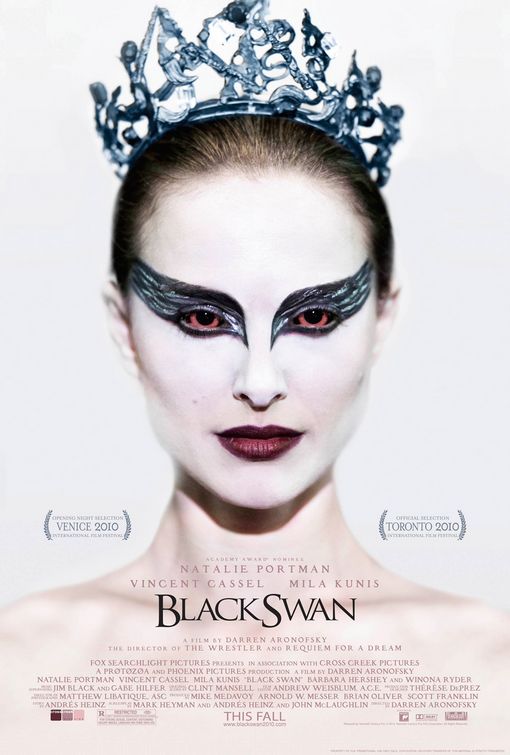
Director: Darren Aronofsky
Cast: Natalie Portman, Mila Kunis, Barbara Hershey, Vincent Cassel, Winona Ryder, Sebastian Stan, Patrick Heusinger
Running Time: 1 hour 48 minutes
Film Rating: 9 out of 10
Darren Aronofsky’s masterpiece is a taut psychological thriller about a prima ballerina who delves into her dark side, so she can perform the complex role of the Swan Queen in Tchaikovsky’s Swan Lake. Natalie Portman gives a stunning and frenzied performance as Nina Sayers. As well as the physical demands of playing the lead Ballerina in Swan Lake, Nina is trapped in a claustrophobic and co-dependent relationship with her mother, a wonderfully obsessive performance by Oscar nominee Barbara Hershey (Portrait of a Lady).
Whilst rehearsing for the final act, the ballet master a seductive and sadistic Thomas played with relish by Vincent Cassel, taunts Nina and reproaches her continually for not bringing out her dark qualities to dance the antithesis of the White Swan, the Black Swan. The fact that Nina is prone to episodes of self-mutilation smothered by her overbearing mother and is generally an exceptional sexually frustrated and fragile young woman who uses dancing to quench her repressive state, makes Black Swan a highly intoxicating psycho sexual thriller set in the bitchy and uncompromising world of ballet.

Aronofsky always has his central characters stripped away to the vicious core, from The Wrestler, where in a break-out performance by Mickey Rourke as a washed up Trailer Park, drug-addicted wrestler angling for a comeback to heroin addicts played by Jennifer Connelly and Jared Leto in Coney Island, who resort to extreme methods for their drugs, as detailed in the inventive and shockingly brutal Requiem for a Dream.

Black Swan is no exception, as Portman gives a ground breaking performance of a Ballerina rapidly losing her grip on reality, delving deeper into her own troubled and shattered psychosis to satisfy the dreams of an obsessed mother who compromised her own stage success.
Black Swan is about the rigours of Ballet training along with the mental deterioration of a young woman driven beyond the edge of sanity, surrounded by a gallery of heinous characters from an overbearing mother, a cruel ballet instructor and a tempting rival, Lily played with an unforgiving relish by Milas Kunis slyly plotting to derail Nina’s debut as the Swan Queen.
This is a classic psychological thriller, from the drab and daunting world of the dance studios, filled with giant mirrors reflecting Nina’s inner torment to the dingy apartment shared with her mother, an entire film bathed in black and white with only the occasional gashes of blood to break the diametric colour palette. Watch out for a great cameo performance by Winona Ryder as the broken ballerina Beth who declines as savagely as Nina’s star rises dramatically. Black Swan is a debut etched in blood and director Aronofsky, like in The Wrestler and Requiem for Dream shows this grueling Ballet world in its entire stripped down depravity, with obsessive dancers driven and searching for a depreciating gratification. A far cry from the graceful triumph associated with Ballet exemplified in such films as The Company and Mao’s Last Dancer.
Black Swan gets a film rating of 9 out of 10 and is recommended viewing.
Posted in Darren Aronofksy |
Tags: Barbara Hershey, Mila Kunis, Natalie Portman, Patrick Heusinger, Sebastian Stan, Vincent Cassel, Winona Ryder |
Comments Closed
83rd Academy Awards
Oscar Winners
for the 83rd Annual Academy Awards
Sunday 27th February 2011

Best Film: The King’s Speech
Best Director: Tom Hooper – The King’s Speech
Best Actor: Colin Firth – The King’s Speech

Best Actress: Natalie Portman – Black Swan

Best Supporting Actress: Melissa Leo – The Fighter
Best Supporting Actor: Christian Bale – The Fighter
Best Original Score: Trent Reznor and Atticus Ross – The Social Network
Best Adapted Screenplay: Aaron Sorkin – The Social Network
Best Original Screenplay: David Siedler – The King’s Speech
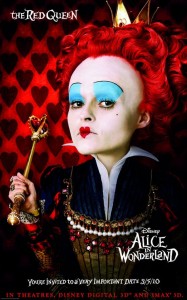
Best Art Direction: Alice in Wonderland

Best Cinematography: Wally Pfister –Inception
Best Costume Design: Colleen Atwood – Alice in Wonderland
Best Editing: Angus Wall and Kirk Baxter – The Social Network

Best Make-up: Rick Baker and Dave Elsey – The Wolfman

Best Foreign Language Film: In a Better World directed by Susanne Bier (Denmark)
Best Sound Editing: Richard King – Inception
Best Visual Effects: Paul Franklin, Chris Corbould, Andrew Lockley and Peter Bebb – Inception
*
http://en.wikipedia.org/wiki/83rd_Academy_Awards
Posted in Oscars, Tom Hooper |
Tags: Christian Bale, Colin Firth, Melissa Leo, Natalie Portman |
Comments Closed
Twisting the Superhero, Sidekick Relationship
The Green Hornet

Masked Heroes in a Sleek Ride
The Green Hornet a subversive and explosive tale of a Media Mogul’s son Britt Reid who becomes a crime fighter in contemporary Los Angeles twists the usual superhero and sidekick relationship in a script treatment by comedian Seth Rogen, who also shed 18 kilos to play the titular role.
With a pastiche of car gadgets inspired by all the James Bond films from Goldfinger to Goldeneye, Rogen’s portrayal of an anti-superhero does not quite live up to the success of Robert Downey Jnr’s Iron Man franchise, which featured a terrific plot, superb casting and the right balance of action and anticipation.
The Green Hornet is too brash, badly paced and filled with unnecessary explosions, car chases and destruction overshadowing a storyline which if the cameo appearances by stronger actors like James Franco and Tom Wilkinson had been given more screen time, allowing a counterpoint to Rogen’s obsession with his new found superhero status as The Green Hornet and his perplexing relationship with his sidekick, a Chinese martial arts motor mechanic Kato played by Jay Chao.
Whilst The Green Hornet, based on a radio series pokes fun at pop culture and the American obsession with superheroes, the media business and the increasing fascination with wealth and consumerism, the film fails to rise above its popcorn matinee status.
The international cast makes for a confusing motley crue of characters from Chinese star Jay Chou and Austrian Oscar Winner Christoph Waltz, fresh from his Nazi hunting role in Inglourious Basterds, playing the villian Bloodnofsky to Cameron Diaz who clearly portrays the anguish of an actress caught in the wrong film, with a crazy leading man.
The Green Hornet is saved by some clever dialogue by Rogen who also serves as scriptwriter but lacks the solidly plausible storyline of more impressive superhero films from Batman Begins to the Spiderman films. Then who ever said plausibility was required in any tale of a superhero?
As brilliant superhero films go, The Green Hornet dazzles with explosive action scenes but remains a rowdy, comical romp well below par of similar films in this saturated genre.

Posted in Michel Gondry |
Tags: Cameron Diaz, Christoph Waltz, Jay Chou, Seth Rogen |
Comments Closed

- SZA Slams ‘Disgusting‘ Musicians Using AI, Says Platforms Like Suno Train on the ‘Best and Brightest Black Minds of Writers and Producers’SZA took to Instagram on Saturday to slam artists using AI music generators such as Suno, alleging producer Diplo had equity in the company and was trying to train it on “the best and brightest black minds of writers and producers.” “We make up 13% of the American population yet influence the world w our […]Corbin Bolies
- Karlovy Vary Film Festival Topper Karel Och Talks About the 60th Edition Lineup and Its Cinematic Ambitions for Regional Filmmakers and BeyondAmong pop-up bars, bandstands and opulent, 19th century spa buildings painted in sherbet pastels, the Karlovy Vary Intl. Film Festival (KVIFF) takes place each year in July, at the halfway mark between Cannes and Venice. For those weirdos among us who make a chunk of our living running the gauntlet of summer festivals, the Czech […]Jessica Kiang
- Concertgoer Falls to His Death During Goose Show at Madison Square GardenA concertgoer fell to his death during a Goose concert on Saturday night at Madison Square Garden, according to CBS News. Police told the outlet that a 51-year-old man fell from MSG’s 300 level and suffered fatal injuries just before 10 p.m. Authorities found the man unconscious and unresponsive. He was later pronounced dead at […]Jack Dunn
- Aardman Teases New Pokemon Series, Upcoming Lego Short, Aardman Academy and Looks Back at 50 Years of Clay Animation at AnnecyWith more than 50 years of clay animation, Aardman unveiled a glimpse of a bright future this year at the Annecy Animation Film Festival, which opens June 21. The studio’s legendary trio, co-founders Peter Lord, David Sproxton and fellow director Nick Park, took the stage earlier today in Annecy’s main venue, the magnificent lakeside Bonlieu […]Kevin Giraud
- Netflix, A24 and Focus Pass on Luca Guadagnino’s ‘Artificial’ as Mubi Circles (EXCLUSIVE)Several of the buyers who screened Luca Guadagnino’s hotly anticipated “Artificial” in the days after Amazon MGM Studios abruptly dropped the film have passed on acquiring it, sources tell Variety. Focus Features, Warner Bros.’ Clockwork, A24 and Netflix have all stepped away, according to those sources. But the Sam Altman drama, which is nearly completed, […]Elskes
- Jessica Biel & Justin Timberlake's Pics Prove They're in 7th Heaven June 21, 2026We've got this feelin' inside our bones that Jessica Biel will do whatever it takes to ensure husband Justin Timberlake is cryin' a river of happy tears June 21. After all, the 10-time Grammy...Sarah Grossbart
- Keith Urban Sends Birthday Love to Nicole Kidman One Year After Split June 21, 2026Keith Urban is thinking of Nicole Kidman. The “You’ll Think of Me” singer gave the Babygirl star a sweet shoutout for her 59th birthday six months after the pair finalized their divorce. As Urban...Sasha Wayman
- Why Derek Hough Is Enjoying Even the S--ttiest Parts of Fatherhood June 21, 2026For Derek Hough, parenting is truly filled with s--ts and giggles. And, no, he doesn't give a you-know-what about having to deal with the messier parts of fatherhood. Take 5-month-old daughter...Sarah Grossbart
- Kate Middleton Honors Prince William in Sweet Father’s Day Tribute June 21, 2026Kate Middleton is showering Prince William with love. Indeed, the Princess of Wales shared a never-before-seen snap of her husband alongside their daughter Princess Charlotte for Father’s Day,...Sasha Wayman
- Inside Pete Davidson's Life as a New Father June 21, 2026Pete Davidson didn't always know he'd be a cast member on Saturday Night Live. But being a dad? That was a role he felt called to from an early age."When I was young and my dad passed, I remember...Elyse Dupre
- Read MoreDifferent providers offer different cell phones, so take a look at the options from each provider to choose the right one for you. You may also want to look into any promotions that the providers have to offer, such as free cell phones in exchange for signing a contract. Tags: 2gmhass90