Author Archive
Infinite Probability of Happiness
 March 9th, 2015 |
  Author:
 The Theory of Everything

Director: James Marsh
Cast: Eddie Redmayne, Felicity Jones, Charlie Cox, Emily Watson, David Thewlis, Alice Orr-Ewing
Shadow Dancer director James Marsh delivers a fine, subtle film about the early Cambridge years of the brilliant theoretical physicist Professor Stephen Hawking in The Theory of Everything so remarkably portrayed on screen by Eddie Redmayne (My Week with Marilyn, Les Miserables) that he become one of the youngest best actor Oscar winners at the age of 33.
Redmayne’s portrayal of Stephen Hawking from gangly awkward scientist in the early 1960’s, through to his courtship of the lovely Jane Wilde, beautifully portrayed by Felicity Jones (The Invisible Woman, Hysteria) to his devastating diagnosis of the life altering motor neurone disease is absolutely phenomenal. The expressive face of Eddie Redmayne, his physical contortions in portraying Hawking is beyond superb as the Professor grapples with the horrendous paradox of being intellectually gifted yet physically crippled as the motor neurone disease takes effect on his body, limiting his speech, his ability to walk and even to eat properly.
Despite this crippling diagnosis, Professor Hawking and his wife Jane, manage to produce three children so obviously his reproductive abilities weren’t affected by the disease as weren’t his mental capabilities in which he managed to expound the Big Bang Theory and then later to disprove it in his ground breaking novel, A Brief History of Time, which sold millions of copies worldwide and propelled him to international fame http://en.wikipedia.org/wiki/Stephen_Hawking.

The intellectual conflict in the film between Jane’s Church of England upbringing and Hawking’s cosmic atheism is delicately portrayed. One the most poignant moments is when Jane Hawking confides in her mother played by Emily Watson that she cannot cope with her husband’s crippling disability and having to bring up several children simultaneously. Her mother’s advice is typically English and suggests she should join the Church Choir. During Choir practice, Jane meets the able bodied and charming choral master Jonathan, played against type by Irish actor Charlie Cox, who soon befriends Jane and her famous wheelchair bound husband, Professor Hawking.
Unnaturally this seemingly impossible ménage-a-trios is not set to last as soon Hawking’s motor neuron disease takes a turn for the worst after he collapses during a Wagner concert in Bordeaux. Jane Hawking soon realizes that she is going to require a full time care giver to look after her famous yet incapacitated husband. The fact that the caregiver looks like a 1960’s Bond girl is testament to Hawking’s own flirtatious nature and soon through the aide of an American sounding computerized voice he informs Jane that him and the caregiver are flying to America together.
The mathematical probability of happiness is discovered in all its infinity as soon as Jane and Stephen find partners suitable for their own physical requirements, and this eventual separation becomes the emotional crux of The Theory of Everything, apart from the bleak physical disabilities and momentous scientific breakthroughs which has characterized a highly unconventional marriage.
Despite some directorial embellishments, James Marsh’s The Theory of Everything is a well-structured and sensitive portrayal of one of the world’s most famous Physicists who despite all the odds and being unable to speak or walk, manages to expand a theory of time which transforms all future scientific endeavour and quantitative research. Hawking’s insatiable will to survive is testament to the power of the human spirit, considering he was given two years to live at the start of his diagnosis.
At the centre of this film, based upon Jane Hawking’s memoir, Travelling to Infinity: My Life with Stephen is a story of a very challenging marriage and of a couple whose determination to overcome every physical and emotional obstacle eventually led to their separation yet ultimately finding their own individual fulfillment.
The casting of Eddie Redmayne and Felicity Jones is critical to this film’s success as they both give exceptionally meticulously and ranged performance of Stephen and Jane Hawking which is all the more admirable for portraying such venerated and surviving figures of the British academic establishment.
The Theory of Everything is brilliant cinema, and highly recommended viewing for those that enjoyed films such as My Left Foot and Julian Schnabel’s The Diving Bell and the Butterfly.
This is first rate acting at its best and has proven beyond doubt that Redmayne and Jones are truly gifted screen actors with an infinite career ahead of them. The soft focus cinematography of the entire film gives Cambridge a hallowed glow that ensures the audience gets a feeling that they too are watching a miracle, ably assisted by an exceptional musical score by Jóhann Jóhannsson.
 Posted in James Marsh |
  Tags: Alice Orr-Ewing, Charlie Cox, Christian McKay, David Thewlis, Eddie Redmayne, Emily Watson, Felicity Jones, Simon McBurney, Tom Prior |
  Comments Closed
Comic Book Moonraker
Kingsman: The Secret Service

Director: Matthew Vaughn
Cast: Taron Egerton, Colin Firth, Mark Strong, Samuel L. Jackson, Michael Caine, Jack Davenport, Sofia Boutella, Mark Hamill, Lily Travers, Edward Holcroft
X-Men First Class director Matthew Vaughn’s glossy Kingsman: The Secret Service although has some great finishing touching is certainly no diamond in the rough. Although from the outset, the film inspired by a Comic book series and despite the casting of Oscar winners Michael Caine and Colin Firth fails to successfully make fun of the spy genre and its plot falls flat in the face of some glamorous production design, Kingsman actually is not as good as the trailer makes out to be. Which is a pity.

Whilst the storyline of a youngster, Eggsy played by Taron Egerton is a sort of male version of Pygmalion as he is plucked out of trouble and brought to the finishing school for spies, The Kingsman: The Secret Service with the elegant assistance of Harry Hart wonderfully played by Colin Firth, the overall effect of the film is absurd to the point of making it nothing more than a comic book version of the Bond classic Moonraker. The eloquent Hart’s best line is manners maketh man, otherwise the plot itself is disjointed coming off as a schizophrenic spoof of the usually intriguing spy genre essentially aimed at the teenage market.
The villain is an American tech giant, Richmond Valentine bizarrely played by Samuel L. Jackson (Django Unchained) in one of his least compelling roles. Whilst the storyline follows the classic megalomaniac aiming to take over the world and cull the downtrodden, while only saving a few politically connected elite, Kingsman: The Secret Service follows the traditional spy genre but then at some point during the film subverts this venerated genre, probably the moment when bigots are attacking each in a rural church in Kentucky, making the whole storyline utterly farcical.
Given the production values and the casting of such British acting talents as Michael Caine (The Cider House Rules, The Dark Knight) as Arthur a traditional figurehead of The Secret Service and Colin Firth (The King’s Speech) as a sort of style master to the fatherless ruffian Eggsy, whose own father codenamed Lancelot met a gory end in a snow villa in Argentina, Kingsman: The Secret Service could have been so much slicker, better edited and infinitely smarter than what the finished product is.
Look out for a guest appearance by reclusive actor Mark Hamill who played Luke Skywalker in Star Wars as the mad Professor Arnold.
There are some wonderful moments when Firth takes out a gang of hoodlums in a pub aptly called the Black Prince with a very lethal umbrella, Kingsman: The Secret Service is overly long, with a plot which becomes more ludicrous as the film progresses and eventually does little justice to the original Spy thrillers the film is aiming to emulate: The Bourne Series, the iconic James Bond films and even the action TV show 24.
The action sequences are beyond credible and the first part of the film involving the training of the potential Kingsman has a sort of British upper class Hunger Games feel about it, the rest of the film could have been edited. All the great actors like Caine, Firth and even Mark Strong recently seen in The Imitation Game should stay clear of trying to star in films based on comic books and stick to more serious subject matter where at least their acting talents as actors are properly utilized.
Twenty six year old Welsh actor Taron Egerton is energetic in the role of Gary (Eggsy) Unwin, a juvenile delinquent transformed into a gentleman, yet given a more illuminating script, his true potential as an actor could have shone brighter. Recommended for viewers that enjoyed Get Smart or even some of the earlier X-Men films, but diehard spy fans should keep clear of Kingsman: The Secret Service – as its mainly poppycock!
Posted in Matthew Vaughn |
Tags: Colin Firth, Edward Holcroft, Jack Cutmore-Scott, Jack Davenport, Lily Travers, Mark Hamill, Mark Strong, Michael Caine, Samuel L. Jackson, Sofia Boutella, Sophie Cookson, Taron Egerton, Tom Prior |
Comments Closed
The Keen Reproduction of Art
Big Eyes

Director: Tim Burton
Cast: Amy Adams, Christoph Waltz, Danny Huston, Jason Schwartzman, Terence Stamp, Krysten Ritter, Jon Polito
Golden Globe winner Amy Adams (American Hustle) gives a sterling and nuanced performance as the American artist Margaret Keane in director Tim Burton’s 1960’s San Francisco set drama Big Eyes.
Whilst Margaret Keane was more commercial and was certainly not in the same vein of other celebrated female artists like Frida Kahlo or Georgia O’Keefe, her rise to fame as the painter of the Big Eyes series is certainly extraordinary and filled with intrigue. In a chauvinist society of the late 1950’s it was unheard of for a woman to leave her husband, and this is what the brave Margaret Keane does leaving upstate California for the more liberal art community of San Francisco with her young daughter Jane in tow, the true inspiration for her Big Eyes series.
In San Francisco Margaret becomes enchanted with the smooth talking Walter Keane, a budding artist but a commercial realtor by trade. Walter Keane, claiming to have spent some time in Paris, is wonderfully if slightly overplayed by Austrian actor and Oscar winner Christoph Waltz (Django Unchained, Inglourious Basterds). After a quick marriage, Walter soon recognizes the commercial potential of his wife Margaret’s art, which mainly consisted of paintings using oils and mixed media of women, children and animal with unusually big eyes.

After an initial showing of the works in a San Francisco nightclub, Walter Keane claims that he is the artist of these works and when commercial success strikes thanks to the purchasing of several painting by the heir to the Olivetti fortune, Walter Keane soon opens his own gallery, simply called the Keane Gallery where the posters of the paintings sell more than the actual art itself.
Before Andy Warhol, Keane was the pioneer of pop art and although the works weren’t particularly imaginative, there was something inspiring and commercially viable about the big eyes paintings.
However the plot twist to Burton’s film Big Eyes, is Margaret Keane’s desperate bid for freedom from her deranged husband after she discovers that Walter was not the artist he claimed to be. Margaret Keane with daughter in tow flees to Honolulu in Hawaii and then after a sort of spiritual rebirth whereby she ironically becomes a Jehovah’s Witness, she claims that she was the original artist of the Big Eyes series on Hawaii radio much to the horror of the American art world. The rest as they say is artistic legal history.
As a film about art, Big Eyes does not match up to similar films such as the brilliant Pollock, Frida or even the late Robert Altman’s film Vincent and Theo, but as a story about the crazy commercialization of art over any form of visual integrity, Big Eyes is a fascinating cinematic adventure, more so because its true.
Amy Adams is mesmerizing as the tortured and vulnerable Margaret Keane, and makes this real life story as bizarre as it really occurred, believable and informative. Watch out for priceless cameos by Jason Schwartzman (Marie Antoinette, The Grand Budapest Hotel) as a snobby art dealer, Terence Stamp (Valkyrie; Priscilla, Queen of the Desert) as senior New York Times art critic John Canaday and Danny Huston (Hitchcock, Birth) as San Francisco journalist Dan Nolan who initially befriends the charismatic yet crazy Walter Keane.
Big Eyes is recommended viewing for students of Pop Art, lovers of films about artists and for those that appreciate an informative tale of a really extraordinary woman, Margaret Keane –http://en.wikipedia.org/wiki/Margaret_Keane who despite the age she lived in eventually become famous in her own right.
Posted in Tim Burton |
Tags: Amy Adams, Christoph Waltz, Jason Schwartzman, Jon Polito, Krysten Ritter, Terence Stamp |
Comments Closed
87th Academy Awards
The 87th Academy Awards / The Oscars
Sunday 22nd February 2015
OSCAR WINNERS AT THE 87TH ANNUAL ACADEMY AWARDS

Best Picture: Birdman
Best Director: Alejandro Gonzalez Innaritu – Birdman

Best Actor: Eddie Redmayne – The Theory of Everything

Best Actress: Julianne Moore – Still Alice

Best Supporting Actor: J. K. Simmons – Whiplash

Best Supporting Actress: Patricia Arquette – Boyhood
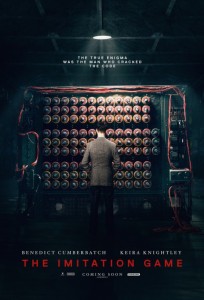
Best Adapted Screenplay: Graham Moore – The Imitation Game
Best Original Screenplay: Alejandro Gonzalez Inaritu, Nicolás Giacobone, Alexander Dinelaris and Armando Bo – Birdman

Best Foreign Language Film: Ida – (Poland) directed by Paweł Pawlikowski

Best Documentary Feature: Citizen Four

Best Animated Feature Film: Big Hero 6
Best Cinematography: Emmanuel Lubezki – Birdman
Best Film Editing: Tom Cross – Whiplash

Best Sound Editing: Alan Robert Murray and Bub Asman – American Sniper

Best Visual Effects: Paul Franklin, Andrew Lockley, Ian Hunter and Scott Fisher – Interstellar

Best Makeup and Hair: Frances Hannon and Mark Coulier – Grand Budapest Hotel
Best Original Score: Alexandre Desplat – Grand Budapest Hotel
Best Production Design: Adam Stockhausen and Anna Pinnock – Grand Budapest Hotel
Best Costume Design: Milena Canonero – Grand Budapest Hotel
Source: http://oscar.go.com/
Posted in Alejandro González Iñárritu, Oscars, Paweł Pawlikowski |
Tags: Eddie Redmayne, J. K. Simmons, Julianne Moore, Patricia Arquette |
Comments Closed
The Alpha Male Syndrome
American Sniper

Director: Clint Eastwood
Cast: Bradley Cooper, Sienna Miller, Luke Grimes, Jake McDorman, Eric Close, Kier O’ Donnell, Jonathan Groff
After Bradley Cooper’s amazing performances in two of director David O. Russell’s films Silver Linings Playbook and American Hustle, Cooper utterly transforms himself physically for the role of Chris Kyle, the most honoured sniper in the American military in director Clint Eastwood’s sparse and taut war film American Sniper.
Cooper plays the ultimate Alpha Male, who is taught to hunt as a boy by his masochistic father and is heavily influenced by the notions of God, country and family something that pervades most of the Republican ethos of Texas. Kyle’s unsuccessful career as a cowboy rodeo rider is short lived after he decides through a series of mediated Television coverages first of the 1998 bombing of the American Embassy in Dar es Salaam, Tanzania and then more crucially in the historic events of 9/11 that he must do his part in protecting America from the ever growing threat of Al-Qaeda and join the almighty US military.
Kyle joins the auspicious navy seals and through a rigorous training programme soon transforms into an Alpha male, a lean, mean fighting machine ready to protect American borders at any cost. Kyle is not interested in the politics of the situation, his unrelenting patriotism drives him to commit to the US war effort with an unflinching ferocity.
At Kyle’s wedding to the flirty yet insubstantial Taya following a bar room pickup, he is soon called up to fight in Iraq. Fallujah to be exact, which is hell on earth and symbolic of urban terror and warfare at its most bloodiest.
Kyle’s special gifts as a sniper are put to good use although controversially his targets are not always his equals in those he kills. Sometimes he is forced to pull the trigger on woman and children, a decision which haunts him profoundly on his return trips to the States, where his pregnant wife Taya is attempting to establish some form of domestic bliss.
Something which Kyle after witnessing and participating in the atrocities of a vicious war in a foreign land, finds himself difficult to reconcile with. Kyle’s shock at being back in American domestic life is akin to the World War One soldiers suffering from shell shock after attempts at reintegration have failed.
After spending four tours in Iraq at the height of the US-Led invasion of Iraq from 2003 onwards and over 1000 days in a conflict zone, any recourse to settle down is a long way off. This conflict between Kyle’s wartime experiences and his scenes with his wife and children back home, especially those between him and Taya, played by Sienna Miller, is not as convincingly portrayed as in Kathryn Bigelow’s superb war drama The Hurt Locker.
Unlike Zero Dark Thirty which delved into the complexity of the American invasion in Iraq and Afghanistan and the hunt for Osama Bin Laden, American Sniper clears politics from the cinematic palette, making it a much harsher film especially the unnerving scenes in Iraq which Kyle handles with an intensity and bravado which Cooper imbues with his complete physical transformation. In short Bradley Cooper utterly captivates the audience with his tragic and sombre performance of Chris Kyle, a quintessentially doomed American hero.
Eastwood’s direction is steady and besides the domestic scenes which are questionable due to Sienna Miller not having the emotional resonance to make Taya Kyle utterly believable, the warzone sequences are utterly riveting and Bradley Cooper’s performance as Chris Kyle lifts this films out of being just another patriotic tribute to American heroism especially considering the bizarre circumstances of Kyle’s tragic end to his life, which is underscored with irony and a profound message about America’s constant fascination with artillery and the second amendment.
American Sniper is an excellent film, highly recommended viewing for those that enjoyed The Hurt Locker and Fury and is sure to spark controversial debate especially in light of the current Geo-political tensions occurring between America and the Middle East specifically Iraq and Syria.
Posted in Clint Eastwood |
Tags: Bradley Cooper, Eric Close, Jake McDorman, Jonathan Groff, Kier O’ Donnell, Luke Grimes, Sienna Miller |
Comments Closed
72nd Golden Globe Awards
72nd Golden Globe Awards
Took place on Sunday 11th January 2015 hosted by the Hollywood Foreign Press Association
Golden Globe Winners in The Film Categories:
Best Film Drama: Boyhood

Best Film Musical or Comedy: Grand Budapest Hotel
Best Director: Richard Linklater – Boyhood
Best Actor Drama: Eddie Redmayne – Theory of Everything
Best Actress Drama: Julianne Moore – Still Alice

Best Actor Musical or Comedy: Michael Keaton – Birdman

Best Actress Musical or Comedy: Amy Adams – Big Eyes
Best Supporting Actor: J. K. Simmons – Whiplash
Best Supporting Actress: Patricia Arquette – Boyhood

Best Foreign Language Film – Leviathan (Russia)
Source: http://en.wikipedia.org/wiki/72nd_Golden_Globe_Awards
Posted in Golden Globes, Richard Linklater |
Tags: Amy Adams, Eddie Redmayne, J. K. Simmons, Julianne Moore, Michael Keaton, Patricia Arquette |
Comments Closed
71st Golden Globe Awards
71st Golden Globe Awards
Took place on Sunday 12th January 2014 hosted by the Hollywood Foreign Press Association
Golden Globe Winners in The Film Categories:

Best Film Drama – 12 Years a Slave

Best Film Musical or Comedy – American Hustle

Best Actor Drama: Matthew McConaughey – Dallas Buyers Club

Best Actress Drama: Cate Blanchett – Blue Jasmine

Best Actor Musical or Comedy: Leonardo DiCaprio – The Wolf of Wall Street

Best Actress Musical or Comedy: Amy Adams – American Hustle
Best Supporting Actor: Jared Leto – Dallas Buyers Club

Best Supporting Actress: Jennifer Lawrence – American Hustle

Best Director: Alphonso Cuaron – Gravity

Best Foreign Language Film – The Great Beauty (Italy)
Source: http://en.wikipedia.org/wiki/71st_Golden_Globe_Awards
Posted in Golden Globes |
Tags: Amy Adams, Cate Blanchett, Jared Leto, Jennifer Lawrence, Leonardo DiCaprio, Matthew McConaughey |
Comments Closed
70th Golden Globe Awards
70th Golden Globe Awards
Took place on Sunday 13th January 2013 hosted by the Hollywood Foreign Press Association
Golden Globe Winners in The Film Categories:

Best Film Drama – Argo
Best Director: Ben Affleck – Argo

Best Film Musical or Comedy – Les Miserables

Best Actor Drama: Daniel Day-Lewis – Lincoln

Best Actress Drama: Jessica Chastain – Zero Dark Thirty
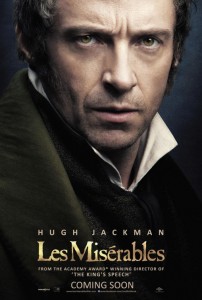
Best Actor Musical or Comedy: Hugh Jackman – Les Miserables

Best Actress Musical or Comedy: Jennifer Lawrence – Silver Linings Playbook

Best Supporting Actor: Christoph Waltz – Django Unchained

Best Supporting Actress: Anne Hathaway – Les Miserables

Best Foreign Language Film: Amour (France)
Source: http://en.wikipedia.org/wiki/70th_Golden_Globe_Awards
Posted in Ben Affleck, Golden Globes |
Tags: Anne Hathaway, Christoph Waltz, Daniel Day-Lewis, Hugh Jackman, Jennifer Lawrence, Jessica Chastain |
Comments Closed
69th Golden Globe Awards
69th Golden Globe Awards
Took place on Sunday 15th January 2012 hosted by the Hollywood Foreign Press Association
Golden Globe Winners in The Film Categories:

Best Film Drama: The Descendants

Best Film Musical or Comedy : The Artist
Best Actor Drama: George Clooney – The Descendants

Best Actress Drama: Meryl Streep – The Iron Lady
Best Actor Musical or Comedy: Jean Dujardin – The Artist

Best Actress Musical or Comedy: Michelle Williams – My Week with Marilyn
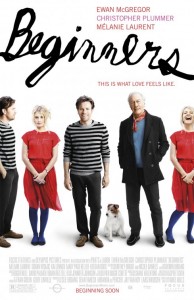
Best Supporting Actor: Christopher Plummer – Beginners

Best Supporting Actress: Octavia Spencer – The Help

Best Director: Martin Scorsese – Hugo

Best Foreign Language Film: A Separation (Iran)
Source: http://en.wikipedia.org/wiki/69th_Golden_Globe_Awards
Posted in Golden Globes, Martin Scorsese |
Tags: Christopher Plummer, George Clooney, Jean Dujardin, Meryl Streep, Michelle Williams, Octavia Spencer |
Comments Closed
2015 Berlin Film Festival
2015 Berlin International
Film Festival Winners

The 65th annual Berlin International Film Festival was held from 5th to the 15th February, 2015
The Berlin International Film Festival known as the Berlinale takes places annually in February and is regarded as one of the most prestigious film festivals in the world.
The Opening Night film was Nobody Wants the Night directed by Isabel Coixet starring Juliette Binoche, Gabriel Byrne, Rinko Kikuchi and Matt Salinger.

Winners of the five main prizes at the 2015 Berlin Film Festival were as follows: –

Golden Bear (Best Film): Taxi directed by Jafar Panahi

Silver Bear (Best Director): shared between – Radu Jude for Aferim!
&
(No Poster Available for this film)
Best Actor: Tom Courtenay – 45 Years
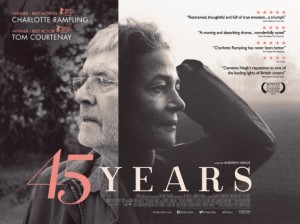
Best Actress: Charlotte Rampling – 45 Years
Silver Bear for Best Script: Patricio Guzmán for The Pearl Button

Source: http://en.wikipedia.org/wiki/65th_Berlin_International_Film_Festival
Posted in Berlin, Isabel Coixet, Jafar Panahi, Małgorzata Szumowska, Radu Jude |
Tags: Charlotte Rampling, Gabriel Byrne, Juliette Binoche, Matt Salinger, Rinko Kikuchi, Tom Courtenay |
Comments Closed

- Georgia’s Production Sector Shifts Gears Targeting Local Creators and Production InnovationInnovation drives the Georgia production sector — it’s adapting in the face of a production decline and increased competition from Europe. “Studios are really looking inward. They’re incorporating more vertical integration. They’re doing partnerships and acquisitions,” says Jezlan Moyet, president of Georgia Entertainment. “They’re making sure that not only do they have the infrastructure, but […]Carolehorst
- Summer Movie Season: 5 Burning Questions as Superheroes, ‘Star Wars’ and Spielberg Are Put to the TestNo pressure, but Hollywood has a lot riding on summer movie season. The busy stretch from May to August is crucial for the industry, representing 40% of the annual box office. But consumer tastes have been rapidly shifting since the pandemic, so this year’s slate should reveal a great deal about what audiences will (or […]Rebecca Rubin
- Laika Debuts Teaser Trailer for Travis Knight’s Handcrafted Fantasy ‘Wildwood’Laika has unveiled the teaser trailer for “Wildwood,” its upcoming stop-motion feature film directed by Travis Knight with a script written by Chris Butler. The film is set to open nationwide in theaters on Oct. 23, and marks the studio’s first film since 2019’s “Missing Link.” “Wildwood” is based on the book written by Colin […]Jazztangcay
- ‘Big Bang Theory’ Spinoff ‘Stuart Fails to Save the Universe’ Drops Apocalyptic First Teaser, Sets Official Release DateHBO Max unveiled the first teaser trailer for the “Big Bang Theory” spinoff “Stuart Fails to Save the Universe.” The teaser was released during the Warner Bros. Discovery upfront presentation to advertisers in New York on Monday. Series stars Kevin Sussman, Lauren Lapkus, Brian Posehn, and John Ross Bowie all took the stage to reveal […]Joseph Otterson
- Jason Priestley, Ken Jeong, Mae Martin, Tantoo Cardinal Named Rockie Awards Gala Honorees at This Year’s Banff World Media FestivalJason Priestley (“Beverly Hills 90210”), Ken Jeong (“Community”), Mae Martin (“Wayward”) and Tantoo Cardinal (“Killers of the Flower Moon”) have been selected as this year’s Rockie Awards Gala honorees at the Banff World Media Festival. In addition, the Banff World Media Festival has announced this year’s heavy hitters taking part in its Showrunner Super Panel, […]Varietyschneider
- Bella Thorne Returns to her Disney Roots With Red Hair Transformation May 13, 2026Bella Thorne’s new look will have you texting your friends TTYLXOX. After all, the Disney alum’s latest hair transformation is a total nod to her Shake It Up days, as she returned from her dark...
- How Katy Perry, Orlando Bloom and Miranda Kerr Successfully Co-Parent May 13, 2026When it comes to parenting their shared children, Katy Perry, Orlando Bloom and Miranda Kerr are never hot n cold. Instead, with Flynn—Bloom's 15-year-old son with former wife Kerr—and Daisy (his...
- Wheel of Fortune Reveals $70,000 Luxury Prize Donated by Jay Leno May 13, 2026One lucky person will be trading in the Wheel of Fortune for a steering wheel. That’s because Jay Leno is donating one of his beloved luxury cars to be gifted on the Wheel of Fortune. The former...
- Ashley Judd Shares She Threw a Birthday Party for Her 12-Year-Old Self May 13, 2026Ashley Judd is healing her inner child. When the Heat actress turned 58 in April, instead of celebrating with a classic birthday, she threw herself a playful celebration in honor of her younger...
- Old Navy x Disney's Summer Collab Delivers Americana Perfection May 13, 2026Hot dog! Old Navy and Disney's new collection is here, and it's serving stars, stripes and style. The latest collaboration just debuted at Old Navy, with summer-ready pieces for the whole family....
- Read MoreDifferent providers offer different cell phones, so take a look at the options from each provider to choose the right one for you. You may also want to look into any promotions that the providers have to offer, such as free cell phones in exchange for signing a contract. Tags: 2gmhass90