Author Archive
The Brutal Education of Norman
 February 16th, 2015 |
  Author:
 FURY

Director: David Ayer
Cast: Brad Pitt, Shia LaBeouf, Logan Lerma, Michael Pena, Jon Bernthal, Scott Eastwood, Jason Isaacs, Anamaria Marinca, Alicia von Rittberg
End of Watch director David Ayer tackles the war genre in the brutal drama simply entitled Fury assembling a stellar cast of great young actors including Shia LaBeouf last seen in Lars von Trier’s Nymphomaniac, Logan Lerman, Michael Pena (End of Watch, American Hustle) and Jon Bernthal and headed by the illustrious Brad Pitt (Legends of the Fall, Twelve Monkeys, Moneyball, The Counselor).
In a role similar to that played in Inglourious Basterds, Pitt plays Don “Wardaddy” Collier, a hardened soldier and Nazi killer who is heading up a tank squadron and who has seen his fair share of bloody battles. The tank in question is called Fury and as the Allies advanced into Germany during April 1945, these American tanks were combating the far superior designed German Panzers. As the brutal end of World War Two winds down, Hitler has ordered every last man, woman and child to defend their country against the advancing Allies.
Against this gritty theatre of war, the veteran Collier inherits a young and naive gunner named Norman Ellison superbly played by Logan Lerman who to his dismay went from being a typist in the US Army to manning a machine gun in an armoured tank. Its Collier’s job to toughen Norman up, even forcing him to shoot an unarmed German soldier as he brandishes pictures of his family to the American troops and desperately pleads for his life.

As the five man team who drive Fury further into the German countryside, the situation gradually deteriorates as they first enter a German town obliterated by shelling casually coming across a suicide party of Nazi officers along with a scattering of scared German villagers and then near a farmhouse in the muddy countryside where they encounter an enemy infantry division marching towards them.
This is grim viewing with lots of bloodshed, superbly choreographed action sequences and unrelenting violence, cinematically brought to life with razor sharp sound effects, giving the viewer the sense of being involved in these gruesome final battles.
As opposed to George Clooney’s Monuments Men, David Ayer’s Fury deglamourizes war to its basic instinctual premise of kill or be killed and with excellent sound editing and effects, the film stands as a perfect counterpoint to The Imitation Game which elegantly showed war as a complex game of ingenuity and skill, clouded with espionage and intrigue.
Fury goes straight to the bloody and dirty heart of war and in its tag line aptly states that no war ends quietly. This is man fighting man with all the brutal savagery one has for each other’s enemies, as the victors march through the lands of the defeated.

Fury is well acted especially by Logan Lerman (Noah) in one of his more substantial roles and definitely alludes to a talent waiting to be nurtured. The rest of the four man team adds a brave complement to Norman’s emotional and physical journey as a very young soldier who realizes he has to go to any lengths to stay alive. Fury will definitely appeal to war film enthusiasts and those viewers that enjoyed Saving Private Ryan, Lone Survivor and even the more stylized Quentin Tarantino war film Inglourious Basterds.
American director David Ayer has excelled with Fury which is highly recommended viewing aimed at a mature masculine audience that can appreciate the art of combat and the innate savagery of war itself. Fury is not for the squeamish and certainly not for those expecting a light hearted war romp like The Monuments Men.
 Posted in David Ayer |
  Tags: Alicia von Rittberg, Anamaria Marinca, Brad Pitt, Jason Isaacs, Jon Bernthal, Laurence Spellman, Logan Lerman, Michael Pena, Scott Eastwood, Shia LaBeouf, Xavier Samuel |
  Comments Closed
From Nouns to Neurons
Still Alice

Directors: Richard Glatzer and Wash Westmoreland
Cast: Julianne Moore, Alec Baldwin, Kate Bosworth, Kristen Stewart, Hunter Parrish
The hugely talented Julianne Moore (Shortcuts, The Hours, The End of the Affair, Magnolia) excels in this quiet film Still Alice about the devastating effects of early onset Alzheimer’s based upon the novel by Liza Genova.
Having already won a 2015 Golden Globe and Bafta award for her nuanced and crushing performance of Alice Howland, Julianne Moore’s acting talents are definitely confirmed as she takes on the complex role of this Columbia University professor of Linguistics who suddenly has to confront a diagnosis of early onset Alzheimer’s after she forgets her running route around campus and even her lecture notes on phonology in front of her graduate students.
Still Alice sensitively portrays what this disease can do an individual so educated and whose life has been devoted to the study and assimilation of words and language. Alice’s seminal doctoral thesis was entitled from Neurons to Nouns and now this esteemed linguistics professor has to grapple emotional and spiritually with a disease which gradually erodes her much cherished brain power to a point of complete and utter forgetfulness.
Moore’s performance is utterly entrancing as she has to deal with breaking the news to her husband John Howland wonderfully underplayed by Alec Baldwin and her grown up children, the sensible daughter Anna Howland-Jones played by Kate Bosworth (Blue Crush, Straw Dogs), her doctor son Tom played by Hunter Parrish (It’s Complicated) and her wayward and artistic youngest daughter Lydia beautifully played by Kristen Stewart (Wonderland, Snow White and the Huntsman).
It is really the scenes between Alice and Lydia that are so touching and poignant as Lydia realizes that her mother’s reasoning powers will soon simply disappear through familial Alzheimer’s disease and offers the most support. A devastating loss indeed for an accomplished woman like Alice who is only 50 years old.
Directors Richard Glatzer and Wash Westmoreland ensure that Still Alice remains Julianne Moore’s film and rest of the cast are merely supporting its star as she significantly unravels despite every effort to stop the onset of this cruel disease. In one scene Alice says, “I feel like my brain is falling out”.
Like Canadian director Sarah Polley’s nuanced film Away from Her, featuring a superb performance by Julie Christie, Still Alice features a stunning and intelligently researched portrayal of a highly educated and independent woman who suffers a cruel fate indeed. Julianne Moore is phenomenal in this film and although Still Alice can be watched on the small screen, the film remains a gem of a movie exceptionally well acted by its supporting cast and by its leading star.
Recommended viewing for those that enjoyed Away from Her, Still Alice is a nuanced and touching portrayal of a woman who slowly but surely loses her ability to remember words and pronounce them. Still Alice highlights the importance of memory, images and essential familial support when a patient, whatever their age, gets diagnosed with any form of Alzheimer’s.
Posted in Richard Glatzer, Wash Westmoreland |
Tags: Alec Baldwin, Hunter Parrish, Julianne Moore, Kate Bosworth, Kristen Stewart |
Comments Closed
Queen of the Universe
Jupiter Ascending

Director: Andy & Lana Wachovski
Cast: Mila Kunis, Channing Tatum, Eddie Redmayne, Douglas Booth, Gugu Mbatha-Raw, Sean Bean, Tuppence Middleton, Maria Doyle Kennedy, James D’Arcy, Tim Pigott-Smith
Creators of the marvellous Matrix trilogy and the super confusing reincarnation fantasy Cloud Atlas, The Wachowski’s have returned to their Sci-Fi roots in the deeply ambitious yet slightly far-fetched cinematic offering Jupiter Ascending.
Despite the fabulous visuals and assembling a cast of all the latest hot young stars for Jupiter Ascending including Mila Kunis (Black Swan), Channing Tatum (Foxcatcher) and Eddie Redmayne (Les Miserables), the narrative is so crammed with infinite details paying homage to David Lynch’s film Dune as well as Robocop, Star Wars and Signs that it suffers from the weight of its own ambition.

Jupiter Ascending focuses on a Russian immigrant to America aptly named Jupiter who is first introduced as a charlady cleaning toilets in Chicago and the next minute is being rescued from insidious almost invisible aliens by a hunky skyjacker named Caine Wise, gorgeously played by Channing Tatum who spends most of the film with his shirt off. Wise’s DNA has been spliced with that of a Wolf so he is a Lycantant.

Jupiter played by the pouty but gorgeous Mila Kunis who soon learns that her DNA is a re-occurrence of a powerful Queen who once headed up a rather enigmatic and powerful space dynasty, known as the Abrasax who destroy planets and suck the lifeblood out of their inhabitants. Charming stuff, not to mention, it is revealed as the story unfolds that humans are only reaching the eve of the genetic revolution.

The Queen of the Universe who died recently has three rather malevolent offspring the rather camp and wicked Balem, a fabulous turn by Redmayne, his sister Kalique played by Tuppence Middleton who is searching for immortality and the younger brother Titus wonderfully played by Douglas Booth who in a weird Oedipal way wants to marry the reincarnation of his mother, Jupiter Jones so that he can claim his share of the intergalactic inheritance. The wedding sequence between Titus and Jupiter is a production designer’s wet dream, gorgeous, lavish and filled with spectacle.
Naturally chemistry develops between the exotic Lycsantant, Wise and Jupiter Jones who is thrust from her mundane existence of servitude and elevated to the status of a celestial queen who has to wrangle with three devious offspring that are all out to distinguish her existence in various ways. This is like a Space Opera on acid, the visuals are fabulous, the storyline completely illogical, yet Jupiter Ascending is still riveting to watch but is not in the same league of such brilliant Sci-Fi films as Snowpiercer, Star Wars and the Ridley Scott’s classic Blade Runner.
Jupiter Ascending despite the fantastic special effects suffers the fatal premise that if you are going to introduce viewers to such a gorgeous and extra-terrestrial universe, then the heroine should not be cleaning toilets in downtown Chicago. At least in Star Wars, Princess Leia never had to deal with such lowly tasks and her plight remained infinitely more profound under the threat of Darth Vader’s Deathstar.
As a friend who saw the film with me commented so aptly, Jupiter Ascending should have been broken down into three films with more back story written into the narrative so that at least the plight of this Queen of the Universe could take on a more historic turn especially in her dealings with each of the nefarious Abrasax clan.
That said, Jupiter Ascending is fabulous to watch, but could have been edited better and more coherently written so that at least Jupiter’s circular odyssey to space and back would be plausible especially as the film started off so promisingly in Russia with her father gazing at the planet Jupiter from the banks of the Neva river in St Petersburg.

Watch out for Gugu Mbatha-Raw (Belle) with big ears as Famulus and an underutilized Sean Bean as Stinger Apini last seen in the Game of Thrones series in brief cameos and Maria Doyle Kennedy (The Tudors) as Jupiter’s mother Aleksa. Jupiter Ascending is recommended viewing only for serious sci-fi fans and those that truly want to escape earth in a steam-punk drug fueled fashion…
Posted in Andy Wachowski, Lana Wachowski |
Tags: Channing Tatum, Douglas Booth, Eddie Redmayne, Gugu Mbatha-Raw, James D'Arcy, Maria Doyle Kennedy, Mila Kunis, Sean Bean, Tim Pigott-Smith, Tuppence Middleton |
Comments Closed
68th Golden Globe Awards
68th Golden Globe Awards
Took place on Sunday 16th January 2011 hosted by the Hollywood Foreign Press Association
Golden Globe Winners in The Film Categories:

Best Film Drama – The Social Network
Best Director: David Fincher – The Social Network

Best Film Musical or Comedy: The Kids are All Right

Best Actor Drama: Colin Firth – The King’s Speech

Best Actress Drama: Natalie Portman – Black Swan

Best Actor Musical or Comedy: Paul Giametti – Barney’s Version
Best Actress Musical or Comedy: Annette Bening – The Kids are All Right

Best Supporting Actor: Christian Bale – The Fighter
Best Supporting Actress: Melissa Leo – The Fighter

Best Foreign Language Film: In a Better World (Denmark)
Source: http://en.wikipedia.org/wiki/68th_Golden_Globe_Awards
Posted in David Fincher, Golden Globes |
Tags: Annette Bening, Christian Bale, Colin Firth, Melissa Leo, Natalie Portman, Paul Giamatti |
Comments Closed
67th Golden Globe Awards
67th Golden Globe Awards
Took place on Sunday 17th January 2010 hosted by the Hollywood Foreign Press Association
Golden Globe Winners in The Film Categories:

Best Film Drama: Avatar
Best Director: James Cameron – Avatar

Best Film Musical or Comedy: The Hangover

Best Actor Drama: Jeff Bridges – Crazy Heart

Best Actress Drama: Sandra Bullock – The Blind Side

Best Actor Musical or Comedy: Robert Downey Jr. – Sherlock Holmes

Best Actress Musical or Comedy: Meryl Streep – Julie and Julia

Best Supporting Actor: Christoph Waltz – Inglourious Basterds

Best Supporting Actress: Monique – Precious

Best Foreign Language Film: The White Ribbon (Germany)
Source: http://en.wikipedia.org/wiki/67th_Golden_Globe_Awards
Posted in Golden Globes, James Cameron |
Tags: Christoph Waltz, Jeff Bridges, Meryl Streep, Monique, Robert Downey Jnr, Sandra Bullock |
Comments Closed
No Messing with Mills
Taken 3

Director: Olivier Megaton
Cast: Liam Neeson, Maggie Grace, Famke Janssen, Dougray Scott, Forest Whitaker, Sam Spruell, Don Harvey
Oscar Nominee for Schindler’s List Liam Neeson reprises his role as ex-CIA operative Bryan Mills in the third installment of the hugely successful Taken franchise. French director Olivier Megaton with a script by Luc Besson and Robert Mark Kamen, Taken 3 does not disappoint as a gritty muscular and tenacious thriller aimed for the 35 plus age group.
The first film Taken was set in Paris and the second film was set in Istanbul and now Taken 3 sees the much blighted Mills family in their home city of Los Angeles.
When Mill’s ex-wife Leonore St John played by Famke Janssen is mysteriously murdered, he is framed for the crime. Not wanting to becoming a guest of the LAPD, Miller ingeniously escapes from the police and goes on a vicious quest to find out who really killed his ex-wife and mother of his beloved daughter Kim played by Maggie Grace, who was the victim of a kidnapping in Taken and nearly sold into the sordid sex trade of Paris.
As the intricate plot of Taken 3 unfolds, it is revealed that Leonore’s relationship with her estranged and slimy husband Stuart St John played by Dougray Scott (Ripley’s Game, Mission Impossible 2) is not what it appears. St John owes large amounts of cash to the Russian mafia through some dodgy arms deals who can be particularly unforgiving when one doesn’t pay their debts.

Veteran ex-CIA agent Bryan Mills knows there is a frame up and in a terrifying and exhilarating cat and mouse game Miller is pursued by wily LAPD detective Frank Doltzer wonderfully played by Oscar winner Forest Whitaker (The Last King of Scotland) who soon realizes that Mills is no ordinary opponent. Liam Neeson has the gravitas and the tough guy image to be taken seriously as a hardened father who does not let anyone mess with his family. For there is no messing with Mills -he will find you and kill you.
Without spoiling the rest of the story, Taken 3 is a fast-paced well directed and gritty action thriller which sees Mills cause havoc on a Los Angeles freeway, at a University campus and in the penthouse of nefarious Russian mobster Oleg Malankov played by Sam Spruell (The Hurt Locker).
This is a shoot first and ask questions later film, with stunning action sequences and a fitting way to end the third installment of a gritty action trilogy.
With the razor sharp editing and unforgiving hand to hand combat sequences, the original Taken was such a surprise hit, with its trademark of unrelenting violence in a mature machismo style, it was no wonder that two more sequels were in order.
Taken 3 does not disappoint action fans and those that loved the first two films. Highly recommended viewing for those that like their action heroes older, tougher and wiser.
Posted in Olivier Megaton |
Tags: Andrew Howard, Don Harvey, Dougray Scott, Dylan Bruno, Famke Janssen, Forest Whitaker, Jonny Weston, Liam Neeson, Maggie Grace, Sam Spruell |
Comments Closed
It’s a Hard Knock Life!
Annie

Director: Will Gluck
Cast: Quvenzhané Wallis, Jamie Foxx, Rose Byrne, Bobby Cannavale, David Zayer, Cameron Diaz, Adewale Akinnuoye-Agbaje
The 21st century film version of the hit Broadway musical Annie is no match for the 1982 cinematic treatment of the musical by director John Huston. In the 2014 version, director Will Gluck has chosen to rather focus too much on making it a contemporary New York tale and less of a classy musical.
Although that does not distract from the onscreen sparkle of the lead actress Quvenzhané Wallis, who embraces the role and become famous for being one of the youngest performers to ever be nominated for an Oscar for Beasts of the Southern Wild. The updated version of Daddy Warbucks, is a cellphone billionaire Will Stacks, wonderfully and almost gleefully played by Oscar winner Jamie Foxx who embellishes the role with humour and charisma.
The supporting cast is equally good including the rising actor Bobby Cannavale as Stack’s scheming publicity driven press officer Guy and his real life wife Rose Byrne who is brilliant as Grace. The casting of the film was diverse and brilliantly done with the exception of Cameron Diaz as Miss Hannigan, whose performance was jarring and questionably overplayed.
Audiences should expect all the wonderful songs of the Broadway musical with a more edgy tunes thrown in along with every available social media innovation that has beset American urban life in the last ten years including Facebook, Twitter and Instagram woven into an increasingly frenetic social narrative.

This Annie is no down and out orphan in Depression era America, but a rising vivacious star in a 21st century post-recession America, emphasizing that the gap between the rich and the poor has widened considerably in the last eighty years.
Excluding any social commentary, the 2014 Annie is a great feel good film and director Gluck makes fill use of the Big Apple as his primary location especially the spectacular scenes at the Guggenheim Museum, the Brooklyn Bridge and stunning aerial shots of the New York skyline.
If audiences are expecting a polished and flawless musical such as Into The Woods, then Annie is not for them. Will Gluck’s Annie is a much thinner, at times disjointed and very light hearted version which comes off slightly messier as the rags to riches storyline gets updated from its original 1930’s period setting to appeal to a the millennial generation.
Whilst the effort can be applauded and the production design including Stacks’s smart internet connected New York penthouse is a must-see, this Annie remains a tamer version of the 1982 classic film. Definitely suitable for children and those that want to avoid a hard knock life!
Posted in Will Gluck |
Tags: Adewale Akinnuoye-Agbaje, Bobby Cannavale, Cameron Diaz, David Zayas, Jamie Foxx, Quvenzhané Wallis, Rose Byrne |
Comments Closed
66th Golden Globe Awards
66th Golden Globe Awards
Took place on Sunday 11th January 2009 hosted by the Hollywood Foreign Press Association
Golden Globe Winners in The Film Categories:

Best Film Drama: Slumdog Millionaire
Best Director: Danny Boyle – Slumdog Millionaire
 Best Film Musical or Comedy: Vicky Christina Barcelona

Best Actor Drama: Mickey Rourke – The Wrestler

Best Actress Drama: Kate Winslet – Revolutionary Road
 Best Actor Musical or Comedy: Colin Farrell – In Bruges

Best Actress Musical or Comedy: Sally Hawkins – Happy Go Lucky

Best Supporting Actor: Heath Ledger – The Dark Knight

Best Supporting Actress: Kate Winslet – The Reader

Best Foreign Language Film: Waltz with Bashir (Israel)
Posted in Danny Boyle, Golden Globes |
Tags: Colin Farrell, Heath Ledger, Kate Winslet, Mickey Rourke, Sally Hawkins |
Comments Closed
29 Million Variations
The Imitation Game

Director: Morten Tyldum
Cast: Benedict Cumberbatch, Keira Knightley, Matthew Goode, Charles Dance, Rory Kinnear, Alan Leech, Tom Goodman-Hill, Matthew Beard, James Northcote, Steven Waddington
Based upon the 1983 book by Andrew Hodges, Alan Turing: The Enigma and brilliantly adapted into an insightful screenplay by Graham Moore, The Imitation Game is a superb and evocative historical drama about the breaking of the enigma code at Bletchley Park during World War II.
Norwegian director Morten Tyldum elegantly weaves a very touching and tragic story of espionage, cryptography and sexuality extracting nuanced performances out of Benedict Cumberbatch as Turing and Keira Knightley as Joan Clarke, an odd couple who make up the mysterious collective which work on and break the seemingly impossible Nazi enigma code at the height of World War II. Using real war footage and blending in a fascinating portrayal of the mathematician Alan Turing whose genius has only recently been acknowledged.

Set between the years of 1928 and 1951, The Imitation Game paints a moving portrait of a very complicated man, whose brilliance was only threatened by the inherent violence of war which engulfed England during the 1940’s as well as the prejudice which followed regarding his latent homosexuality in the early 1950’s.
Cambridge mathematician graduate whose thesis was entitled the Imitation Game, Alan Turing was socially awkward, shy, bullied at an English prep school but the perfect sort of individual who had the foresight and intelligence to develop a machine which cracked the seemingly unbreakable enigma code, a daily Nazi signal which gave countless GPS co-ordinates of where they would be bombing next during World War II with a minimum of 29 million variations.
Naturally groomed by the newly formed MI6 by Stewart Menzies wonderfully played by Mark Strong, Turing is recognized for his potential and yet later vilified for his own sexuality in a moving portrait of one the 20th century’s biggest injustices, his charge and subsequent punishment of chemical castration for being homosexual in 1952, when it was still criminalized in Great Britain.
This was despite the fact that Turing’s mathematical brilliance was the reason that the complicated machine which he called Christopher named after a schoolboy crush, manages to decipher this seemingly unbreakable code able to break the Nazi code and prevent World War II from continuing beyond 1945.
Historically there were lots of other reasons the War ended when it did, but The Imitation Game focuses on the people behind the scenes, the cryptanalysts and code-breaking who elusively assisted those fighting on the front line.
Widely regarded as the founding father of theoretical computer science Alan Turing’s life story http://en.wikipedia.org/wiki/Alan_Turing has only recently gained prominence following a Royal pardon and a highly publicized internet campaign to clear Turing’s name and bestow upon him the recognition he never received in his own lifetime.

With a suitably moving musical score by Alexandre Desplat, The Imitation Game is a poignant and superb historical drama of Turing and his band of men and one woman, Joan Clarke, featuring one of the best performances by Knightley (Atonement, Anna Karenina) in a race against time to save the world from tyranny. Turing’s genius as a mathematician came at a price, his apparent lack of emotional empathy yet despite the enormity of his task, he remained ironically detached from the brutal war which engulfed Europe and the world around him.
The Imitation Game is an intelligent historical drama, with universal themes of injustice and perseverance despite the prejudice and the odds against infuriating bureaucracy and time itself. Highly recommended for those viewers that enjoyed Atonement and Another Country.
Posted in Morten Tyldum |
Tags: Alan Leech, Benedict Cumberbatch, Charles Dance, James Northcote, Keira Knightley, Mark Strong, Matthew Beard, Matthew Goode, Rory Kinnear, Steven Waddington, Tom Goodman-Hill |
Comments Closed
65th Golden Globe Awards
65th Golden Globe Awards
The 65th Golden Globe Awards, honoring the best in film and television of 2007, were scheduled to be presented by the Hollywood Foreign Press Association on January 13, 2008. However, due to the Writers Guild of America strike, the traditional awards ceremony did not take place;[1] instead, the winners were announced at a news conference at 6:00 pm PST on that day (02:00 January 14 UTC).
Golden Globe Winners in The Film Categories:

Best Film Drama: Atonement

Best Film Musical or Comedy: Sweeney Todd, the Demon Barber of Fleet Street
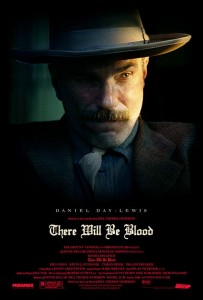
Best Actor Drama: Daniel Day-Lewis – There will be Blood
Best Actor Musical or Comedy: Johnny Depp – Sweeney Todd, the Demon Barber of Fleet Street

Best Actress Musical or Comedy: Marion Cotillard – La Vie en Rose

Best Actress Drama: Julie Christie – Away from Her

Best Supporting Actor: Javier Bardem – No Country for Old Men

Best Supporting Actress : Cate Blanchett – I’m Not There

Best Director: Julian Schnabel – The Diving Bell and the Butterfly
Best Foreign Language Film – The Diving Bell and the Butterfly (France, USA)
Source: http://en.wikipedia.org/wiki/65th_Golden_Globe_Awards
Posted in Golden Globes, Julian Schnabel |
Tags: Cate Blanchett, Daniel Day-Lewis, Javier Bardem, Johnny Depp, Julie Christie, Marion Cotillard |
Comments Closed

- Georgia’s Production Sector Shifts Gears Targeting Local Creators and Production InnovationInnovation drives the Georgia production sector — it’s adapting in the face of a production decline and increased competition from Europe. “Studios are really looking inward. They’re incorporating more vertical integration. They’re doing partnerships and acquisitions,” says Jezlan Moyet, president of Georgia Entertainment. “They’re making sure that not only do they have the infrastructure, but […]Carolehorst
- Summer Movie Season: 5 Burning Questions as Superheroes, ‘Star Wars’ and Spielberg Are Put to the TestNo pressure, but Hollywood has a lot riding on summer movie season. The busy stretch from May to August is crucial for the industry, representing 40% of the annual box office. But consumer tastes have been rapidly shifting since the pandemic, so this year’s slate should reveal a great deal about what audiences will (or […]Rebecca Rubin
- Laika Debuts Teaser Trailer for Travis Knight’s Handcrafted Fantasy ‘Wildwood’Laika has unveiled the teaser trailer for “Wildwood,” its upcoming stop-motion feature film directed by Travis Knight with a script written by Chris Butler. The film is set to open nationwide in theaters on Oct. 23, and marks the studio’s first film since 2019’s “Missing Link.” “Wildwood” is based on the book written by Colin […]Jazztangcay
- ‘Big Bang Theory’ Spinoff ‘Stuart Fails to Save the Universe’ Drops Apocalyptic First Teaser, Sets Official Release DateHBO Max unveiled the first teaser trailer for the “Big Bang Theory” spinoff “Stuart Fails to Save the Universe.” The teaser was released during the Warner Bros. Discovery upfront presentation to advertisers in New York on Monday. Series stars Kevin Sussman, Lauren Lapkus, Brian Posehn, and John Ross Bowie all took the stage to reveal […]Joseph Otterson
- Jason Priestley, Ken Jeong, Mae Martin, Tantoo Cardinal Named Rockie Awards Gala Honorees at This Year’s Banff World Media FestivalJason Priestley (“Beverly Hills 90210”), Ken Jeong (“Community”), Mae Martin (“Wayward”) and Tantoo Cardinal (“Killers of the Flower Moon”) have been selected as this year’s Rockie Awards Gala honorees at the Banff World Media Festival. In addition, the Banff World Media Festival has announced this year’s heavy hitters taking part in its Showrunner Super Panel, […]Varietyschneider
- Bella Thorne Returns to her Disney Roots With Red Hair Transformation May 13, 2026Bella Thorne’s new look will have you texting your friends TTYLXOX. After all, the Disney alum’s latest hair transformation is a total nod to her Shake It Up days, as she returned from her dark...
- How Katy Perry, Orlando Bloom and Miranda Kerr Successfully Co-Parent May 13, 2026When it comes to parenting their shared children, Katy Perry, Orlando Bloom and Miranda Kerr are never hot n cold. Instead, with Flynn—Bloom's 15-year-old son with former wife Kerr—and Daisy (his...
- Wheel of Fortune Reveals $70,000 Luxury Prize Donated by Jay Leno May 13, 2026One lucky person will be trading in the Wheel of Fortune for a steering wheel. That’s because Jay Leno is donating one of his beloved luxury cars to be gifted on the Wheel of Fortune. The former...
- Ashley Judd Shares She Threw a Birthday Party for Her 12-Year-Old Self May 13, 2026Ashley Judd is healing her inner child. When the Heat actress turned 58 in April, instead of celebrating with a classic birthday, she threw herself a playful celebration in honor of her younger...
- Old Navy x Disney's Summer Collab Delivers Americana Perfection May 13, 2026Hot dog! Old Navy and Disney's new collection is here, and it's serving stars, stripes and style. The latest collaboration just debuted at Old Navy, with summer-ready pieces for the whole family....
- Read MoreDifferent providers offer different cell phones, so take a look at the options from each provider to choose the right one for you. You may also want to look into any promotions that the providers have to offer, such as free cell phones in exchange for signing a contract. Tags: 2gmhass90