Author Archive
Eat, Pray, Love and Indulge…
 October 10th, 2010 |
  Author:
 Eat Pray Love
Successful TV series Glee director Ryan Murphy’s big screen adaptation of the Elizabeth Gilbert bestseller Eat Pray Love staring Julia Roberts as a New York writer who decides to embark on a years journey of spiritual discovery is infused with a luminous glow from the opening scene in luscious Bali.

No such thing as a guilty pleasure – just indulge!
Whilst any self-discovery novel is difficult to bring to the big screen especially as Elizabeth Gilbert writes about her own experience on a years trip to Italy, then India and finally Indonesia, Julia Roberts delivers a fine performance as Liz relishing in the exotic locations and a wonderful supporting cast which seems to improve as the 2 and a half hour film progresses.
Eat
The Italy section is superb and the locations especially Rome, the Italian actors and naturally the food are sumptuous and particularly easy on the viewer making the Eat section utterly enchanting.
Pray
Whilst Murphy tried to imitate the opening sequence of Slumdog Millionaire in the India section, the most moving part of the film is a standout character performance by Richard Jenkins as Richard from Texas.
For in the novel, Eat Pray Love, Richard from Texas was a character written with such accuracy and obvious charm that I kept wondering which actor would fill that part. Jenkins does a superb interpretation of a middle-aged American who has literally lost everything landing up at the Ashram to clear his mind and an overwhelming sense of guilt.
Love
The final section of Eat Pray Love, set in Bali was fascinating but after Italy and India, felt a tad faded although the scenery is still ravishing. As far as adaptation goes, the film sticks very close to the novel and Julia Roberts does a hugely impressive task of managing a character that has travelled not only literally across the globe, but also spiritually from a discontented New Yorker escaping an ugly divorce to a woman who has found serenity and peace as she discovers love again in a most unlikely man. Javier Bardem whilst always gripping to watch, gave the impression he was not quite comfortable in such a largely commercial film as Eat Pray Love. Bardem is more at home in edgier roles playing the Spanish seducer in Vicky Cristina Barcelona or the psychopathic killer in No Country for Old Men or the gay Cuban poet in Julian Schnabel’s Before Night Falls.

Bardem’s role as Felipe the love interest for Liz in the Love act of the journey lacked edge and panache in a role that was as unclear in the novel as it appeared in the film. Although watching Roberts and Bardem together was certainly interesting more for the lack of sparkle than the effort the two actors put in to contrive to make their romance believable.
Best scenes in the film are most certainly in Rome (all the sequences are exquisite) and the delightful meals Roberts character is served puts Babette’s Feast to shame. Worst scene in the film was the ending, but I’ll leave that up to the viewer to decide. Most consistency in Eat Pray Love was the varied choice of actors who played alongside Julia Roberts as her character travels the world, from Billy Crudup to the shamefully underutilized James Franco to Richard Jenkins and finally to Javier Bardem.
As for it being a woman’s movie, not really as regardless of one’s gender anyone who has ever desired to travel or more importantly decided to take a year off from the monotony of urban living and responsibility and see countless exotic locations could surely identify with Liz’s journey. Eat Pray Love should feature at the Awards season if not for Julia Roberts most certainly for a supporting actor nomination for Richard Jenkins. Whilst it is no Razor’s Edge, Eat Pray Love will find many ardent fans the world over.
 Posted in Ryan Murphy |
  Tags: Billy Crudup, James Franco, Javier Bardem, Julia Roberts, Richard Jenkins, Ryan O’Nan, Viola Davis |
  Comments Closed
Eternal Portrait of Vanity and Decay
Oscar Wilde’s novella The Picture of Dorian Gray published in the summer of 1890 marked the age of aestheticism in the declining years of Victorian England. Wilde at the time of publication wrote `To become a work of art is the object of living’.
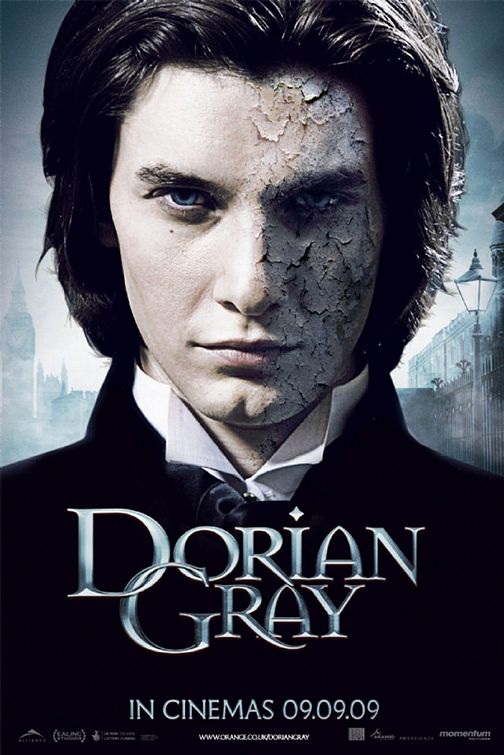
A Decaying Image but an Eternal work of Art
In Dorian Gray, the 2009 film version, Gray a wealthy aristocrat sells his soul to the Devil in exchange for eternal youth. As the young Dorian drifts languidly into a world of debauchery, opium dens, orgies and uncompromising excess, the portrait first painted of him as a beautiful young lord soon reflects the ugliness of Dorian’s actions whilst the character retains his flawless beauty. There is an almost vampire quality to Dorian’s sordid adventures as he slowly but surely delves deeper into the darker spheres of human action from seduction, temptation and ultimately to murder, manipulating all those around him with the exception of his primary influencer Lord Henry Wotton, a brilliant performance by Colin Firth who shines in this part.
Ben Barnes who shot to fame in Prince Caspian and the 2009 film adaptation of Noel Cowards play Easy Virtue, struggles with a character as complex and compelling as Dorian Gray. Barnes portrayal whilst beautiful is bordering on flaccid and his inability to capture the fall from innocence of Dorian Gray is only illuminated by the razor sharp supporting performances of Firth and the remarkably brilliant Rebecca Hall of Vicky Christina Barcelona fame, illustrating that as an actor, Barnes is beautiful to look at but does not have the requisite skill and theatrical maturity to master a complex character like Dorian Gray.
Whilst Oliver Parker’s Victorian Gothic version of Dorian Gray is fascinating and at times horrific to watch, it falls short as a brilliant work of cinema simply because there has never been a successful screen adaptation of Oscar Wilde’s The Picture of Dorian Gray as the novella is as much about literary symbolism, an ironic portrayal of aestheticism as a means in itself, as it is about decrepitude and vicious narcissistic menace, even resulting in seducing the artist Basil Hallward who paints Dorian’s portrait, a wonderfully brief but vivid performance by Ben Chaplin. Jude Law who starred as the vain and spoilt Lord Alfred Douglas in the film version of Oscar Wilde’s later life, Wilde opposite a fantastic Stephen Fry in the title role, would have been a more suitable Dorian Gray as his skill as an actor would have captured the weaknesses of a character entirely devoted to his own vanity and basking in the fascination that youth, wealth and beauty can cast on an infinitely corruptible society.

Oscar Wilde – either the wallpaper or myself have to go!
Think of Jude Law’s Oscar nominated performance in Anthony Minghella’s The Talented Mr Ripley. Law would have been perfect in Dorian Gray.
For literary enthusiasts Dorian Gray is a film worth watching as a point of discussion on how life imitates art and eventually as with all lovers of aestheticism, art survives above life for art’s sake, far out living those corpses decaying in a murky grave. Images outlive the subject and the portrait however beautiful will remain eternal. For vanity and debauchery, as the Duke of Rochester so magnificently portrayed by Johnny Depp in The Libertine shows, those that yield to an abundance of temptation ultimately perish by the pursuit of their own desires.
As for what Oscar Wilde would comment on a 21st century Dorian Gray, words far exceed those merits of a celluloid image.
Posted in Oliver Parker |
Tags: Ben Barnes, Ben Chaplin, Caroline Goodall, Colin Firth, Emilia Fox, Fiona Shaw, Maryam d'Abo, Rebecca Hall |
Comments Closed
Coast to Coast
Going the Distance
Drew Barrymore and Justin Long’s romantic comedy Going the Distance while examining the pressures and joys of 21st century relationships fails to deliver on a solid front with the film undecided about whether the narrative is a comedy or a serious romantic drama. Highlights of the film include great visuals of New York and San Francisco and an awesome soundtrack coupled with some hilarious moments especially the dining room scene, the central premise of the film takes slightly too long to arrive at any serious conclusion.

Meeting halfway – would be the stopover in Jefferson?
Going the Distance is more about the arc of a relationship than the geographic separation that two people feel as they attempt to keep a relationship together across two coasts and timezones. Great Sunday afternoon viewing but Barrymore has done far better films and is immensely more talented than she makes out in this film… Grey Gardens proves that! This film is a coast to coaster but no smooth operator!
Posted in Nanette Burstein |
Tags: Charlie Day, Christina Applegate, Drew Barrymore, Jason Sudeikis, Justin Long, Oliver Jackson-Cohen, Ron Livingston |
Comments Closed
Only by Day, can the Graveyard be Seen
Reservation Road
Reservation Road is a profoundly tragic human drama about how the lives of two families are affected by a fatal hit and run accident one dark night on Reservation Road, in suburban Connecticut. Terry George best known for the harrowingly brilliant film Hotel Rwanda, brings this engrossing film version of the novel by John Burnham Schwartz to the big screen with a subtlety and sensitivity remininscent in all its despair of similar films like The House of Sand and Fog and The Ice Storm.

Colliding worlds with tragic consequences
With such talented actors at his disposal, including Academy Award winner Jennifer Connelly and nominee Joaquin Phoenix, who both prove their endless range and depth of emotion and a welcome change for actor Mark Ruffalo playing the hapless lawyer who causes the accident, proceeding to pathetically endure the guilt and torment of someone that has committed an irreversible crime. Phoenix takes on the opposite male role of Media Professor Ethan Learner who desperately battles to make sense of an awesome loss, and invariably realizes that in any hit and run accident justice is never fair.

What makes Reservation Road so engaging and exceptionally sad as was the case in Jennifer Connelly’s earlier film House of Sand and Fog, was that it is the children who suffer the most. This film relies on the human emotions of loss, grief, guilt and a longed for revenge, while highlighting the difficulty of how ordinary citizens come to terms with an unexpected and tragic encounter that will irreparably change their lives forever. The eternity of Reservation Road, makes the film more compelling, for accidents can happen anywhere in the world. While even the most idyllic of places can be fraught with human suffering, sometimes its better concealed behind beautiful homes and garages in tranquil suburban Connecticut, than in other more volatile regions as illustrated in war-torn Rwanda, suffering just as universal, especially when children become the victims.
Reservation Road might appear to be another tear-inducing cinematic experience, the film also skillfully delves into the significance of loss and revenge in our contemporary worlds with a suspense so naturally frightening, where we so often seek comfort in all things technological, while grappling to deal with death and the subsequent grief it inflicts. Terry George and author Schwartz worked on the subtle script combined with some great performances especially by Connelly and Phoenix, making this film worthwhile. See it and don’t be afraid to shed a tear.
Posted in Terry George |
Tags: Jennifer Connelly, Joaquin Phoenix, Mark Ruffalo, Mira Sorvino |
Comments Closed
The Savy Super Anti-Hero
Iron Man
The superbly versatile character actor, Robert Downey Jnr has made a big screen comeback in the summer blockbuster Marvel comics’ film adaptation of Iron Man bringing a fresh twist on the superhero role. In recent years, we have seen numerous film trilogies about super heroes, from the X-Men to Spiderman become box office successes.

Downey returns to form with a Money Spinner
Iron Man opens promisingly with Downey Jnr playing Tony Stark a weapons manufacturer on a visit to Afghanistan. He is chatting boisterously with American soldiers in the back of an armoured vehicle, while sipping on a fine whisky, a decadent contrast to the passing landscape of the bleak Afghan province of Kunar. Stark poses for photographs and does not to take life seriously even though he is responsible for inheriting an empire that builds weapons of apparently mass destruction. Portrayed as somewhat of a playboy, as seen in flashbacks whereby Stark goes from gambling at Caesars Palace, Las Vegas while missing his own awards ceremony to seducing a blonde reporter at his immense Malibu mansion. All the while, drinks in hand, he casually races to his private Californian airstrip to board a luxury jet en route to Afghanistan, where he is due to present the latest product from Stark industries, Jericho, a rocket launcher with magnificent destructive capacities.
The self-indulgent Tony Stark is soon captured by a militant group of rebels, living in the Afghan mountains, certainly suggestive of the Taliban. There he is forced to build another weapon for this guerilla group, but aided by a mysterious fellow prisoner, he builds an iron suit, which is powered by a flashy blue battery that keeps shrapnel from entering his heart. The film follows similar superhero plots whereby the hero returns to his native California after annihilating his captives and finds that his very newly acquired powers are being undermined by those closest to him.
Besides the inconsistencies in storyline, evident of a group of screenwriters marrying diverging plot points, Iron Man follows most superhero storylines, from Spiderman to the more recent Ghost Rider, always ultimately rescuing the female lead, in this case, Stark’s efficient assistant Pepper Pots played with a surprising subtlety by Gwyneth Paltrow. What was so attractive in this film was this standard plot being treated with a subverted and ironically mature undertone, given that the hero is a middle-aged millionaire who draws on his own emotional vulnerabilities to eventually fuel his physical transformation from careless warmonger to conscientious saviour. Iron Man, the super hero, almost is an anti-hero, defeating the villain and saving the distressed damsel, while still retaining his own personal insecurities.
Thus, Downey’s performance fits perfectly with this subversion of a traditional superhero, as he smirks and delights in a clearly comic role, with significantly relevant undertones; especially enhanced by the fact that Iron Man doesn’t actually possess any supernatural powers, his ironclad flying suit is entirely his own creation.
Posted in Jon Favreau, Marvel Cinema Universe |
Tags: Clark Gregg, Gwyneth Paltrow, Jeff Bridges, Jon Favreau, Leslie Bibb, Robert Downey Jnr, Terrence Howard |
Comments Closed
Mata Hari Jolie Style
Salt

Salt is a fast paced action thriller which is intriguing and admirable for the wonderful casting of Angelina Jolie as the title character and Liev Schrieber so refreshing in this female version Mission Impossible style thriller set in Washington DC and New York, shot with the same vigour and energy as the Bourne trilogy less the exotic locations.
Australian Director Philip Noyce whose impressive credits include the brilliant Rabbit Proof Fence and The Quiet American directs Salt with panache and a strong control of the pace, plot and environment of shady double agents and counter-intelligence. Noyce has worked with Jolie before on the serial killer thriller The Bone Collector back in 1999, so he returns to familiar territory with the new thriller Salt set in the murky world of US counter-espionage with a superb supporting cast including Liev Schrieber and the hugely underrated Chiwetel Ejiofor of the famed Stephen Frears film, Dirty Pretty Things and Ridley Scott’s American Gangster.
Salt is a combination of the Boys from Brazil and In the Line of Fire with a fast-moving plot and fantastic action sequences reminiscent of Angelina Jolie’s earlier roles in Tomb Raider, Wanted and Mr and Mrs Smith. Salt is a riveting thriller and worth the twist in the tale.
Posted in Philip Noyce |
Tags: Angelina Jolie, August Diehl, Chiwetel Ejiofor, Corey Stoll, Liev Schreiber |
Comments Closed
Anarchy Reigns Supreme
The Dark Knight

Christopher Nolan follows up his 2005 film Batman Begins with a darker, more sinister and entirely gripping sequel, The Dark Knight. At the end of Batman Begins the Gotham City police chief James Gordon played with great subtlety by Gary Oldman hands Bruce Wayne a calling card for the a new breed of criminal. Wayne, or his alter ego Batman flips over the card and all we see is The Joker, a suggestion that a sequel is definitely in the pipeline. With Christian Bale, Michael Caine and Gary Oldman reprising their roles, who was to be cast as the ultimate villain? The role of the Joker, first made famous by a more jovial and naughty Jack Nicholson in Tim Burton’s Batman in the late 1980’s was reinvented with a more anarchistic alacrity by the hugely talented Heath Ledger, fresh from his Oscar-nominated role in Ang Lee’s Brokeback Mountain.
So with the casting of the film pretty much sorted only with the slight change of Maggie Gyllenhaal taking on the role of female lead character Rachel Dawes, played in Batman Begins by the pre-Tom Cruise wedded Katie Holmes, all seemed clear sailing. In January 2008 tragedy struck with the unexpected and premature death of Heath Ledger, The Dark Knight’s main draw card, and an eerie and tragic shadow was cast over the release of the film, for it was to become Heath Ledger’s last completed movie and more significantly his final and most intense cinematic impression ever. So when The Dark Knight was released in July simultaneously in cinemas around the globe, the hype was not only about the best sequel ever, it was largely attributed to Ledger’s brilliant and overtly sinister portrayal of Batman’s arch nemesis, The Joker. Ledger deservedly won the Oscar post-humously for Best Supporting Actor for this film, the second actor in cinema history since Peter Finch won for Network.
So naturally, like any avid cineaste, I couldn’t wait to see the final movie. Having followed Christopher Nolan’s previous works from the bizarre Memento to the excellent 2006 film The Prestige

Magic is an illusion and ambition a killer
I knew that The Dark Knight would be in exceptionally talented hands. The Dark Knight, like the trailer suggests, will literally blow any audience viewer away or transfix them to their seat with visuals and cutting edge sound so spectacular it’s hard to realize that two and a half hours have passed. A high-octane and visually spectacular movie with one great action sequence followed by another, punctuated by superb performances not only by Ledger as the Joker, but by Christian Bale, Maggie Gyllenhaal and Aaron Eckhart who takes on the wonderfully ambiguous part of District Attorney Harvey Dent. Gotham is a simulacrum of any large American metropolis, a sinister and shadowy mix of New York, Chicago and Los Angeles, where corporate greed fits like a glove with psychotic criminals, ruthless mobsters and a city whose citizens have clearly lost their souls.
For this Joker, a spine-chillingly brilliant and maniacal performance by Heath Ledger, does not have a goal just as long as he is content with wreaking mass destruction, he is purely doing it so anarchy can reign supreme. Prisoners are not an option and nothing is spared as violent and malignant retribution for all the evil that was inflicted on him as a character. The Joker simply is a delusional psychopath with no particular empathy for any moral order or social consequence, let alone a superior and well-meaning hero like Batman, the once brave and fabulously wealthy Bruce Wayne. The Dark Knight is undeniably the best film in ages, for everything is of vastly superior quality from the superb action sequences, senseless and conniving villains, to the exhilarating aerial shots of Gotham and Hong Kong, combined with the elegance of the ultra wealthy urbanized set contrasted by the violent and devious criminals which seek to undermine all that was once sacred. The technical aspects of the film are brilliant from the sound editing, to the slick pace, insures that at two and a half hours, one is never bored, one is shocked into a state of frenzied captivation, entranced by a film so expansive and devouring, refined and slick, scary and ultimately very intense. Don’t miss this spectacular sequel on the big screen, it is entirely beyond anything one can even comprehend. As for the late Heath Ledger, one really wonders who is having the last laugh.
The Joker?

Ledgers Iconic final performance
Posted in Christopher Nolan |
Tags: Aaron Eckhart, Christian Bale, Cillian Murphy, David Dastmalchian, Eric Roberts, Gary Oldman, Heath Ledger, Maggie Gyllenhaal, Michael Caine, Morgan Freeman, Nestor Carbonell, William Fichtner |
Comments Closed
Where Dreams merge with Reality
INCEPTION
Often when you awaken from a dream, there is that split second where you are not sure if you are still dreaming or you have in fact come back to reality. Inception explores that split second and makes an ambitious two hour feature out of that very sense of disorientation.
Christopher Nolan’sdreamworld vision amplified in Inception is an impressive film by the sheer scale of invention, the pace of the action and the intricacy of the plot leaving many a viewer to ponder diverse interpretations. Isn’t that what our dreams are about? Open to diverse interpretations?

Where dreams are shifting landscapes
After the huge success of The Dark Knight featuring the legendary performance by Heath Ledger, Nolan had to follow up that film with an equally brilliant achievement. With a dream cast including a bunch of Oscar nominated actors from Leonardo di Caprio, to Ellen Page from Juno, to Oscar winner Marion Cotillard from La Vie en Rose supported by Michael Caine, the hugely-underrated Joseph Gorden-Levitt to Ken Watanabe, Inception follows a layered structured narrative with simultaneous action sequences occurring weaving in the notion of merging reality with dreams and how the dreamscape can shift unexpectedly. Christopher Nolan debut on the international cinema scene almost 10 years ago with the brilliant 2001 film Memento

Murder can be a series of images
whose central character has to shift through amnesia to discover whether he committed a murder to the more recent The Prestige followed by the phenomenal success of Batman Begins and The Dark Knight. Nolan inhabits the darker recesses of the human psyche and brings a unique quality to every film he creates.
As for his trademarks as a director, watch out for breathtaking shots of Tokyo and Mombasa and taut sequences with explosions and multiple action sequences in Inception. Now that Nolan commands the respect of Hollywood his budgets are bigger and his vision is uncompromising, he is mainstream filmmaker with a twist, coaxing superb performances out of his lead characters from Heath Ledgers unforgettably dark portrayal of the Joker in The Dark Knight to Christian Bale’s tortured magician in Victorian England in The Prestige. Here in Inception, Marion Cotillard shines as Mal, Cobb’s long last wife along with Leonardo di Caprio as the central character Cobb using dreams to reconstruct a voyage into his guilt-ridden past.
Inception is a film that will torment the viewer in its post-structural form and psychological interpretations are rampant, demonstrating that Nolan is influenced by some mind-altering science fiction classics like Blade Runner and Solaris, as dreams merge with reality. For the dreamscape is emotional and projections are purely there to torment the dreamer or guide them to the inner depths of an already fragmented subconscious, forcing the characters into deeper levels of their own imagination and ultimately grasping for a reality which is inconceivable. Freud would have had a field day with Inception, as dreams, memories, aging and time is altered beyond recognition into a gripping post-linear filmic structure. Like The Dark Knight, the sound editing on Inception is brilliant and is definitely worth viewing in a large surround sound theatre especially to feel and witness the enormity of the directors vision, pace and peculiarities. In The Dark Knight anarchy reigned supreme, whereas in Inception dreams merge into reality and the spinning top remains symbolic.
Posted in Christopher Nolan |
Tags: Cillian Murphy, Elliot Page, Joseph Gordon-Levitt, Ken Watanabe, Leonardo DiCaprio, Lukas Haas, Marion Cotillard, Michael Caine, Tom Berenger, Tom Hardy |
Comments Closed
Natural Selection and the Origin of Species
Creation
Jon Amiel’s film Creation is a thought-provoking and beautifully crafted story about Charles Darwin who went up against Victorian religious principles and published the ground-breaking book entitled Origin of Species in 1859.

Darwin’s Origin of the Species was a seminal work and changed forever the way man viewed himself, his position on this planet and his relationship with his God. That is Western Man. Darwin after having traveled far and wide from Australia to Tierra del Fuego on the tip of South America and most notably to Islands near Borneo, witnessing a wide range of the most fascinating aspects of nature and of the various inhabitants of these exotic lands returned to Victorian England and expounded the theory of natural selection, how man and beast are all linked through years of gradual mutation and survival of different species. How man itself is very much part of Nature and not the masters of it.

Creation is a film that will haunt the viewer with great images, superb cinematography and taut and compelling performances by the underated Paul Bettany and Jennifer Connelly, the devoted wife and his first cousin Emma Westwood, also mother of his children who turns to God as refuge after the death of their eldest daughter. Both of them as parents suffer themselves for the scientific theory of survival of the fittest. Bettany as Darwin is outstanding as a man who initially is grappling to come to terms with the loss of a child but also the realization that his findings and work whilst not only be true will also shake the moral fibre of Victorian society who were bound by the book of Genesis and the notion that on the 7th day God created man to be the carer of all the forms of life found on this planet.
Darwin’s theory of evolution that man had evolved over millions of years from mammals like Monkeys and Orangutans was ground breaking and opened up a whole range of scientific, religious and anthropological debates about nature versus nurture, biological similarities and eventually paved the way for man to better understand the environment he was living in and how he was an intricate part of its evolution over millions of years. Creation as a film centres on Darwin’s anguish as a father, a writer and the realization that his discoveries were groundbreaking only to be proven correct by fellow scientists in the Spice Islands, overcoming the conflicts of religion and faith allowing him to publish the Origin of Species. Jon Amiel’s filmic reference is rich taking from Jane Campion’s The Piano to similar period films about the Victorian quest for discovery such as Mountains on the Moon and Greystoke: Lord of the Apes.

Lord of the Apes
Jennifer Connelly holds her own as the wife of a genius, a role very similar to what she played in her Oscar winning performance as the wife of brilliant but delusional Princeton mathematician John Forbes Nash in A Beautiful Mind.
Creation is a period drama focusing on the anguish of writing a seminal work and the events and inner demons that a writer suffers during his own private moments of creativity, more about the anguish of writing than the repercussions that will follow publication. Stark Victorian scenery is reminiscent of Capote whilst he battles to grasp the complexity of the Clutter killings in 1950’s desolate Kansas and the effects of capital punishment. As cinema Capote is more riveting whilst Creation is certainly as compelling yet lacks in the power to make it a contender on Oscar night relegating it to that film about Charles Darwin. Notwithstanding Creation is worth watching even as a talking point about concepts which as man, we simply now in the 21st century take for granted. Man is evolving every day and nature is keeping that evolution in check despite the advancements of technology.
A Hauntingly Lavish Thriller…
The Ghost Writer

Director: Roman Polanski
Cast: Pierce Brosnan, Kim Cattrall, Ewan McGregor, Timothy Hutton, Jim Belushi, Olivia Williams, Tom Wilkinson, Morgane Polanski
Polanski’s dark and almost claustrophobic thriller The Ghost Writer adapted from the novel by Robert Harris author of Enigma and Pompeii is an absolute gem reminiscent of his earlier classics like Bitter Moon, Chinatown and the Oscar winning film The Pianist.

Dark and claustrophobic
Balancing a great script with tight directing and creepy use of stark isolated locations, Polanski keeps the viewer of the Ghost Writer on the edge of their seat.
Highly versatile and underrated Ewan McGregor is wonderfully human as the title character and Olivia Williams shines as the ousted Prime Minister‘s Adam Lang’s wife Ruth with a witty, dark and altogether complex performance which gives tremendous weight to the concept of behind every powerful man lies an equally powerful woman. Pierce Brosnan takes the part of Adam Lang, the Prime Minister with a combination of his charm, ego and slight menace which brought him acclaim in his recent more memorable films Matador and Remember Me.
What is truly thrilling is Polanski’s homage to Alfred Hitchcock making a political and social thriller without compromising on the story and the intricacies of the characters, whilst retaining the claustrophobic atmosphere of a once powerful leader being forced into a lavish exile. Sounds Familiar? As I returned from watching this stunning thriller, Polanski was released from house arrest in Gstaad, Switzerland which is an absolute relief, as it would be a tragedy to keep a filmmaker of this calibre under confinement.
Polanski’s distinctly European perspective on the collusion of Britain and America in foreign wars in the Middle East is his greatest asset highlighting how a Prime Minister can fall from grace and become a virtual outcast is brilliant in his brittle and subversive vision of how corrupting power and influence can become.
Visually The Ghost Writer is sleek, dark and elegant whilst reminding the viewer that decisions of great international magnitude are often made in secluded locations like Cape Cod or St Andrews far away from the distant nations which will be affected by those choices. For to give the story, location or plot away would be ludicrous, suffice to say… see The Ghost Writer and relish in a masterful director’s return to form with a cinematic homage to the political thriller crackling with suspense, wit and utterly thought-provoking down to the shattering final sequence.
Posted in Roman Polanski |
Tags: Ewan McGregor, James Belushi, Jon Bernthal, Kim Cattrall, Morgane Polanski, Olivia Williams, Pierce Brosnan, Timothy Hutton, Tom Wilkinson |
Comments Closed

- SZA Slams ‘Disgusting‘ Musicians Using AI, Says Platforms Like Suno Train on the ‘Best and Brightest Black Minds of Writers and Producers’SZA took to Instagram on Saturday to slam artists using AI music generators such as Suno, alleging producer Diplo had equity in the company and was trying to train it on “the best and brightest black minds of writers and producers.” “We make up 13% of the American population yet influence the world w our […]Corbin Bolies
- Karlovy Vary Film Festival Topper Karel Och Talks About the 60th Edition Lineup and Its Cinematic Ambitions for Regional Filmmakers and BeyondAmong pop-up bars, bandstands and opulent, 19th century spa buildings painted in sherbet pastels, the Karlovy Vary Intl. Film Festival (KVIFF) takes place each year in July, at the halfway mark between Cannes and Venice. For those weirdos among us who make a chunk of our living running the gauntlet of summer festivals, the Czech […]Jessica Kiang
- Concertgoer Falls to His Death During Goose Show at Madison Square GardenA concertgoer fell to his death during a Goose concert on Saturday night at Madison Square Garden, according to CBS News. Police told the outlet that a 51-year-old man fell from MSG’s 300 level and suffered fatal injuries just before 10 p.m. Authorities found the man unconscious and unresponsive. He was later pronounced dead at […]Jack Dunn
- Aardman Teases New Pokemon Series, Upcoming Lego Short, Aardman Academy and Looks Back at 50 Years of Clay Animation at AnnecyWith more than 50 years of clay animation, Aardman unveiled a glimpse of a bright future this year at the Annecy Animation Film Festival, which opens June 21. The studio’s legendary trio, co-founders Peter Lord, David Sproxton and fellow director Nick Park, took the stage earlier today in Annecy’s main venue, the magnificent lakeside Bonlieu […]Kevin Giraud
- Netflix, A24 and Focus Pass on Luca Guadagnino’s ‘Artificial’ as Mubi Circles (EXCLUSIVE)Several of the buyers who screened Luca Guadagnino’s hotly anticipated “Artificial” in the days after Amazon MGM Studios abruptly dropped the film have passed on acquiring it, sources tell Variety. Focus Features, Warner Bros.’ Clockwork, A24 and Netflix have all stepped away, according to those sources. But the Sam Altman drama, which is nearly completed, […]Elskes
- Jessica Biel & Justin Timberlake's Pics Prove They're in 7th Heaven June 21, 2026We've got this feelin' inside our bones that Jessica Biel will do whatever it takes to ensure husband Justin Timberlake is cryin' a river of happy tears June 21. After all, the 10-time Grammy...Sarah Grossbart
- Keith Urban Sends Birthday Love to Nicole Kidman One Year After Split June 21, 2026Keith Urban is thinking of Nicole Kidman. The “You’ll Think of Me” singer gave the Babygirl star a sweet shoutout for her 59th birthday six months after the pair finalized their divorce. As Urban...Sasha Wayman
- Why Derek Hough Is Enjoying Even the S--ttiest Parts of Fatherhood June 21, 2026For Derek Hough, parenting is truly filled with s--ts and giggles. And, no, he doesn't give a you-know-what about having to deal with the messier parts of fatherhood. Take 5-month-old daughter...Sarah Grossbart
- Kate Middleton Honors Prince William in Sweet Father’s Day Tribute June 21, 2026Kate Middleton is showering Prince William with love. Indeed, the Princess of Wales shared a never-before-seen snap of her husband alongside their daughter Princess Charlotte for Father’s Day,...Sasha Wayman
- Inside Pete Davidson's Life as a New Father June 21, 2026Pete Davidson didn't always know he'd be a cast member on Saturday Night Live. But being a dad? That was a role he felt called to from an early age."When I was young and my dad passed, I remember...Elyse Dupre
- Read MoreDifferent providers offer different cell phones, so take a look at the options from each provider to choose the right one for you. You may also want to look into any promotions that the providers have to offer, such as free cell phones in exchange for signing a contract. Tags: 2gmhass90