Author Archive
Madhatters to A Single Man…
 March 23rd, 2010 |
  Author:
 Alice in Wonderland
Tim Burton’s Alice in Wonderlandis clever, unconventional, but essentially not darker enough – although saved by Tweedledum & Tweedledee and the Red Queen… Johnny Depp is wonderful as the Madhatter and Helena Bonham Carter is brilliant as the Red Queen. Anne Hathaway also features as the White Queen along with Mia Wasikowska as Alice Kingsleigh in the titular role.
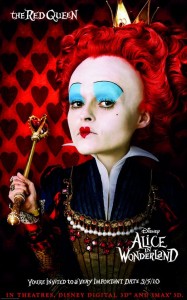
Ruling Wonderland one Queen at a time!
Remember Me

Remember Me is surprisingly good although does tend to drag in the 2nd act, but wait for the finale – its a stunner… And as for Robert Pattinson – of course he is brilliant and holds his own in the film amongst such support talents as Pierce Brosnan, Academy Award winner, Chris Cooper (Adaptation) along with Oscar nominee and Swedish born actress Lena Olin (Unbearable Lightness of Being, Enemies: A Love Story). Recommended viewing.
A Single Man
Tom Ford’s luscious and sexy A Single Man is pure cinematic pleasure, every shot is like a Vogue fashion shoot and whilst the supporting cast are to die for, its really Colin Firth’s wonderful and sensitive central performance that lingers long after the lavish final shot!! See it just for the Spaniard in the Phone Booth scene!! Utterly breathtaking… especially Nicholas Hoult as the young and gorgeous Kenny skinny dipping in the Pacific at Midnight. Also starring Matthew Goode and Ginnifer Goodwin.
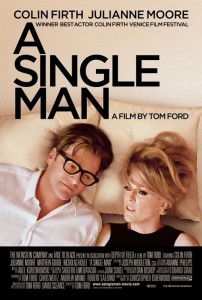
Lover and the Lush!
*********
 Posted in Allen Coulter, Tim Burton, Tom Ford |
  Tags: Anne Hathaway, Chris Cooper, Colin Firth, Crispin Glover, Emile de Ravin, Frances de la Tour, Ginnifer Goodwin, Helena Bonham Carter, Johnny Depp, Julianne Moore, Lena Olin, Matthew Goode, Mia Wasikowska, Michael Sheen, Nicholas Hoult, Pierce Brosnan, Robert Pattinson |
  Comments Closed
82nd Academy Awards
Oscar Winners for the 82nd Annual Academy Awards: ~
Sunday 7th March 2010
The 82nd Academy Award Winners

Best Film – The Hurt Locker
Best Director – Kathryn Bigelow – The Hurt Locker

Best Actor – Jeff Bridges – Crazy Heart

Best Actress –Sandra Bullock – The Blind Side
Best Supporting Actress – Mon’que – Precious

Best Supporting Actor – Christoph Waltz – Inglourious Basterds
Best Original Screenplay – Mark Boal for the Hurt Locker
Best Adapted Sreenplay – Geoffrey Fletcher for Precious based upon the novel Push by Sapphire

Best Foreign Language Film – The Secret in Their Eyes by Juan Jose Campanella (Argentina)
Best Film Editing – The Hurt Locker

Best Cinematography – Avatar

Best Costume Design – Sandy Powell – The Young Victoria
Best Visual Effects – Avatar
Best Original Score – UP
Best Original Song – Crazy Heart – The Weary Kind
Best Cinematography – Avatar
*
Posted in Kathryn Bigelow, Oscars |
Tags: Christoph Waltz, Jeff Bridges, Monique, Sandra Bullock |
Comments Closed
Through the White Picket Fence
Revolutionary Road

Last year there was ample hype about the Sam Mendes film, Revolutionary Road starring Kate Winslet and Leonardo di Caprio. Whilst the Oscar buzz only got a best supporting actor nod for Michael Shannon, the film itself about the brittle deterioration of a marriage in 1950s suburban Connecticut was seamless and superbly acted. Kate Winslet reprised a similar role as she did in Todd Field’s brilliant 2006 film, Little Children as a anxious housewife trapped in the monotony of a soulless marriage.
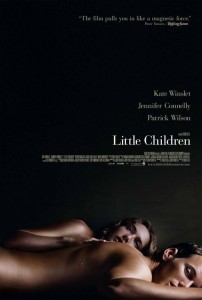
The Random act of Infidelity
Whilst both films are worthy of attention, more notably Little Children, the novel, Revolutionary Road is an absolute must-read. Deftly crafted with superb subtle characters whilst referring to major themes of discontent, disillusion and the nature of insanity.
~
The novel, Revolutionary Road, written by Richard Yates and is an ironic, sometimes humourous and especially scathing look at the hollowness of the Great American Dream especially piognant in its depiction of a society bound by the virtues of marriage, fidelity, corporate ambition and the myth of the white picket fence. Highly recommended novel, even better than the film adaptation.
Revolutionary Road will resonate now, nearly fifty years on, as when it was first praised in 1962. The prose is wonderfully crafted with such detail and poignancy that clearly aims to undercut the sophisticated era it was meant to evoke.
Both the novel and the film version of Revolutionary Road are highly recommended but its always best to read the novel first before seeing the cinematic version.
Posted in Sam Mendes, Todd Field |
Tags: Dylan Baker, Jackie Earle Haley, Jennifer Connelly, Kate Winslet, Kathy Bates, Leonardo DiCaprio, Michael Shannon, Noah Emmerich, Patrick Wilson, Zoe Kazan |
Comments Closed
Quirky Victorian Machismo Reinvented….
SHERLOCK HOLMES

The Dark and Sexy 1890s….
Picture the Victorian age, and most people imagine a British society with strict morals and closeted virtues, governed by an immovable Queen, who managed an Empire, whose centre was London and radiated out to the four corners of the globe, from South Africa, to Hong Kong, to New Zealand and Jamaica. But by the 1890s that Victorian society was slowly unravelling by the very constraints that were tying it together. Under that epitome of London fortitude, that epicentre of British colonialism, Oscar Wilde was flouting his homosexuality in the mid 1890s and was soon to be tried for his alleged affair with Lord Alfred Douglas, culminating in one of the most famous trials in British legal history. Jack the Ripper was prowling the East End, slitting the throats of Cockney prostitutes and opium dens were rife in the less savoury parts of the City. Under the veil of conservatism, the late Victorians were a quirky bunch, many sects were popping up exploring the occult and challenging the grip of the Church of England, spiritualism was rife, as was the certainty that Victoria’s steel reign was coming to a rapid and abrupt end. England was emerging from the industrial revolution and slowly entering the edges of the modern era. Sir Arthur Conan Doyle, lived at a very interesting junction in history and his most famous literary creation from 1890-1905, Sherlock Holmes was a mixture of bound up fanaticism and heroic individuality, a brilliant mind, a borderline addict and an overwhelming eccentric living in an age well before forensics was perfected…
Ritchie Returned…
No other director but the London born, Guy Ritchie (Rock n Rolla, Snatch, Lock, Stock and Two Smoking Barrels) could have brought a 21st century take on the most filmed literary character, and no better actor than Robert Downey Jnr could have pulled off all the perverse complexities as the Victorian super-sleuth, Sherlock. Downey’s performance was reminiscent of his Oscar nominated role in Richard Attenborough biopic, Chaplin.
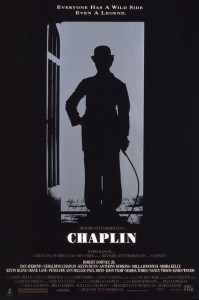
Hollywood iconic…
Jude Law is superbly cast as the unassuming but more stable companion Dr Watson whose repartee with Sherlock is bordering on between British Machismo and pervading homo-eroticism. In this version, Holmes and Watson bicker like an old married couple and Holmes sensing separation anxiety at the thought of Watson leaving London to take his bride to go and live in the country, engages Watson as his ever faithful sidekick to destroy the plans of an occult aristocratic. It’s an enabler-rescuer relationship of note and the male bonding that ensues between them penetrating secret societies and separating the mysticism from the science can be read at deeper levels if a viewer wishes. For besides the central Holmes-Watson relation which is central to the film is a fascinating plot which has the duo pitted against the evil and enigmatic Lord Blackwood, another wonderful role by Mark Strong and his ring of henchmen including a French giant.
A Trio of Triumph….
Sherlock Holmes is at home in the 21st century thanks to the adept eye of Guy Ritchie who steers the plot away from glamorous American commercialism and keeps the film, gritty atmospheric, dark and downright British, even to tea in the afternoon, bulldogs and Big Ben. Judging actors and directors by their personal lives is misleading especially with the private affairs of Ritchie, who was going through a divorce with Madonna, Downey who has had an eventful ride to fame, from the early days of Less than Zero to the brilliant Iron Man and Jude Law himself, whose extra-marital affairs have kept him in the spotlight. This trio of talent is brilliant as a team and Guy Ritchie with the extraordinary power of his leading men, create a muscular, engaging and quirky cinematic Sherlock Holmes for the 21st century, leaving a whole generation to discover the very complex and fascinating era that was Victorianism with a twist.
Posted in Guy Ritchie |
Tags: Eddie Marsan, James Fox, Jude Law, Kelly Reilly, Mark Strong, Rachel McAdams, Robert Downey Jnr |
Comments Closed
Virtual Colonialist Diatribe
Avatar
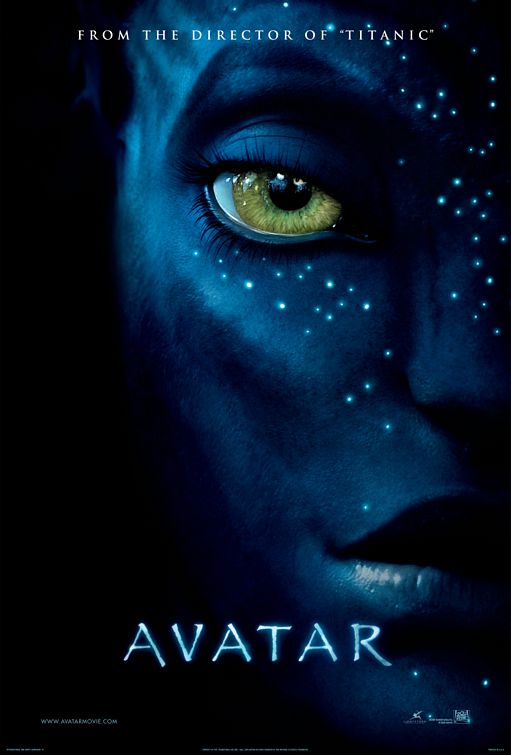
James Cameron much anticipated Avatar is a simulacrum of CGI images which will dazzle the viewers but leave any intelligent probing of colonialism in a virtual capacity as a hollow fantasy without any true substance, leaving the human characters to languish in a wilderness of special effects without a thread of credibility…. there again – it is billed as a fantasy epic – a strange mixture of Ferngully on Acid mixed with GI Joe Transformers – where are those corporates digging for precious metals?
Too little of such great talents as Sigourney Weaver and Giovanni Ribisi are used purposefully onscreen while Sam Worthington’s avatar is as solid as it is imaginary, as two dimensional as the proverbial battle between the indigenous popultion, the Na’vi and the humans which seek to destroy and colonize Pandora
First half is stunning but once Pandora ‘s delights are discovered, it all goes South from there and the machines bring destruction and a new dawn…
Irony of the film is that the earth-loving Pandoreans would never have been created ten years ago without the 21st Century digital technology….
Blade Runner, Babylon AD and Chronicles of Riddick do far better in the originality arena… held up by the bastions of Science Fiction Star Wars and the recent brilliant Star Trek.
Posted in James Cameron |
Tags: C. C. H. Pounder, Giovanni Ribisi, Michelle Rodriguez, Sam Worthington, Sigourney Weaver, Zoe Saldana |
Comments Closed
Pearls and Panache in the Kitchen…
Julie & Julia

Nora Ephron’s latest film Julie & Julia – follows two separate but true stories about Julia Child rise to fame through French cuisine by surviving the McCarthy era in Paris learning Gourmet Cuisine and 50 years on, Julie Powell’s blog account of a year of cooking exquisite dishes from the famed recipe book that was Julia Child’s piece de resistance, Mastering the Art of French Cooking and how it got to be published in 1961.
Child having spent years in Paris with her diplomat husband, took up Gourmet cooking lessons and was determined to eventually introduce French cuisine to the American home.
While Ephron’s film should be treated as a comedy and a gastrononic delight it by no means rivals the brilliant Babette’s Feast or Chocolat. While films whose main subject is cuisine is always difficult to market, Ephron manages through a fairly quirky script to capture the two distinct eras that both her heroines lived in. Child and her husband had to deal with the McCarthy era, where everyone was treated with suspicion due to Communist paranoia sweeping America, not helped by their early years spent in China.
Juliet Powell and her husband Eric played by Chris Messina lead a less glamorous life across the pond, in Queens, New York where Powell sets herself a blogging and cooking deadline of a year to cook every recipe in Child’s bible on French cuisine as a way of distracting her from a call centre job dealing with the families and relatives of 9/11 in 2002.
While there was 50 years apart in their lives, both women were trying not to deal with the realities of a world that did not make sense. And who could blame them? Post 9/11 New York and Post World War II Paris are vastly different, yet with some delicious recipes to lose themselves in, Julie and Julia proved that like any man, a woman can be just as determined, passionate and steadfast in their goals especially in achieving success, whether it be domestic or literary.

Julia Child’s original kitchen
Obliquely the film, also comments subtly on the rise of celebrity cult status and how historical references shape a characters lives so distinctly. Most notable are the wonderful shots of Paris and the diplomatic parties that Julia Child attends and eventually cooks for contrasting with a replica of her Cambridge, Massachusetts kitchen built especially for the tall woman she was, so elegantly displayed at the Smithsonian in Washington DC, where Julie eventually, like a worshiper at a sacred site, leaves a pound of butter as a fitting tribute to her gastronomic inspiration.
Julie & Julia is by far means not a brilliant film, but it will evoke an appetite for some superb, tangy and tantalizing gourmet dishes and give the audience a new appreciation of de-boning a duck, whilst wearing pearls in the kitchen and appearing relatively calm.
See it and enjoy the meals, yet its far from a cinematic feast, flawed with shoddy editing and uneven directing, whilst saved by a eclectic score by Alexandre Desplat who excelled in The Queen and of course by the ever versatile and brilliant Meryl Streep.
Posted in Nora Ephron |
Tags: Amy Adams, Chris Messina, Jane Lynch, Meryl Streep, Stanley Tucci |
Comments Closed
Revisionist Cinema from Hell
Inglourious Basterds
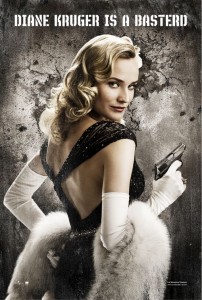
She is watching us… the Voyeur as Killer
A Revisionist look at World War 2 with all the German angst, French charm and American parody…
Sooner or later Tarantino was bound to approach the territory of the 2nd World War. While there has been a plethora of World War movies since the mid 1940s onwards, many have tackled the War from a purely Euro-American perspective focusing on the Nazi’s simply as the enemy. From Great battle films, like Saving Private Ryan to the more personal and heart-rendering stories of Sophie’s Choice and Schnindlers List and more recently Atonement.
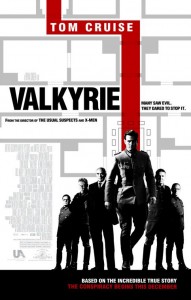
The Rot started from within…
Valkyrie arrived, Tom Cruise’s fascinating yet doomed project about a plot to kill Hitler from within the highest rankest of the Nazi inner circle in 1944. Defiance followed, a superb story of Polish Jewish resistance set in the forests outside Krakow. There was entertainment rumblings from Tarantino that after the Kill Bill films, he was planning a revisionist and slightly parodying version of World War 2…
Cannes Film Festival 2009

Cannes Film Festival 2009 and Inglourious Basterds, Tarantino’s long awaited film featuring a band of Jewish American Nazi scalp-hunters who take revenge on the Nazi’s in German-occupied France in the early 1940s is premiered much to every cineaste’s delight. Basterds is far more than a revenge cult film against Nazi’s, it’s a statement about Cinema being used as propaganda. The references are rife, for as in Pulp Fiction, Tarantino’s best trait is revealed, a rambling but significant knack for quirky dialogue. Except in this film, authenticity dictates –so naturally the French spoke French, the Nazi’s spoke German and the Americans spoke a range of regional accents from Brooklyn to Tennessee slang. Tarantino assembles some fantastic European stars of contemporary cinema, from Til Schwieger to Diane Kruger and Melanie Laurent.
Cinema as Propaganda
Tarantino makes comparisons between Joseph Goebbels – Nazi Minister for Propoganda and the then founder of MGM, Louis B. Mayer, both as masters of cinema and naturally propaganda. More specific are the references to Leni Riefenstahl, who rose to fame in the 1930s as a significant German film-maker churning out the Nazi blueprint for propaganda – Triumph of the Will.
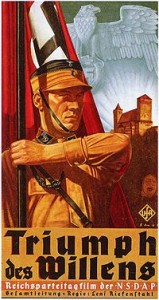
Truimph of the Will
Riefenstahl, was later vilified once the war was over and went onto to become a documentary filmmaker in East Africa. There are also a sprinkling of humorous discussions about the American black athlete Jesse Owens who sparkled at the 1936 Berlin Olympic Games much to Hitler’s dismay. Watch out for a spoof on the British military featuring a contemplative Winston Churchill and a wonderful cameo by Mike Myers whose line, “we will have all the rotten eggs in one basket” is delivered with affected panache.
A French Spaghetti Western Tarantino Style
Basterds opening shots are reminiscent of the early spaghetti Westerns of Sergio Leone – with a scene straight out of The Good, The Bad & The Ugly, except its not a dusty Mexican outback with outlaws escaping bounty hunters, it’s a pastoral scene of a French Farming countryside. This time there is no Sun-Burnt Clint Eastwood in a poncho. Enter Christoph Waltz, the urbane, elegant and lethal multi-lingual Nazi Jewish hunter. Waltz has some of the best dialogue in the film and effortlessly switches from German to French to English in order to ascertain his victims whereabouts. Yet Tarantino presents him as a man simply sent to do an unpleasant task, and one should not judge, but Waltz’s role is crucial to the films wonderful and intricate plot revolving around a cinema outside Paris and a German Film Premiere, where all plans go awry.
Christoph Waltz won an Oscar for Best Supporting Actor following in the psychopathic tradition of Javier Bardem in No Country for Old Men (2008) and Heath Ledger’s Joker in The Dark Knight (2009). Tarantino’s find of this Austrian acting talent has Hollywood virtual blogs a buzzing.
Inglourious Basterds is long, brilliant, bloody and sophisticated with that right dose of European sensibility accurately shredded by an American’s tainted perspective on World War II and more subtly a comment on the Death of original Cinema and more about Film as a nation’s propaganda tool. If you are expecting an action-packed, traditional war film with a clear division of hero and villain, well then you are simply in the wrong movie. Tarantino tantalizes, shrills and insures that any audience seeing the Basterds will feel claustrophobic and trapped in a cinema from Hell.
Posted in Quentin Tarantino |
Tags: August Diehl, Brad Pitt, Christoph Waltz, Daniel Bruhl, Denis Menochet, Diane Kruger, Eli Roth, Melanie Laurent, Michael Fassbender, Richard Sammel, Til Schweiger |
Comments Closed
A More Impressive Mrs Brown
The Young Victoria
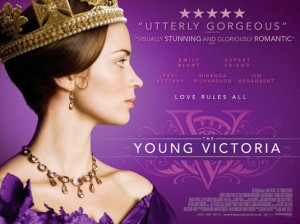
Regal, beautiful and rebellious to the point of gaining an Empire
Director: Jean-Marc Vallee
Cast: Emily Blunt, Paul Bettany, Rupert Friend, Mark Strong, Miranda Richardson, Thomas Kretschmann, Harriet Walter, Julian Glover, Jesper Christensen, Jim Broadbent, Michiel Huisman
Running Time: 1 hour and 45 minutes
Film Rating: 7.5 out of 10
The Young Victoria is a treat for any dedicated royalist and purveyor of British history and shows Queen Victoria as she ascends the throne and deals with her first and only love, the marriage to Prince Albert of Germany, perfectly portrayed by Rupert Friend. Emily Blunt takes the part of the headstrong Victoria perfectly with the correct amount of poise and dedication and is supported by a fine cast such as Miranda Richardson as the Duchess of Kent, Mark Strong as Sir John Conroy and Paul Bettany as Lord Melbourne.
Previous film version about Queen Victoria only showed her as a reclusive widow hiding away in Balmoral as the 19th century draws to a close while she is being wooed by a country groundskeeper played with Scottish tenacity by Billy Connolly with Dame Judi Dench taking the role in the superbly under-rated Mrs Brown.
Royalty and the birth of Victorian traditions in all its grandeur
In this film version with a wonderful script by Oscar winning screenwriter Julian Fellowes (Gosforth Park), captures the intrigue of the 19th century British court and how the Royalty then was so tied in with all European aristocracy demonstrating the formation of a strong consolidation of power, which eventually lead to the likes of King Leopold of Belgium, Prince Albert’s uncle and Queen Victoria’s government plundering Africa for the riches and expansions of a colonial empire, known as the scramble for that unknown continent giving historical insight into the treacheries and triumphs of the 19th century and the vast discrepancies which haunt the 21st century.
Nevertheless politics aside, The Young Victoria is a wonderful tale of a young girl who shrugs off the confinements of the Kensington system (a particular set of rules governing etiquette) and ascend the British thrown to become the second longest running monarch in British History second to only Queen Elizabeth I. The difference between the two Queens is while Elizabeth remained the epicentre of her own sovereignty and did not produce an heir, Victoria established a dynasty which is still surviving today.
************************************************************************
The Young Victoria is highly recommended as a fitting cinematic tribute to all that was once lavish where decorum reigned supreme and etiquette and conservation of dignity was regarded as the foundation of a powerful yet ultimately flawed civilization, to a nation that established its hegemony and was sure to lose that supremacy centuries later, only to be left with the vestiges of all those colonial expansions…
At the centre of any Empire was a ruler, in this case Victoria, like all charismatic leaders started off as impressionable and malleable but soon developed the skills of diplomacy and manipulation, especially playing the rules of power and politics on her own terms.
Posted in Jean-Marc Vallee |
Tags: Emily Blunt, Harriet Walter, Jesper Christensen, Jim Broadbent, Julian Glover, Mark Strong, Michiel Huisman, Miranda Richardson, Paul Bettany, Rupert Friend, Thomas Kretschmann |
Comments Closed
Fear in a Forest of Despair
ANTICHRIST
Fear in a forest of imaginary angst and abysmal despair….
So the controversial Danish director Lars Von Trier premiered his new film Anti-Christ at the Cannes film festival in May 2009, where it was alternately jeered and praised. I was fortunate enough to catch a late screening of the film at the Durban International Film Festival http://www.durbanfilmfest.co.za/ in July, knowing that Anti-Christ due to its explicit content and supreme visual style would not make the Cinema Nouveau circuit by any stretch of the imagination and surely I was not disappointed in any expectations of controversy.
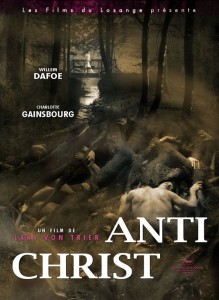
No love lost in this demonic garden…
Anti-Christ featuring a powerful performance by Charlotte Gainsbourg who received a best actress at Cannes and an equally disturbing performance by Willem Dafoe as a couple in Washington state who due to the tragic death of their child suffer a breakdown of psychological emotional and physical proportions second to none. The film, like Dogville is stylised and divided into chapters and while initially you wonder what the fuss is about, you soon find yourself watching explicit porno-graphic images coupled with some more violent and deeply disturbing sequences of self-mutilation as the protagonists marriage unravels to a point of utter destruction towards the final act. The disturbing scenes set in a forest lodge where all the couples fears and angers can be played out to the edge of insanity is part horror film reminiscent of The Blair Witch Project and part The War of the Roses without the trappings of material possessions. Dafoe, as psychologist and father questions his wife after her initial mental breakdown and says “What is your greatest fear?”
Her answer is “Being alone in the Forest”.
Facing those fears lead the couple on a downward psychological and often disturbing journey into the depths of their own depravity and soon any defiance of social conventions are evident and fulfilled where in this destruction only nature takes precedence. Is this the proverbial tale of Adam and Eve fighting in an imaginary Garden of Eden? No, its more like after they have been corrupted and expelled into the wilderness of their own disintegration, violence and abysmal despair.
*
Anti-Christ is not for the faint-hearted and will definitely cause debate, sometimes derision and certain denouncement. Lars von Trier known for his unusual eccentricities like a fear of flying and being raised by a family of nudists is show to demonstrate all these idiosyncrasies in his uncompromising and thought-provoking style.
If you enjoyed Dogville or Breaking the Waves, you might be curious to watch Anti-Christ, but warnings abound as to its explicit content and offensive treatment of the destruction of a marriage. As for his notoriety that is secure, von Trier as director will continually attract art-house cinema-goers and actors who wish to work with an auteur that will expectantly push the boundaries of their craft in a Brechtian and creative way.
The fact that von Trier has attracted big stars to his films like Nicole Kidman, Lauren Bacall, Emily Watson and Willem Dafoe is testament to his allure as a stylish and innovatively unconventional director, a Danish version of David Lynch with far more intensity and stark realism…. after all both Lynch and von Trier managed to garner huge attention at festivals around the world and their movies whether it be Blue Velvet or Anti-Christ will be classics of the controversial kind. As for Willem Dafoe, that truly enigmatic actor, who attracted critical praise in Shadow of a Vampire, has now appeared in both a von Trier and a David Lynch film. Who can forget that trailer park, leather clad seduction sequence that Dafoe performed with sinister dedication to the naive Laura Dern in Wild at Heart?

Luscious Lula saved by the interminable Sailor
How a stylist was formed…
Coco Avant Chanel
Coco Avant Chanel, Anne Fontaine’s gorgeous film about the early years of famed Fashion Designer Coco Chanel charts an unusual course as biographical films go. There are no famous people, struggles with addictions, few tragic events and none such biographical directions that films in a similar genre like Capote and Pollock take.
While Capote and Pollock showed how those respective artists gained famed and notoriety, both succumbing to the excesses of creativity, Coco Avant Chanel portrays a strong personality, a woman who was way ahead of her time in terms of vision and conception. She was the French version of Queen Elizabeth I, beholden to no one except her own ideals and determination and while she wasn’t royalty, Coco Chanel’s enormous influence on style and design can still be seen a century later.
Frivolous Fashions
Dismissing the frivolous fashions of the early 20th century when French fashions were limited to the silky and often too feminine designed of court designer Charles Frederick Worth – Chanel aspired towards simplicity in a masculine world which sought to minimise women’s power and their ability to succeed. What made Chanel an international brand was the 1920s and 1930’s when due to the depression and post World War I economic restrictions placed in Europe made simplicity and practicality key not to mention stylish and more affordable. Gone were the big hats with feathers, strings of pearls and corsets, Chanel changed women’s fashions and their perceptions forever.
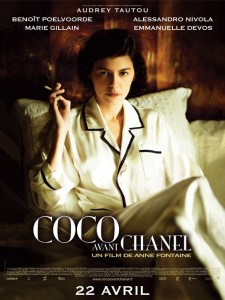
Stylish even in her Sleepwear….
Any devout fashionista will revel in the beauty of Fontaine’s film, so rush and see the sumptuous Coco Avant Chanel and watch Audrey Tatou dazzle…
Posted in Anne Fontaine |
Tags: Alessandro Nivola, Audrey Tautou, Benoit Poelvoorde, Emmanuelle Devos, Marie Gillain |
Comments Closed

- SZA Slams ‘Disgusting‘ Musicians Using AI, Says Platforms Like Suno Train on the ‘Best and Brightest Black Minds of Writers and Producers’SZA took to Instagram on Saturday to slam artists using AI music generators such as Suno, alleging producer Diplo had equity in the company and was trying to train it on “the best and brightest black minds of writers and producers.” “We make up 13% of the American population yet influence the world w our […]Corbin Bolies
- Karlovy Vary Film Festival Topper Karel Och Talks About the 60th Edition Lineup and Its Cinematic Ambitions for Regional Filmmakers and BeyondAmong pop-up bars, bandstands and opulent, 19th century spa buildings painted in sherbet pastels, the Karlovy Vary Intl. Film Festival (KVIFF) takes place each year in July, at the halfway mark between Cannes and Venice. For those weirdos among us who make a chunk of our living running the gauntlet of summer festivals, the Czech […]Jessica Kiang
- Concertgoer Falls to His Death During Goose Show at Madison Square GardenA concertgoer fell to his death during a Goose concert on Saturday night at Madison Square Garden, according to CBS News. Police told the outlet that a 51-year-old man fell from MSG’s 300 level and suffered fatal injuries just before 10 p.m. Authorities found the man unconscious and unresponsive. He was later pronounced dead at […]Jack Dunn
- Aardman Teases New Pokemon Series, Upcoming Lego Short, Aardman Academy and Looks Back at 50 Years of Clay Animation at AnnecyWith more than 50 years of clay animation, Aardman unveiled a glimpse of a bright future this year at the Annecy Animation Film Festival, which opens June 21. The studio’s legendary trio, co-founders Peter Lord, David Sproxton and fellow director Nick Park, took the stage earlier today in Annecy’s main venue, the magnificent lakeside Bonlieu […]Kevin Giraud
- Netflix, A24 and Focus Pass on Luca Guadagnino’s ‘Artificial’ as Mubi Circles (EXCLUSIVE)Several of the buyers who screened Luca Guadagnino’s hotly anticipated “Artificial” in the days after Amazon MGM Studios abruptly dropped the film have passed on acquiring it, sources tell Variety. Focus Features, Warner Bros.’ Clockwork, A24 and Netflix have all stepped away, according to those sources. But the Sam Altman drama, which is nearly completed, […]Elskes
- Jessica Biel & Justin Timberlake's Pics Prove They're in 7th Heaven June 21, 2026We've got this feelin' inside our bones that Jessica Biel will do whatever it takes to ensure husband Justin Timberlake is cryin' a river of happy tears June 21. After all, the 10-time Grammy...Sarah Grossbart
- Keith Urban Sends Birthday Love to Nicole Kidman One Year After Split June 21, 2026Keith Urban is thinking of Nicole Kidman. The “You’ll Think of Me” singer gave the Babygirl star a sweet shoutout for her 59th birthday six months after the pair finalized their divorce. As Urban...Sasha Wayman
- Why Derek Hough Is Enjoying Even the S--ttiest Parts of Fatherhood June 21, 2026For Derek Hough, parenting is truly filled with s--ts and giggles. And, no, he doesn't give a you-know-what about having to deal with the messier parts of fatherhood. Take 5-month-old daughter...Sarah Grossbart
- Kate Middleton Honors Prince William in Sweet Father’s Day Tribute June 21, 2026Kate Middleton is showering Prince William with love. Indeed, the Princess of Wales shared a never-before-seen snap of her husband alongside their daughter Princess Charlotte for Father’s Day,...Sasha Wayman
- Inside Pete Davidson's Life as a New Father June 21, 2026Pete Davidson didn't always know he'd be a cast member on Saturday Night Live. But being a dad? That was a role he felt called to from an early age."When I was young and my dad passed, I remember...Elyse Dupre
- Read MoreDifferent providers offer different cell phones, so take a look at the options from each provider to choose the right one for you. You may also want to look into any promotions that the providers have to offer, such as free cell phones in exchange for signing a contract. Tags: 2gmhass90